Well another trip has come to an end. Thanks for coming along and thanks for sticking with us when my computer went kaput. We hope you enjoyed the blog and that you’ll join us again next time.
Chuck & Joyce
Our Holidays in Salzburg and Prague
Well another trip has come to an end. Thanks for coming along and thanks for sticking with us when my computer went kaput. We hope you enjoyed the blog and that you’ll join us again next time.
Chuck & Joyce
One of Prague’s buildings that really fascinated us was The Dancing House. I know what you’re thinking: all of those fabulous historic sites and we’re obsessed with a weird building that was completed in 1996. But the more we learned about it, the more interesting it became.
We first noticed a nighttime Dancing House overlooking the river when we took our river cruise.
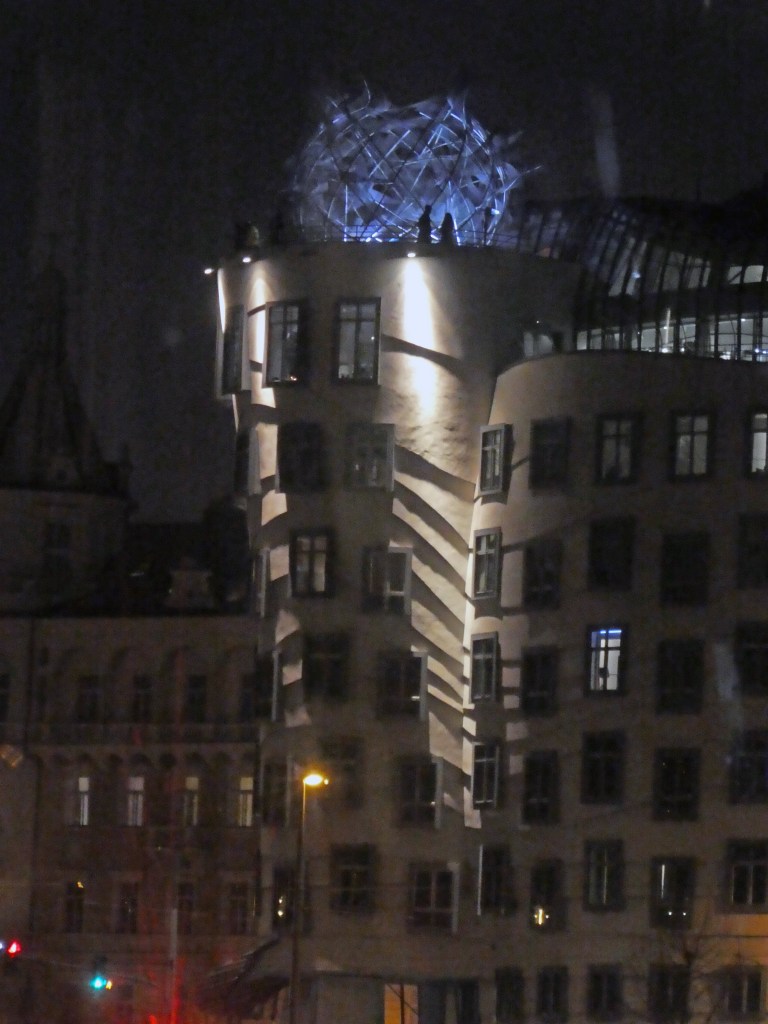
Then we just happened to drive by the House twice more while we were in Prague. We knew we needed to find out the story behind this strange structure.
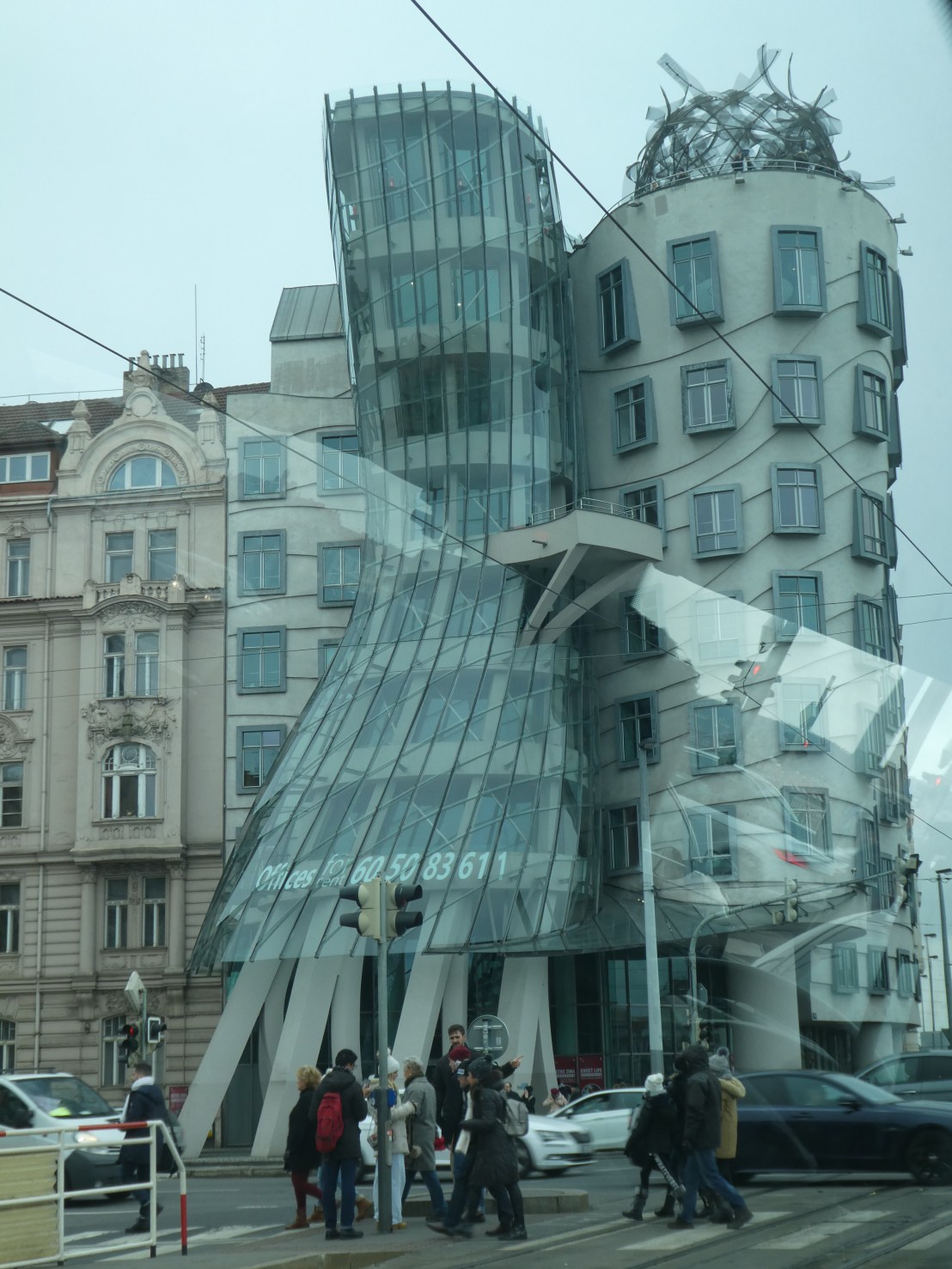
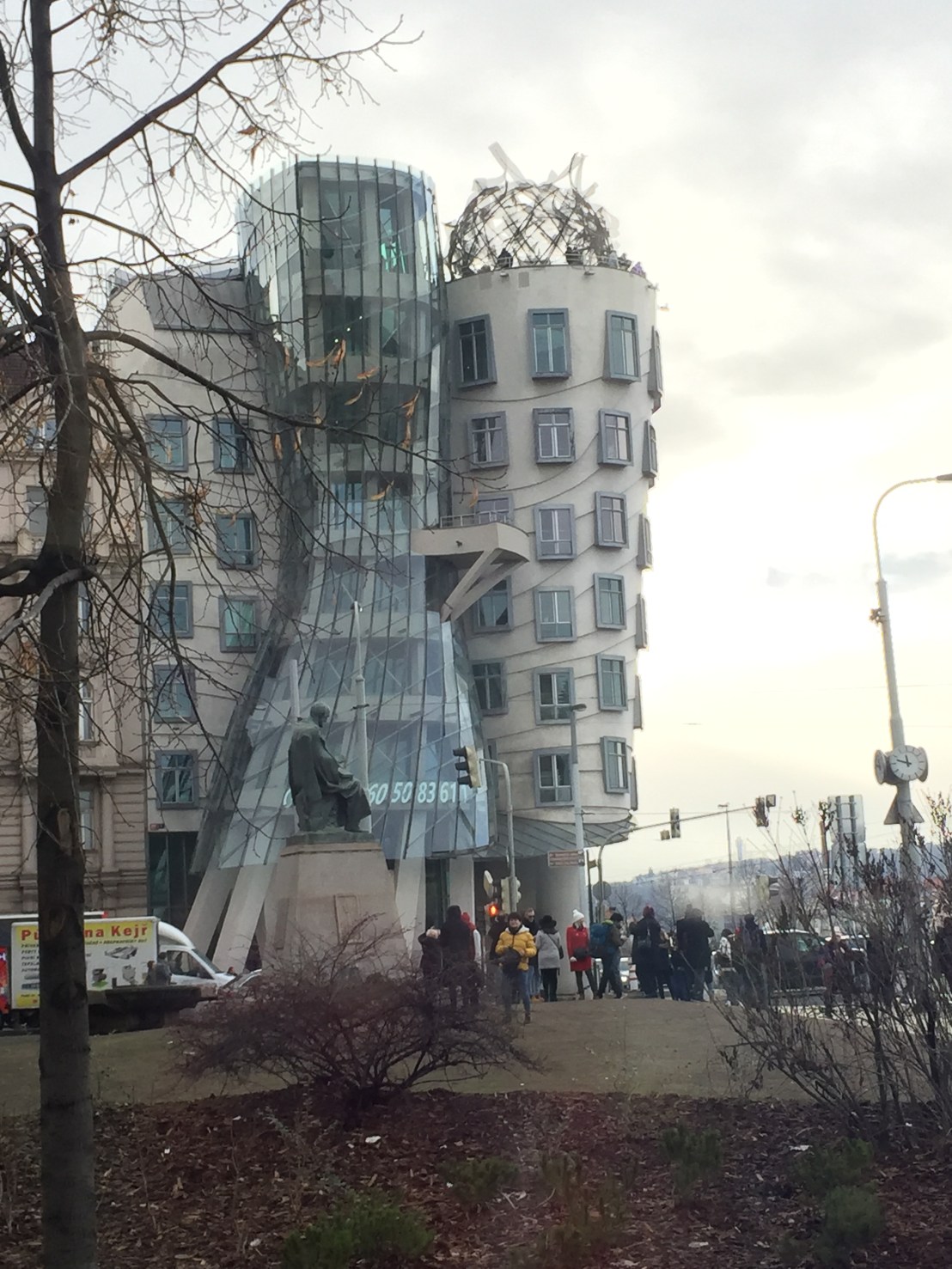

The Dancing House is officially the Nationale-Nederlanden building, named for the Dutch Insurance company that sponsored the building. The building was designed by a Croatian-Czech architect in cooperation with Canadian-American architect Frank Gehry (think Walt Disney Concert Hall among others). The style is deconstructivist (also called neo-baroque), making it stand out from the baroque, gothic and art nouveau buildings for which Prague is famous. The original idea was for a building consisting of two parts, static and dynamic (“yin and yang”), which were to symbolize the transition of Czechoslovakia from a communist regime to a parliamentary democracy.
Gehry originally named the building Fred and Ginger because the house resembles a pair of dancers. The glass tower “Ginger” bends and clings to the concrete tower “Fred.” The “dancing” shape is supported by 99 concrete panels, each a different shape and dimension. On the top of the building is a large twisted structure of metal. The building’s design was driven mainly by aesthetic considerations. Although it is the same height as the two adjacent 19th century buildings, aligned windows would make it evident that the building actually has two more floors than its neighbors. The windows also have protruding frames, such as those of paintings, so that they would have a three-dimensional effect. The winding mouldings on the facade also serve to confuse perspective and diminish contrast with the surrounding buildings.
The building is 9 floors tall plus two floors underground. The layout of each of the floors varies due to the asymmetrical shape of the building, causing the rooms inside to also be asymmetrical. The commercial areas of the building are in the lobby and the first floor. The six floors above that were primarily office spaces. The ninth floor housed a restaurant. Since the building takes a slim shape, and the building is split into two parts vertically, the office space is limited. To make the most of the space, the architect used design elements common in ships and incorporated small hallways into the interior of the building. The total interior of the building is 40,000 square feet.
In 2016, 2 floors of the building were renovated into a 21-room hotel. The hotel also has apartments available in each of the towers named after Fred and Ginger. The Ginger & Fred French Restaurant now operates on the 7th floor and there is now a glass bar on the 8th floor. There is also now an art gallery in the building.
The Dancing House was awarded Time Magazine’s Design of the Year award for 1996.
Here’s another batch of odds and ends. Hope you enjoy.
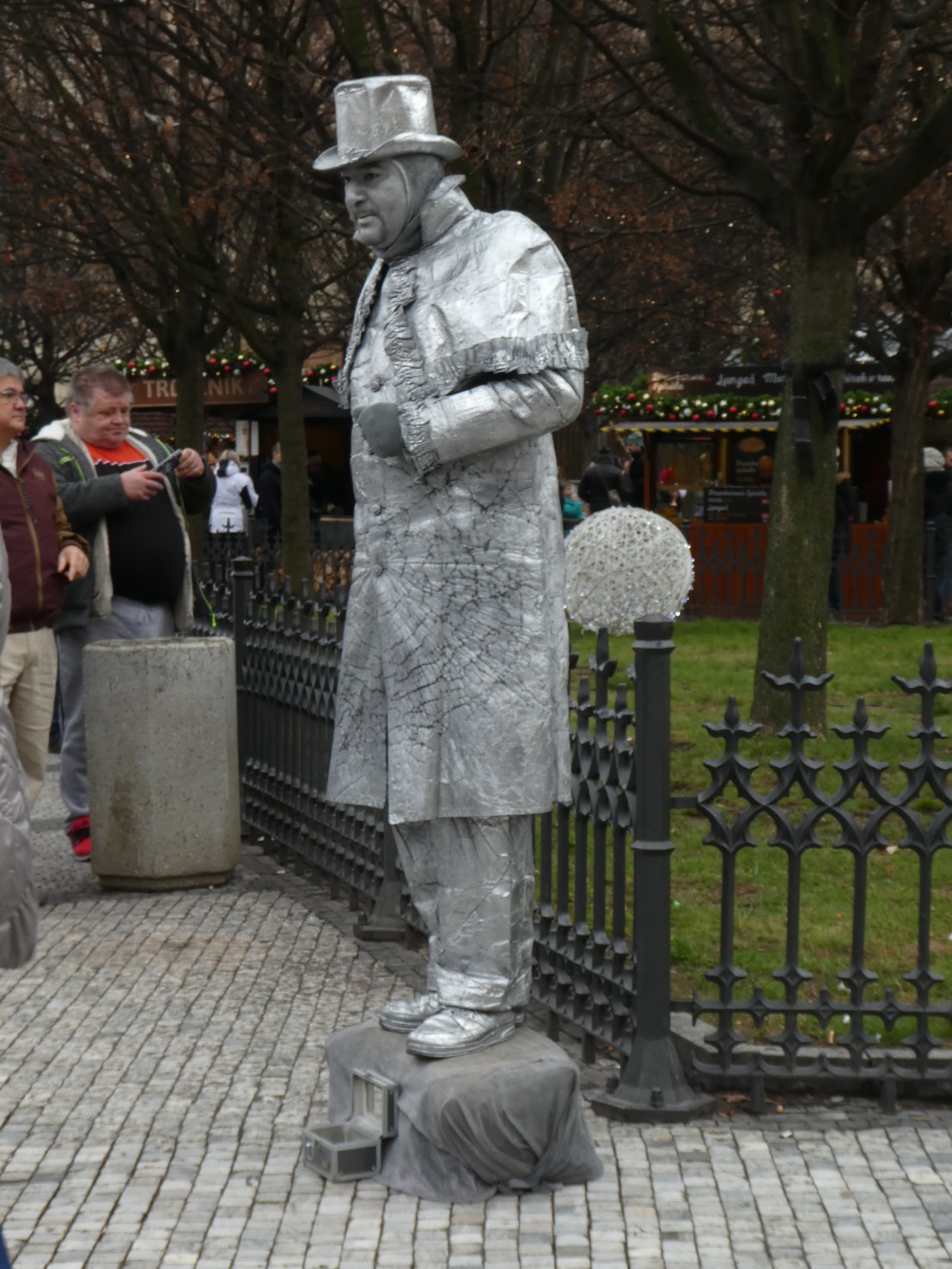
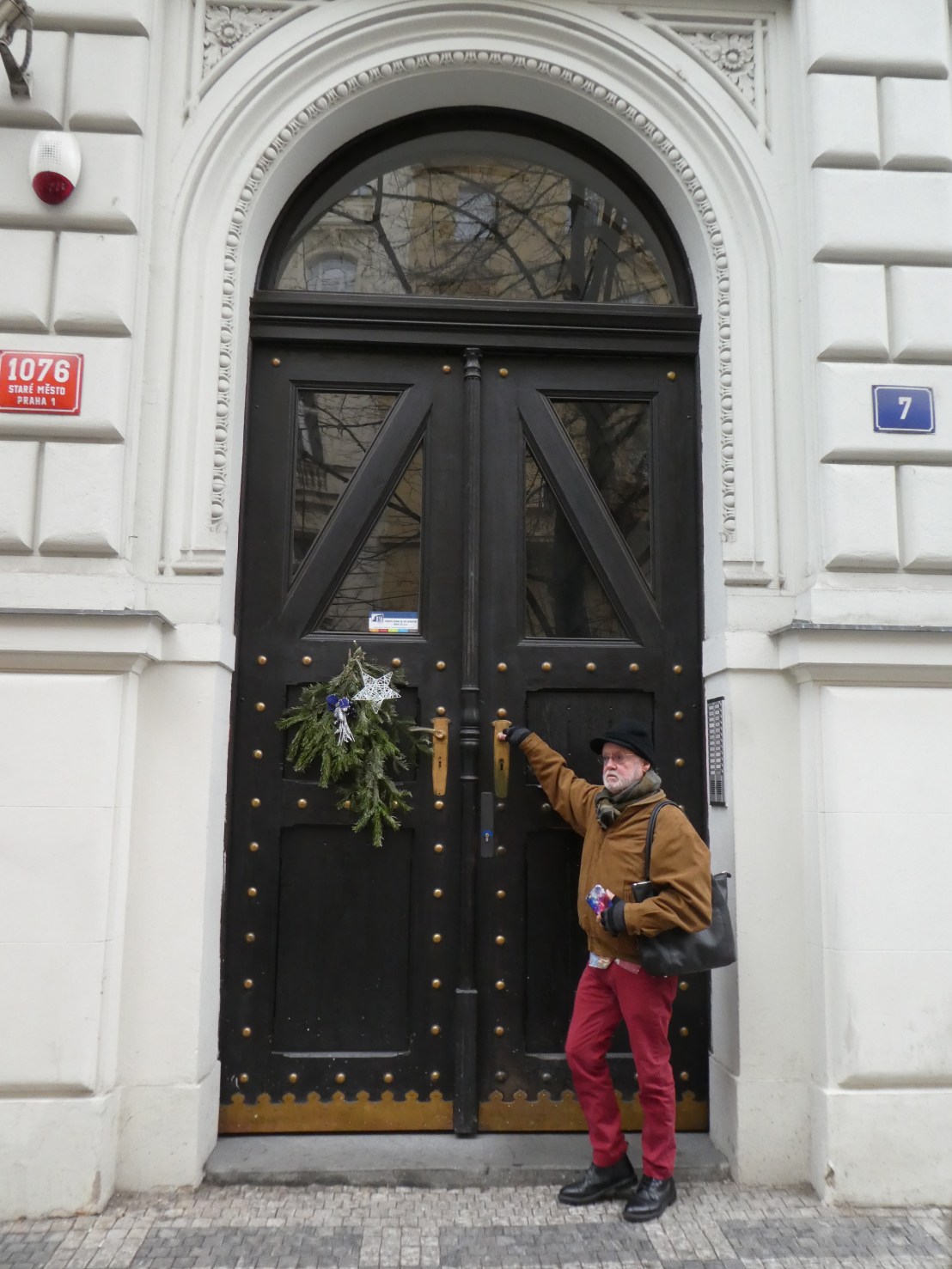
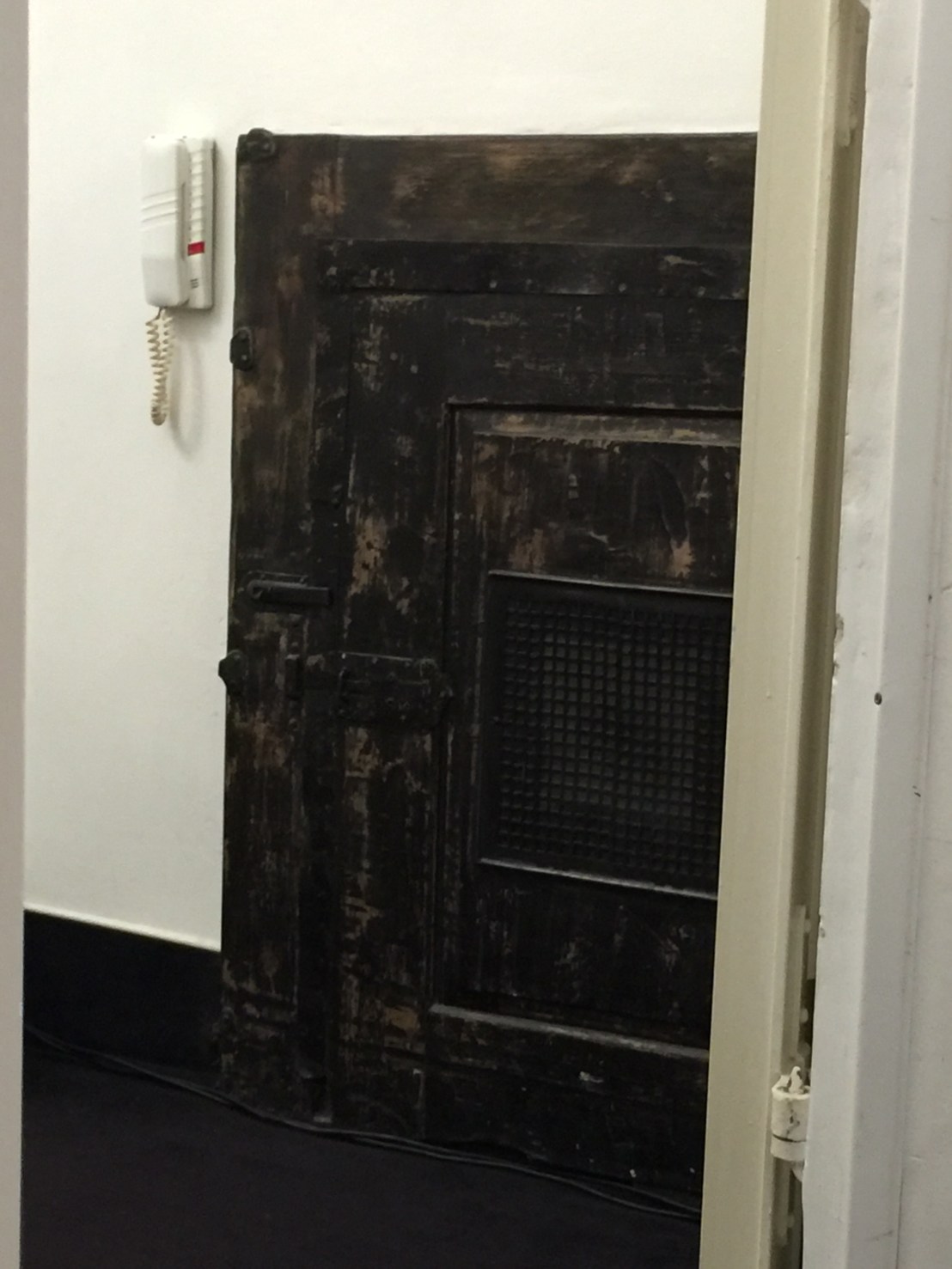
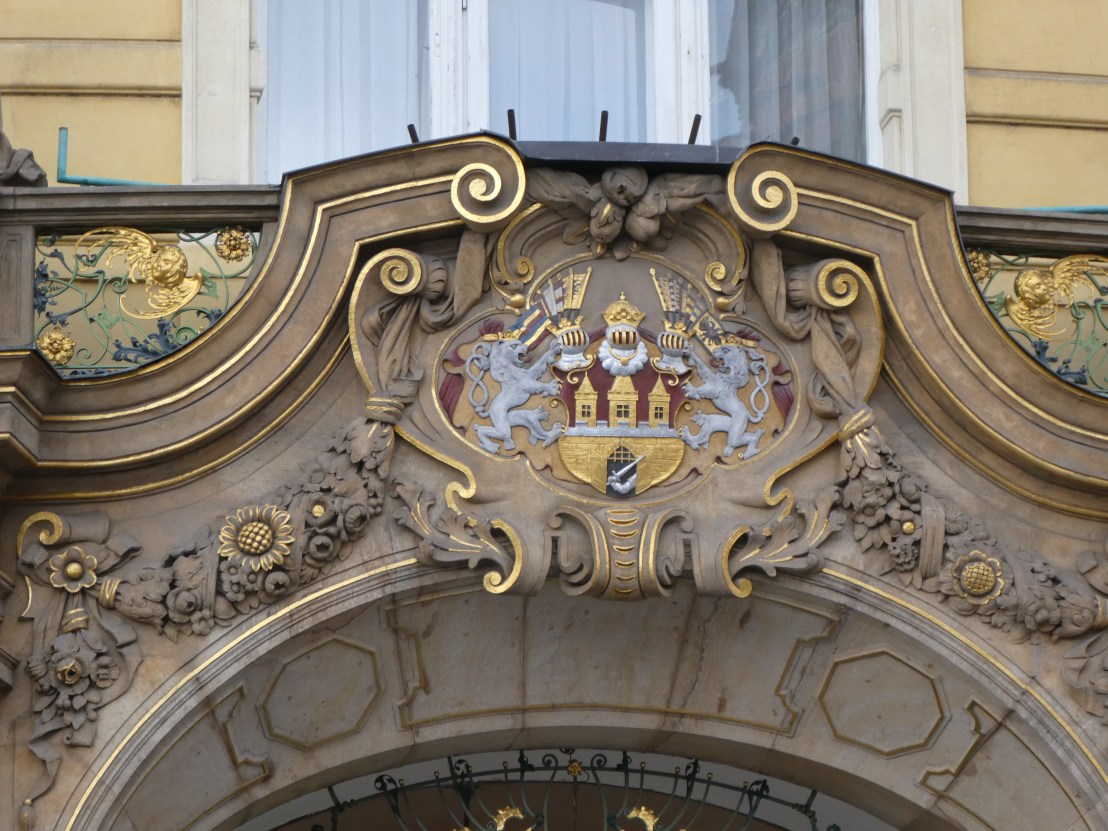
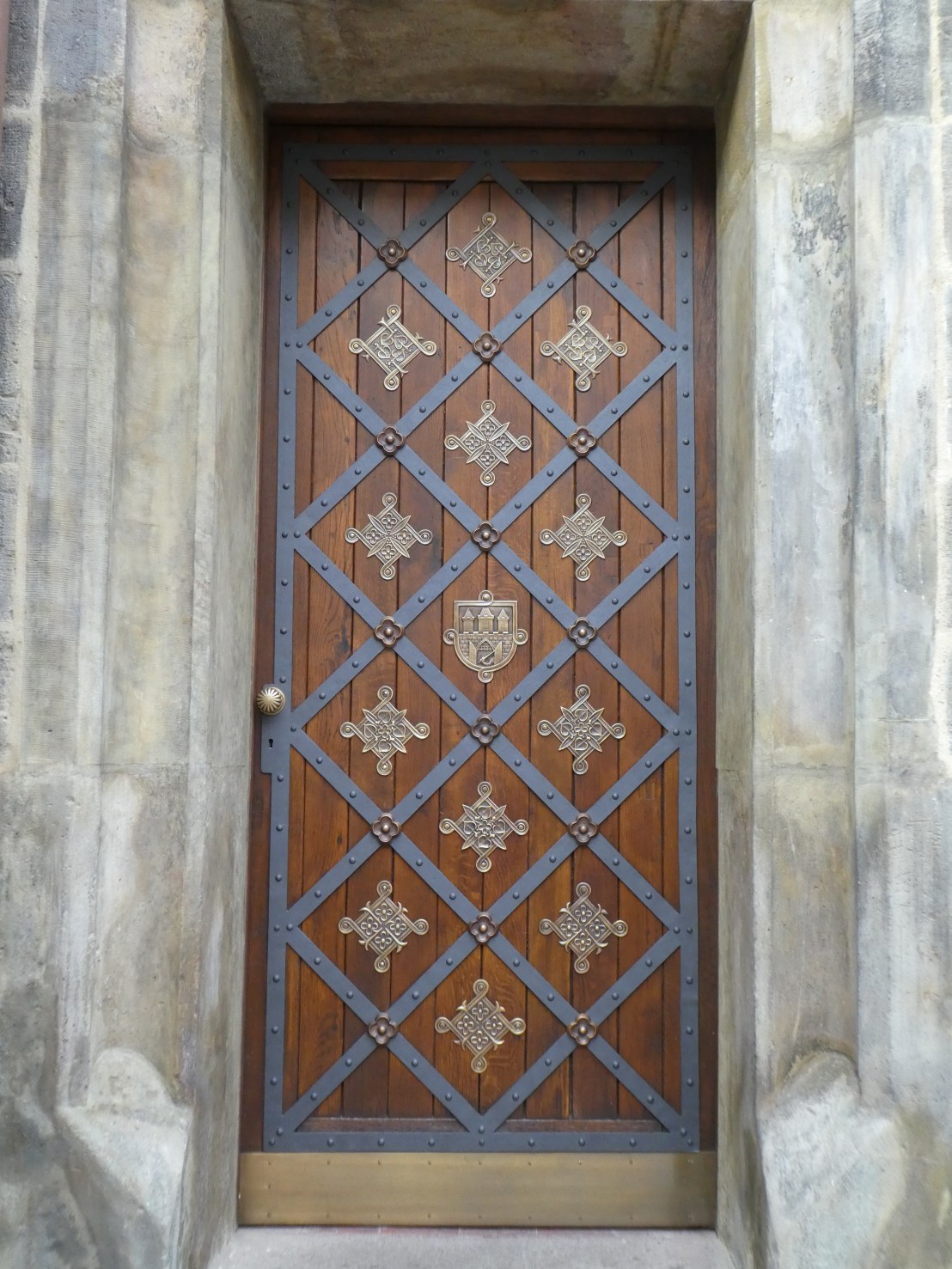
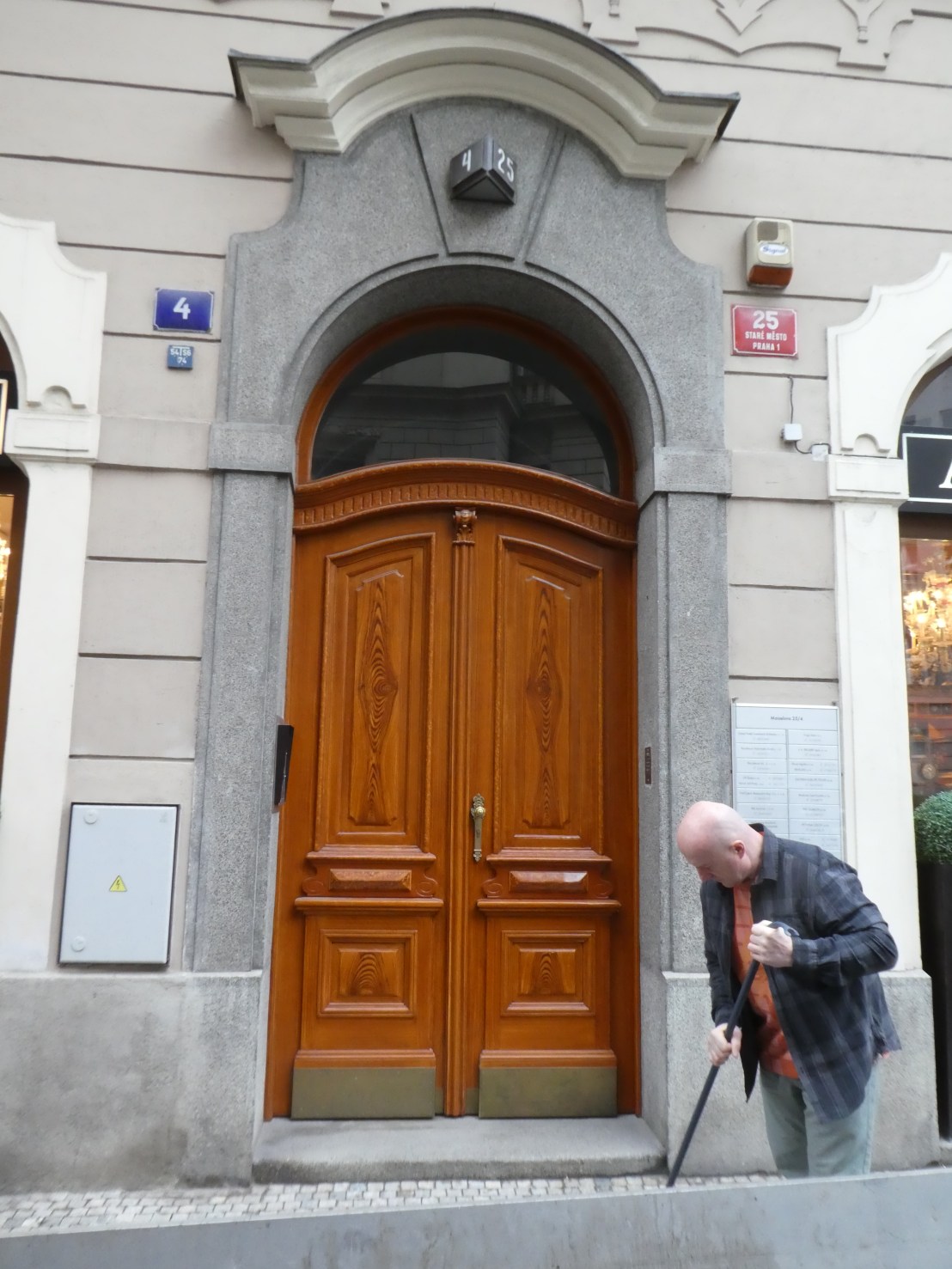
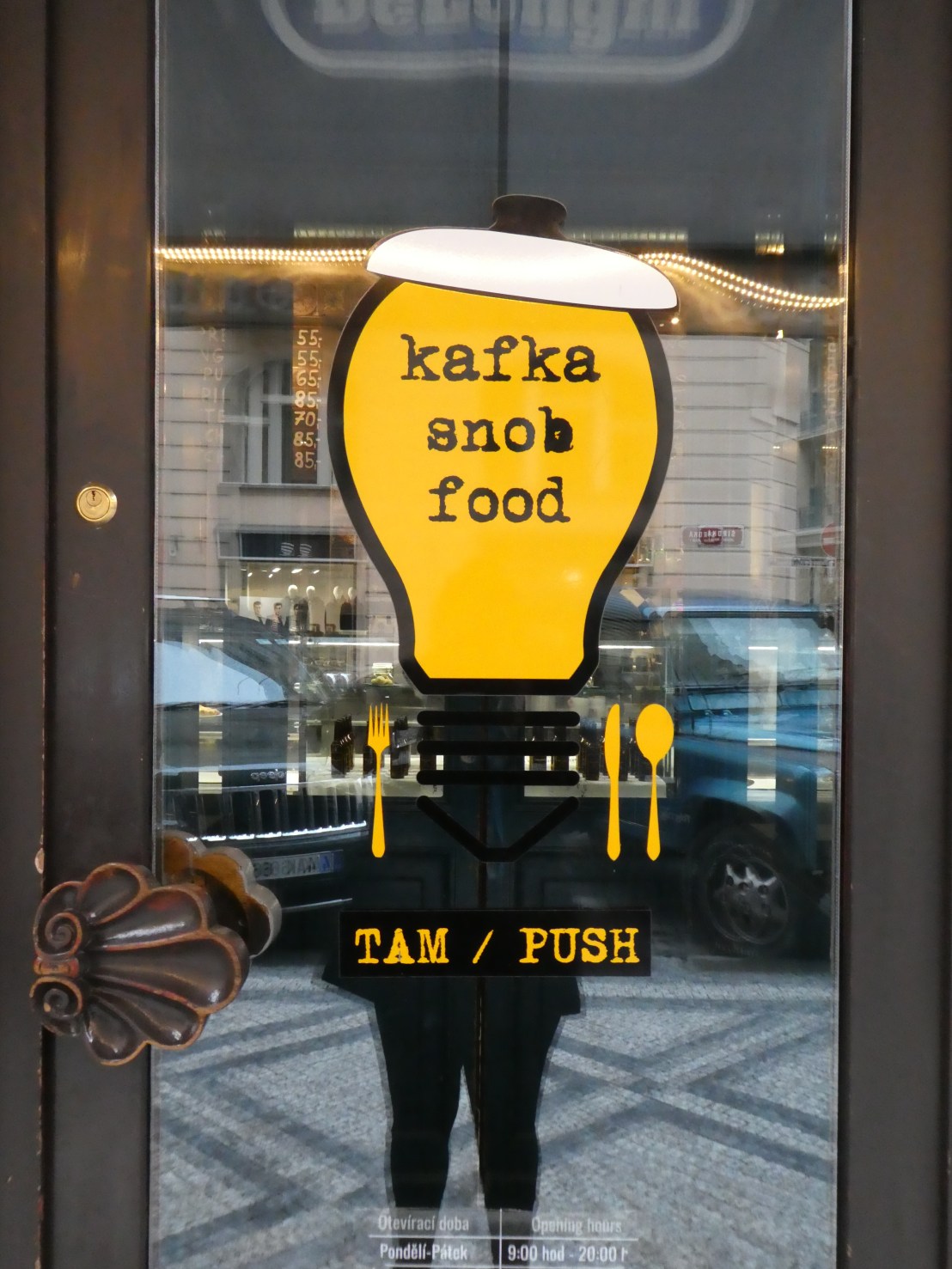
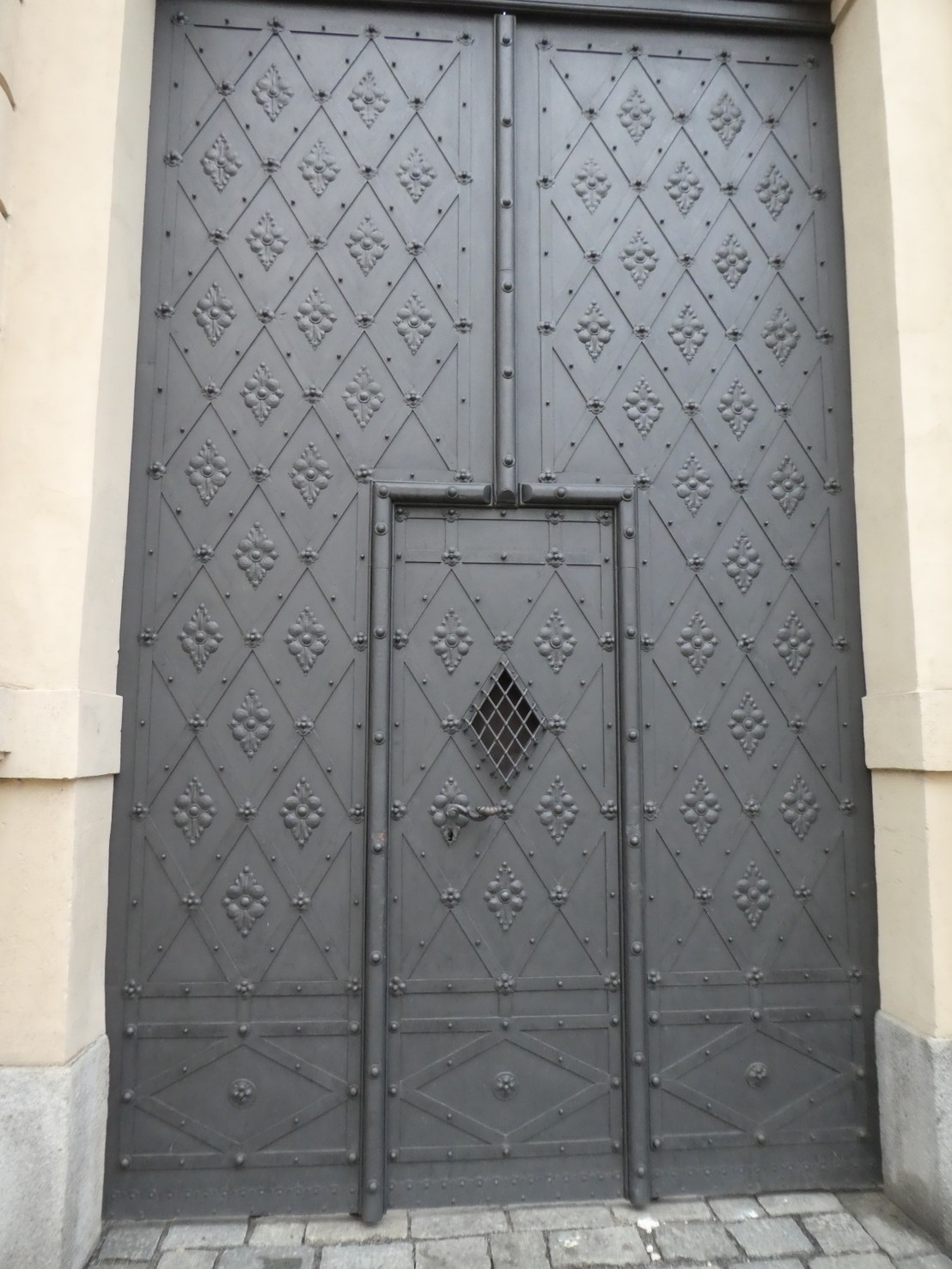
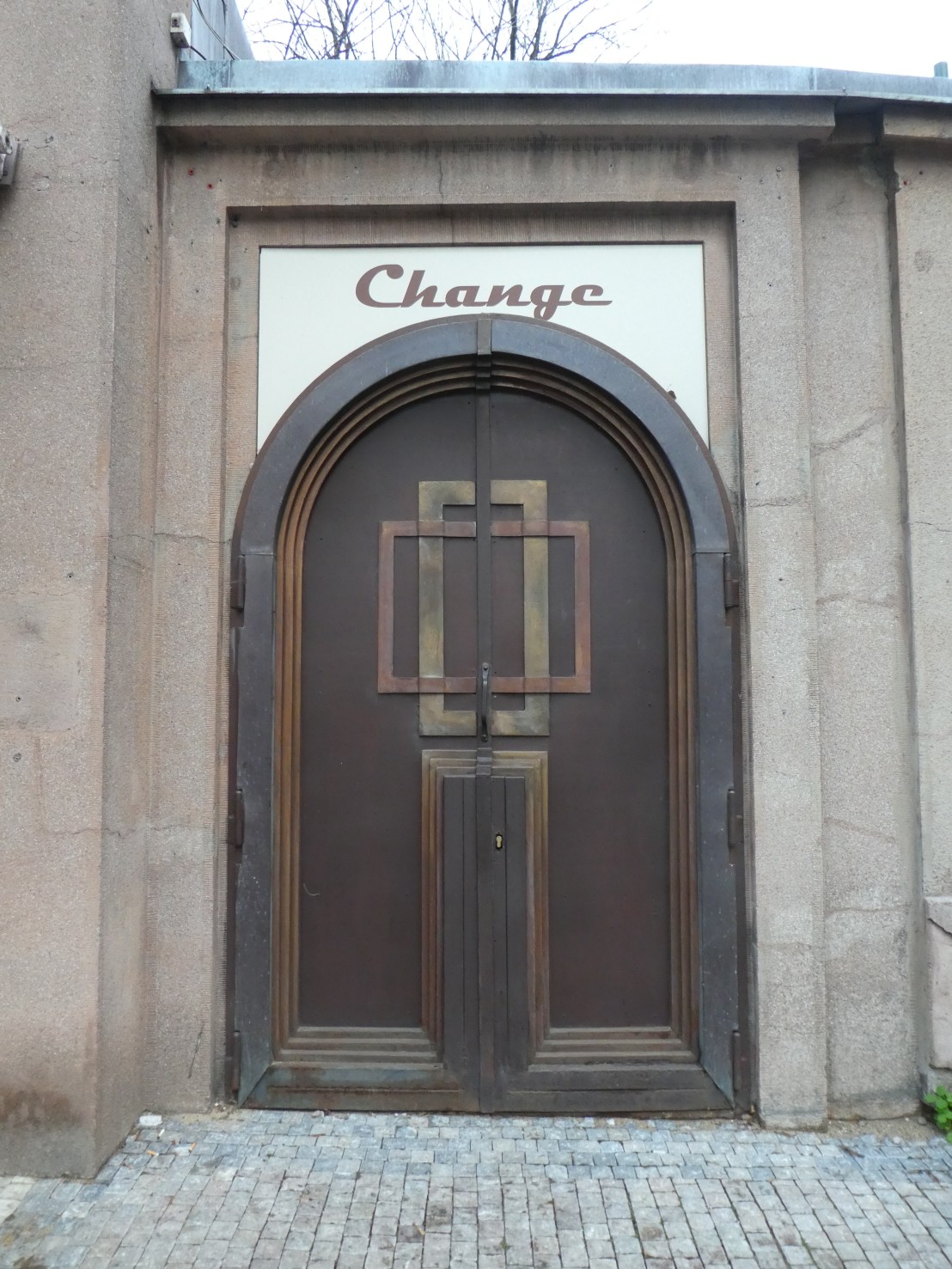
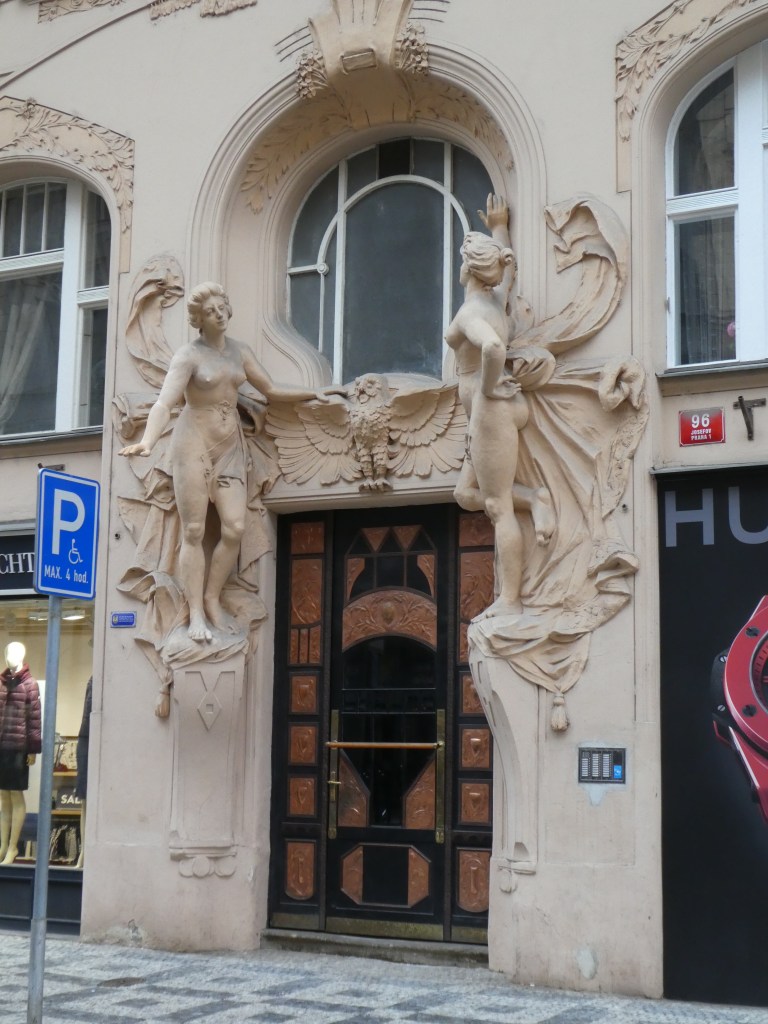
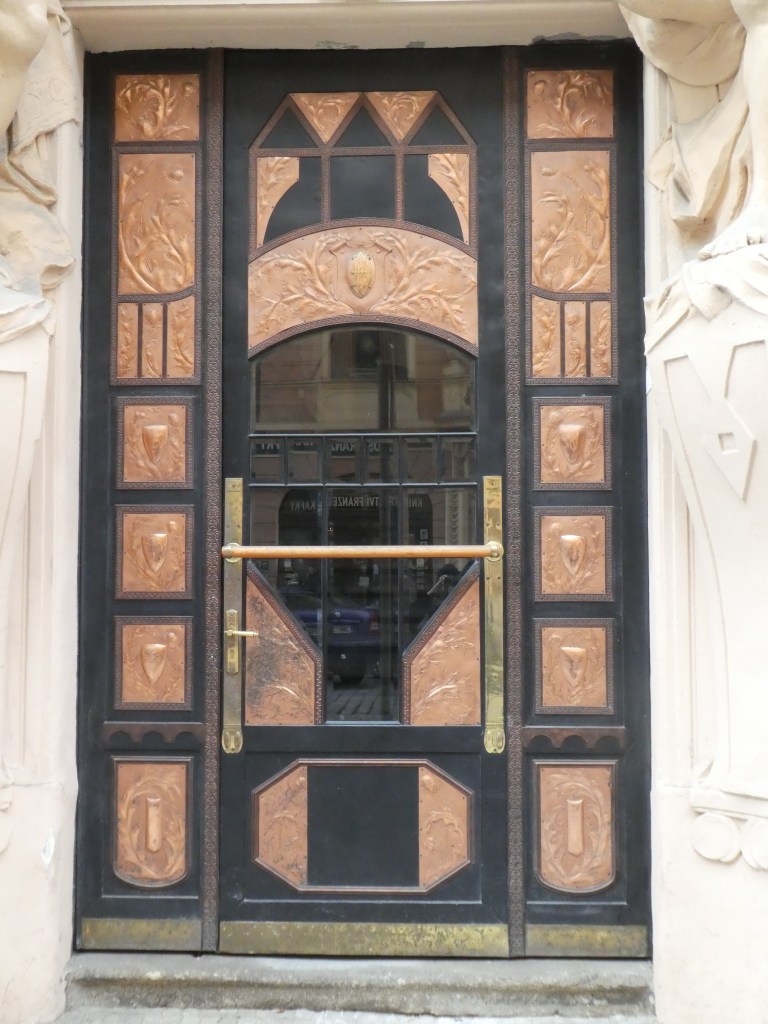
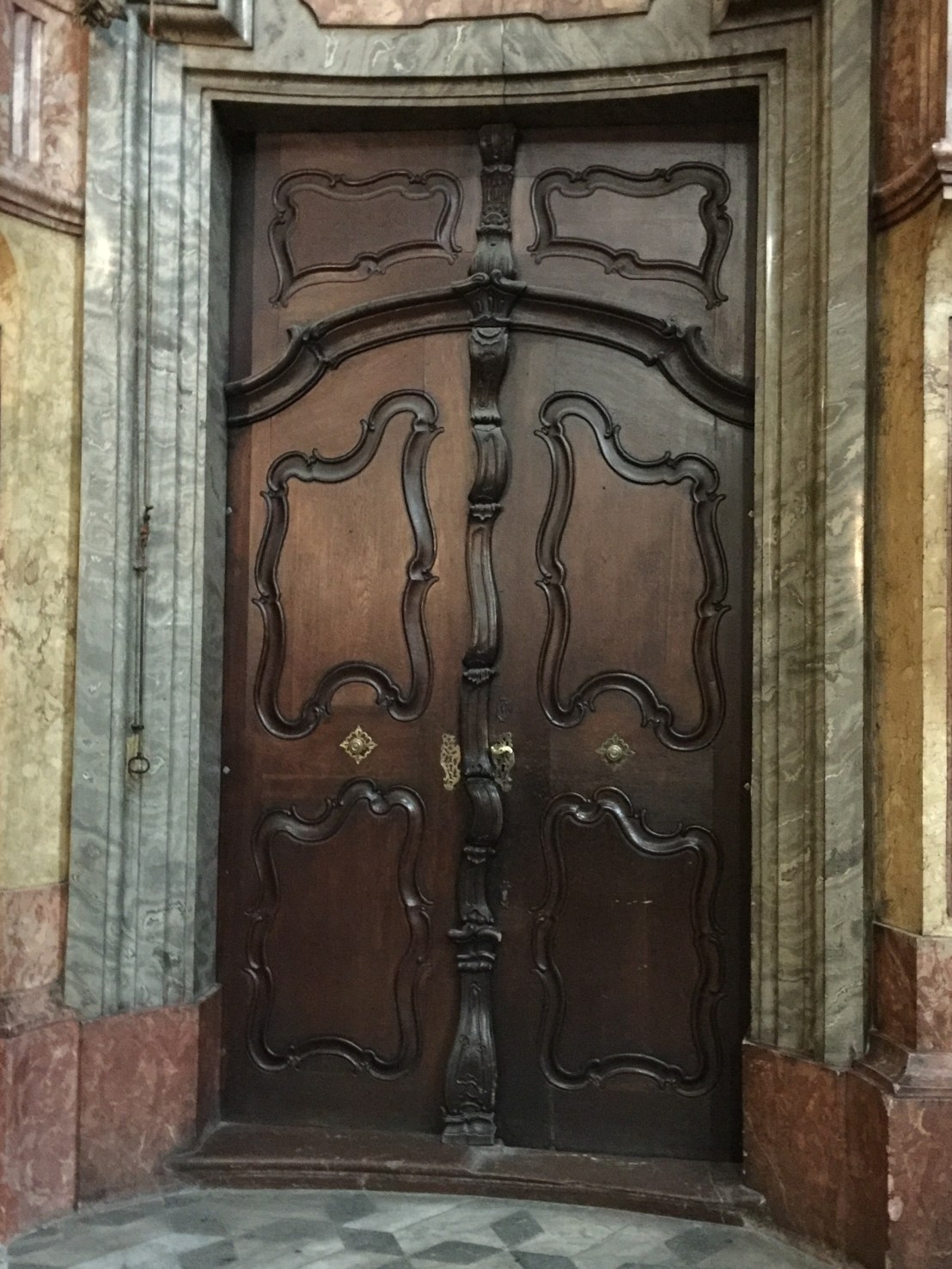
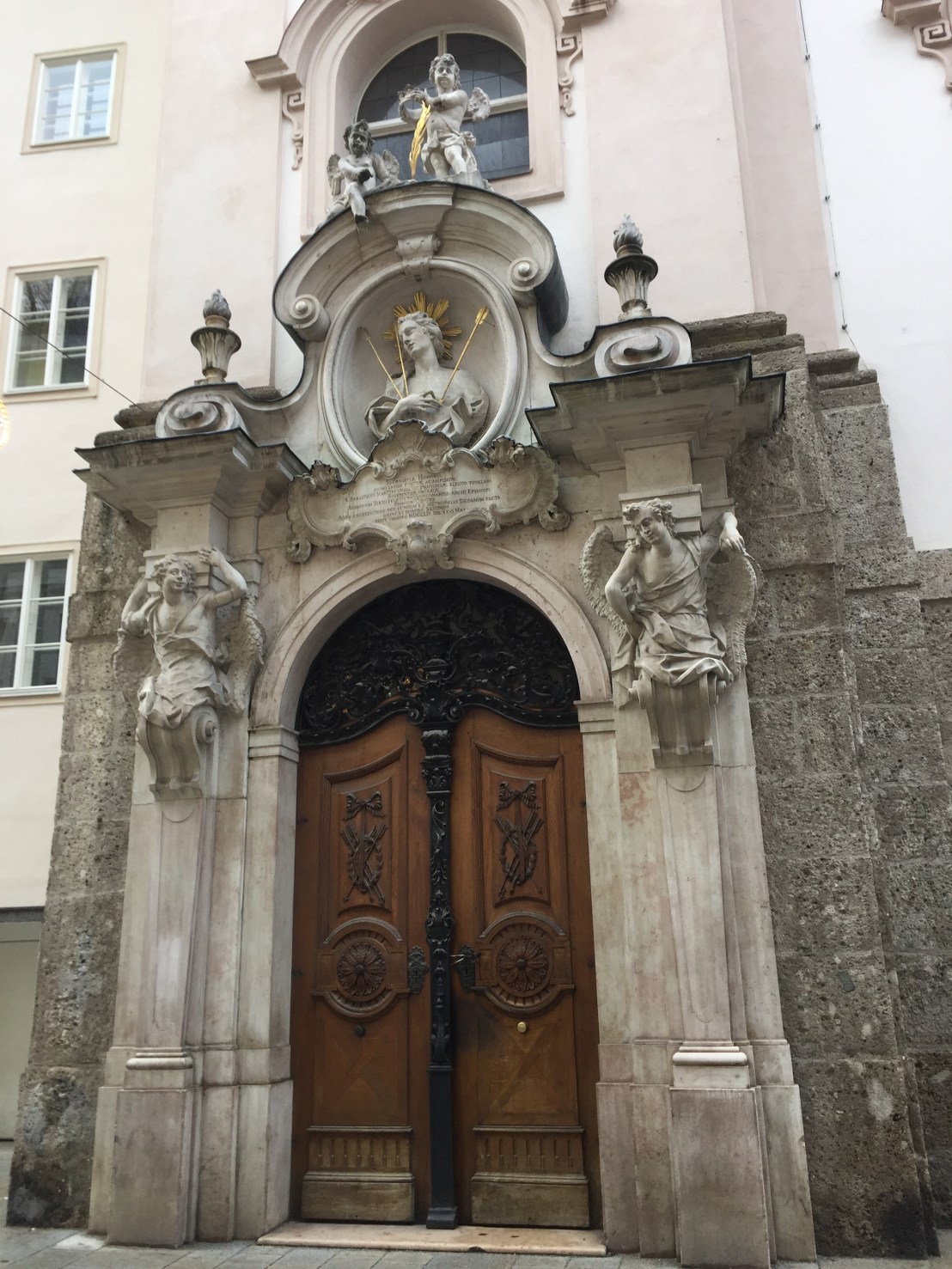
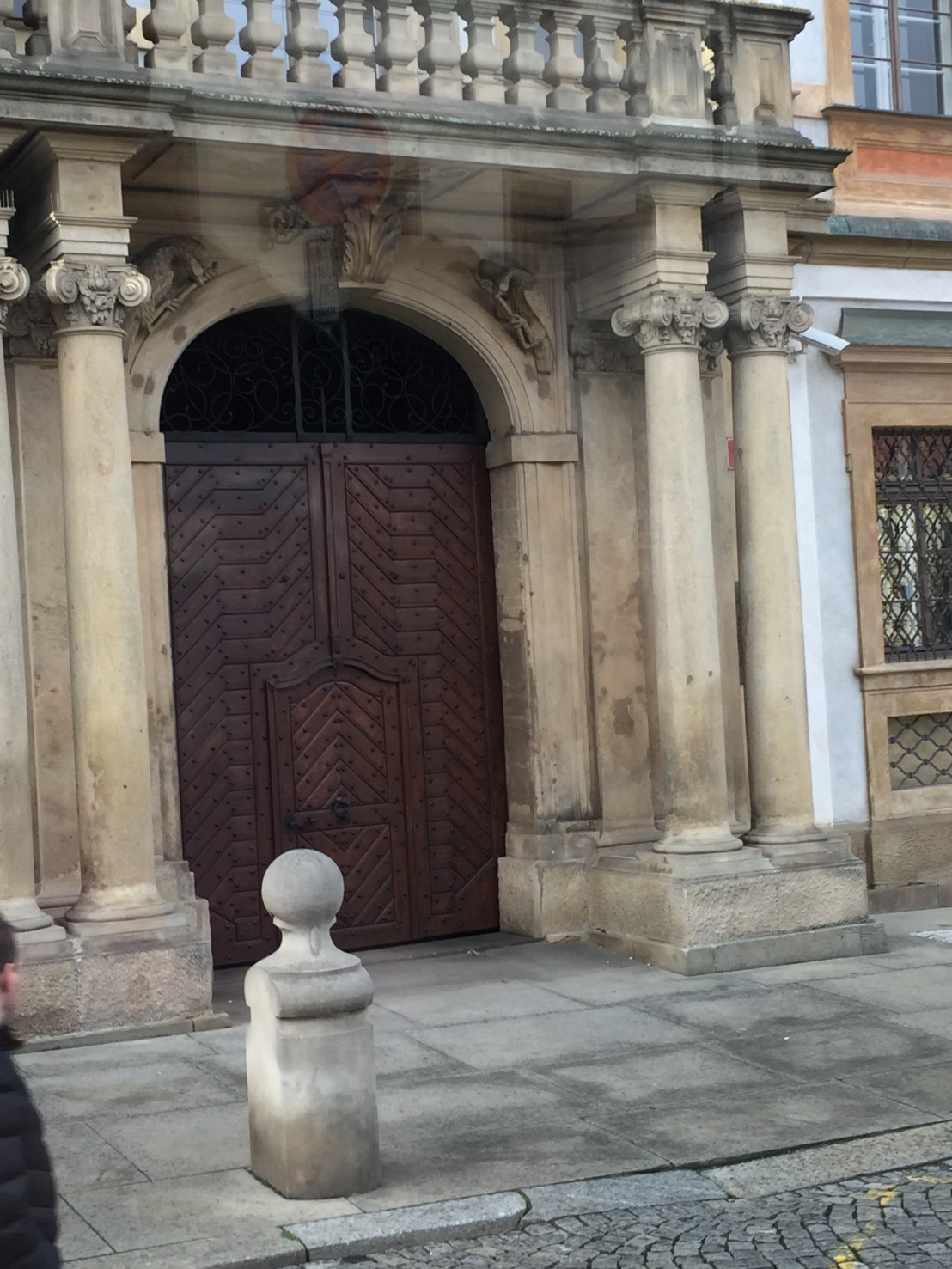
As you would expect, there are lots and lots of beautiful doors in Prague. Sometimes we got so busy admiring them that we forgot to take a picture. So that having been said, here are just a few of the fabulous doors we noticed in Prague.

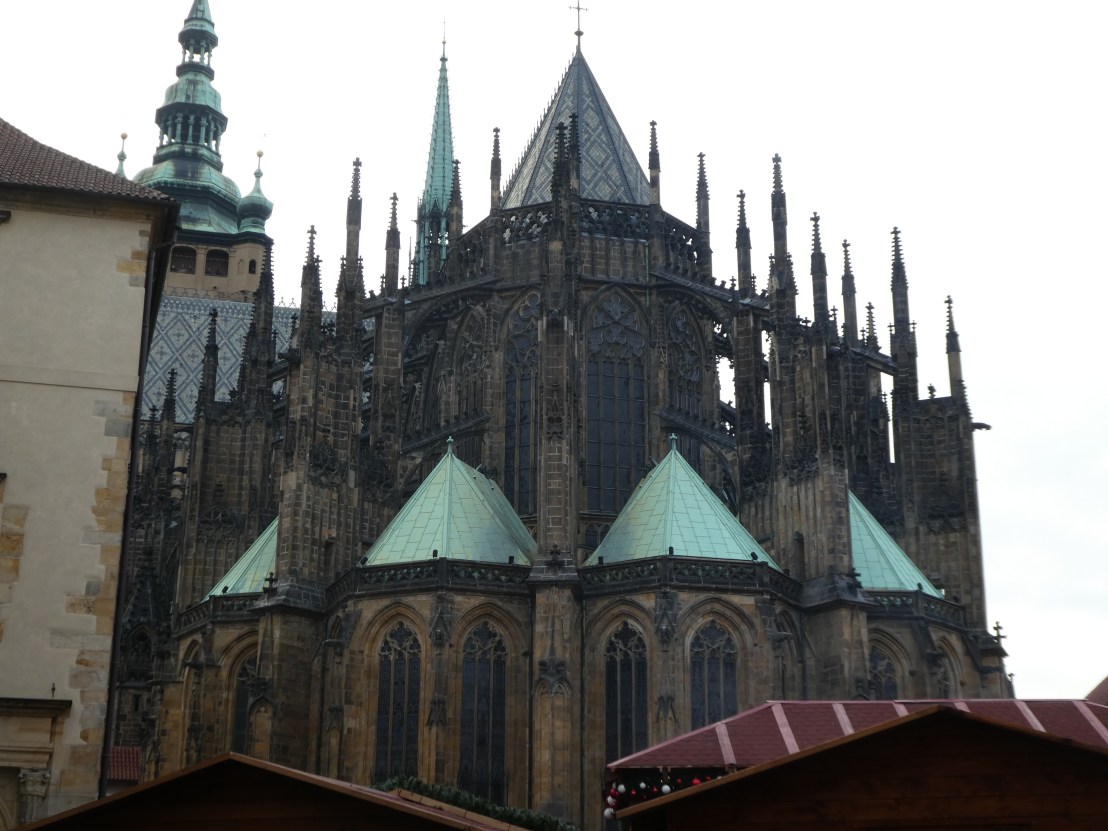
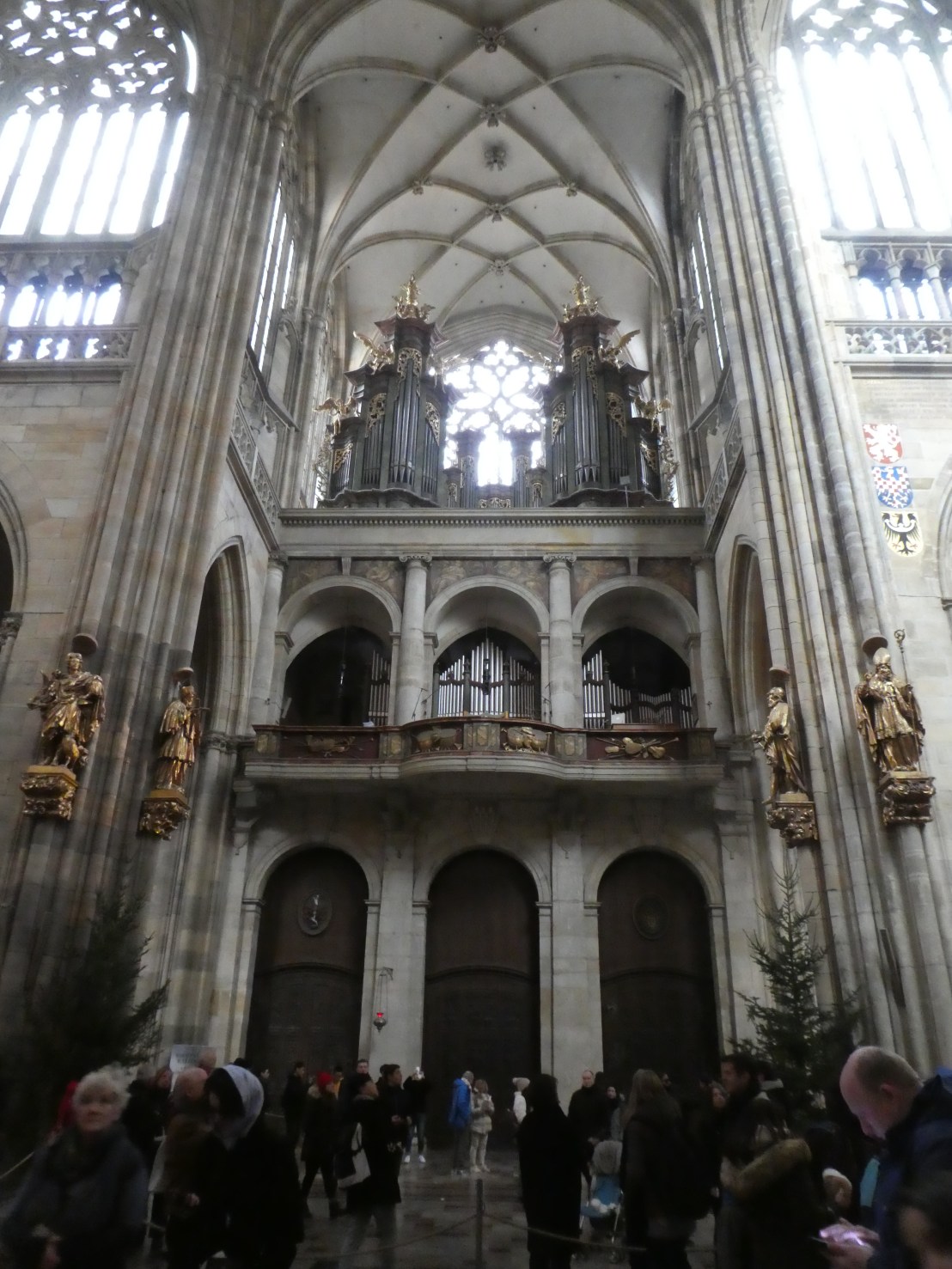
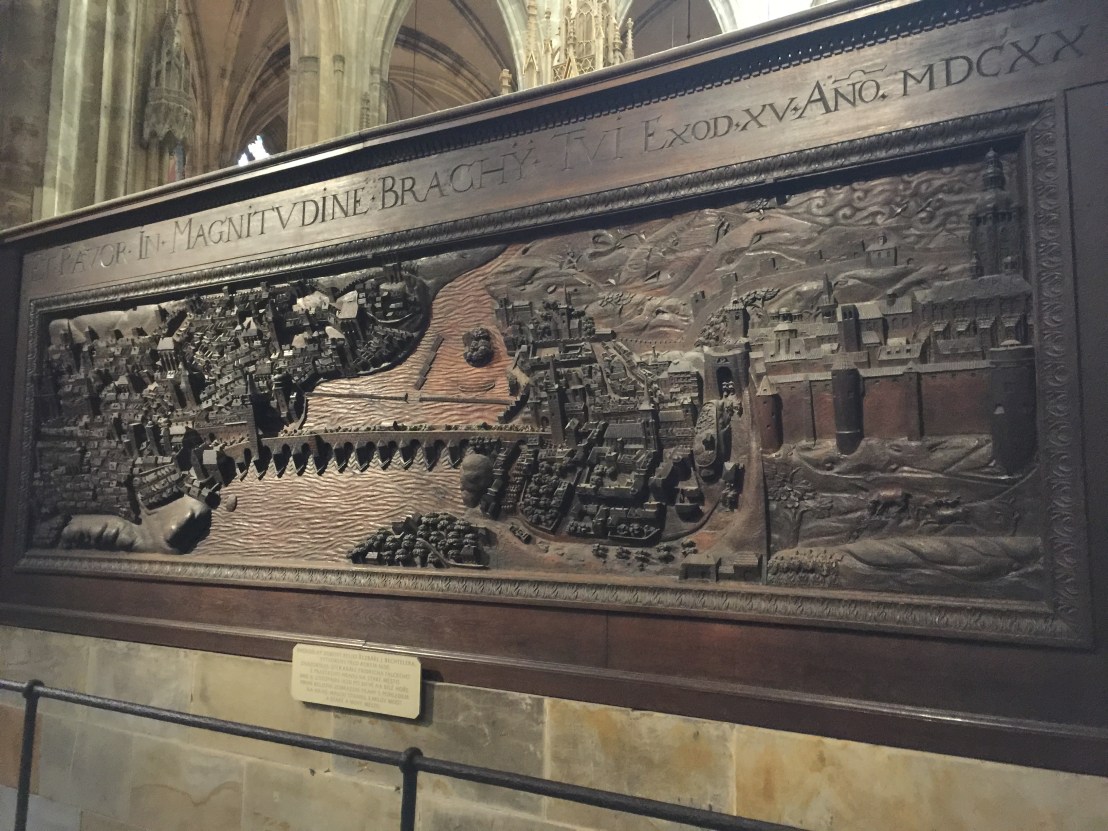
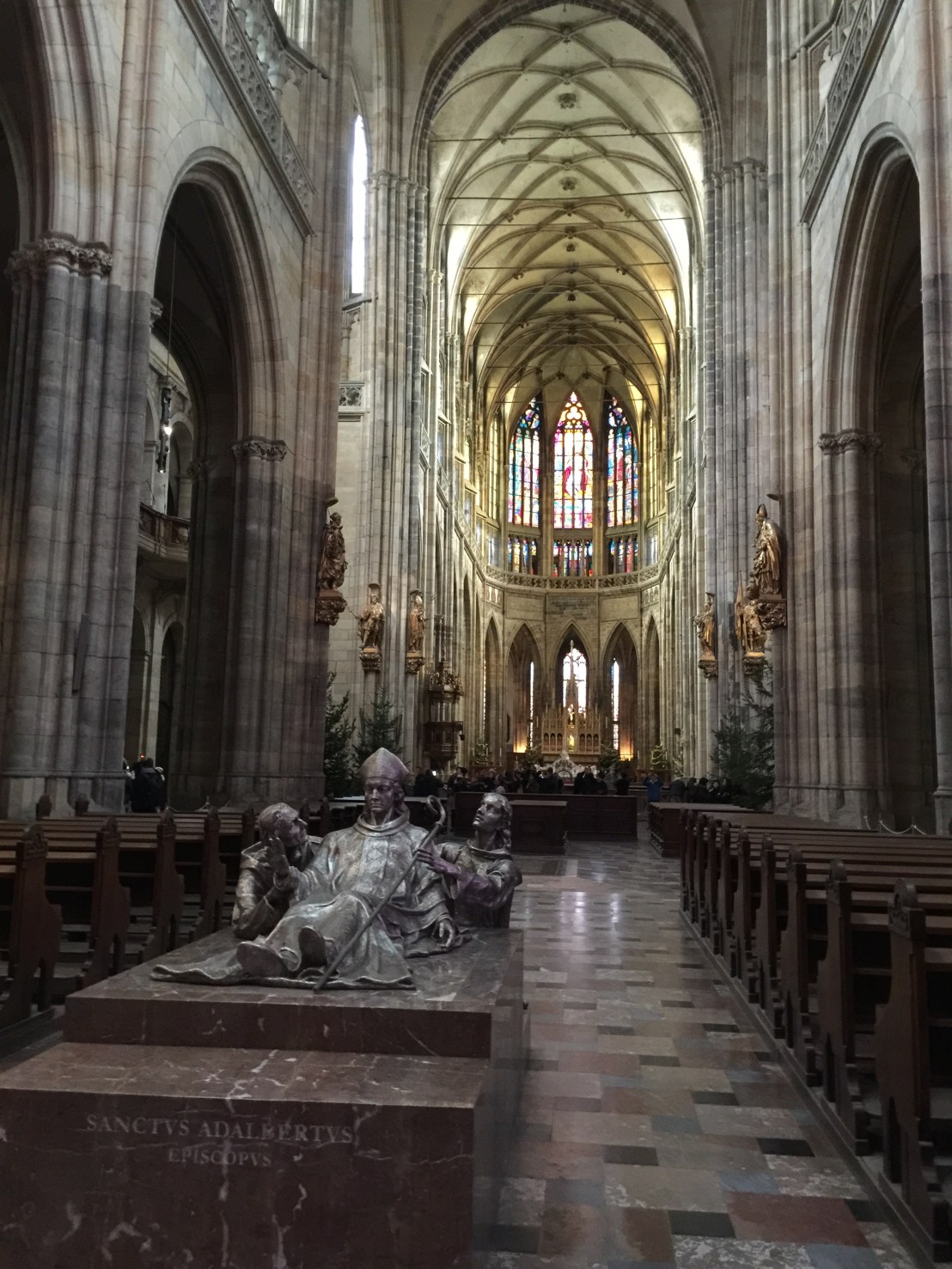
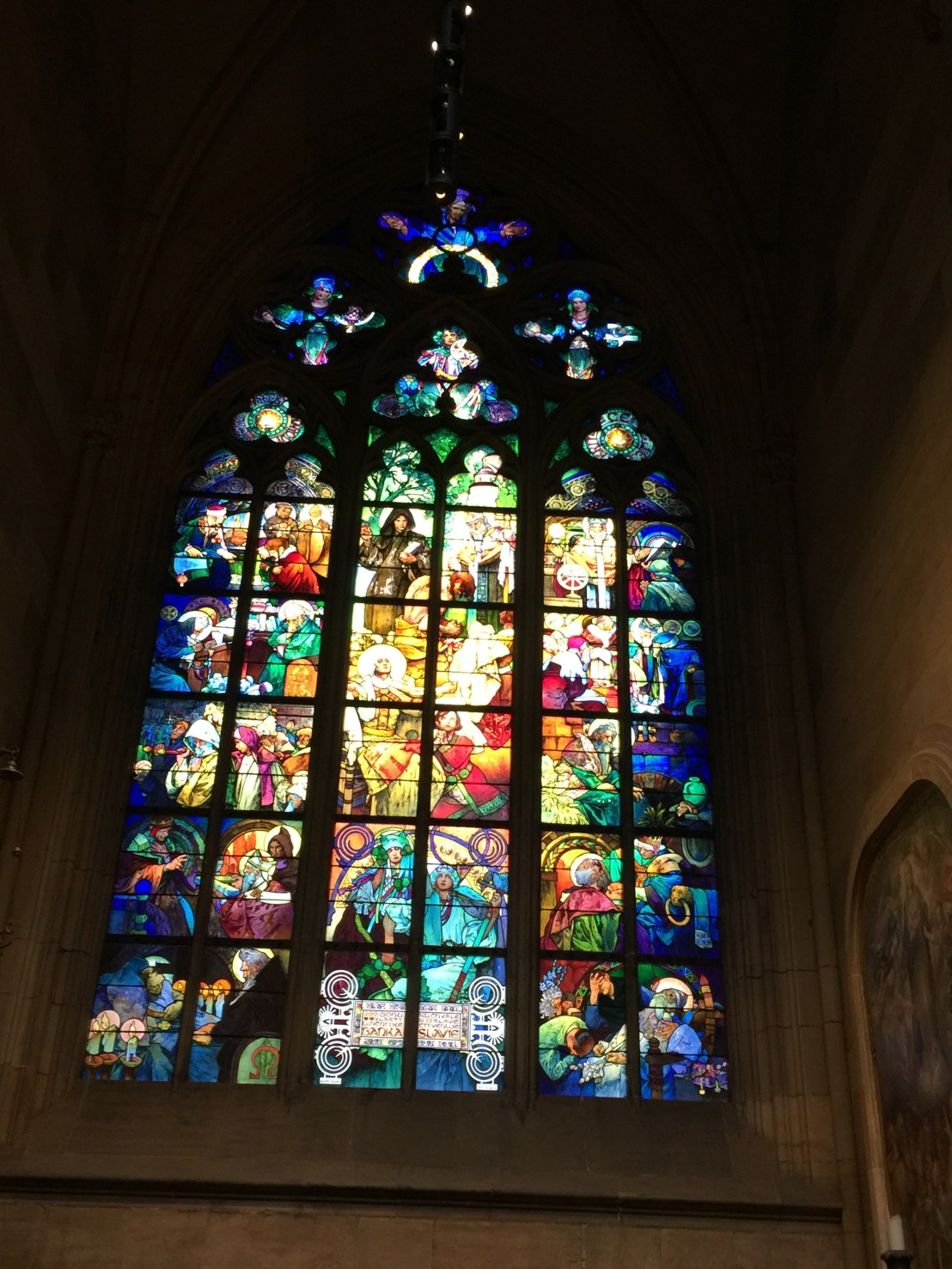
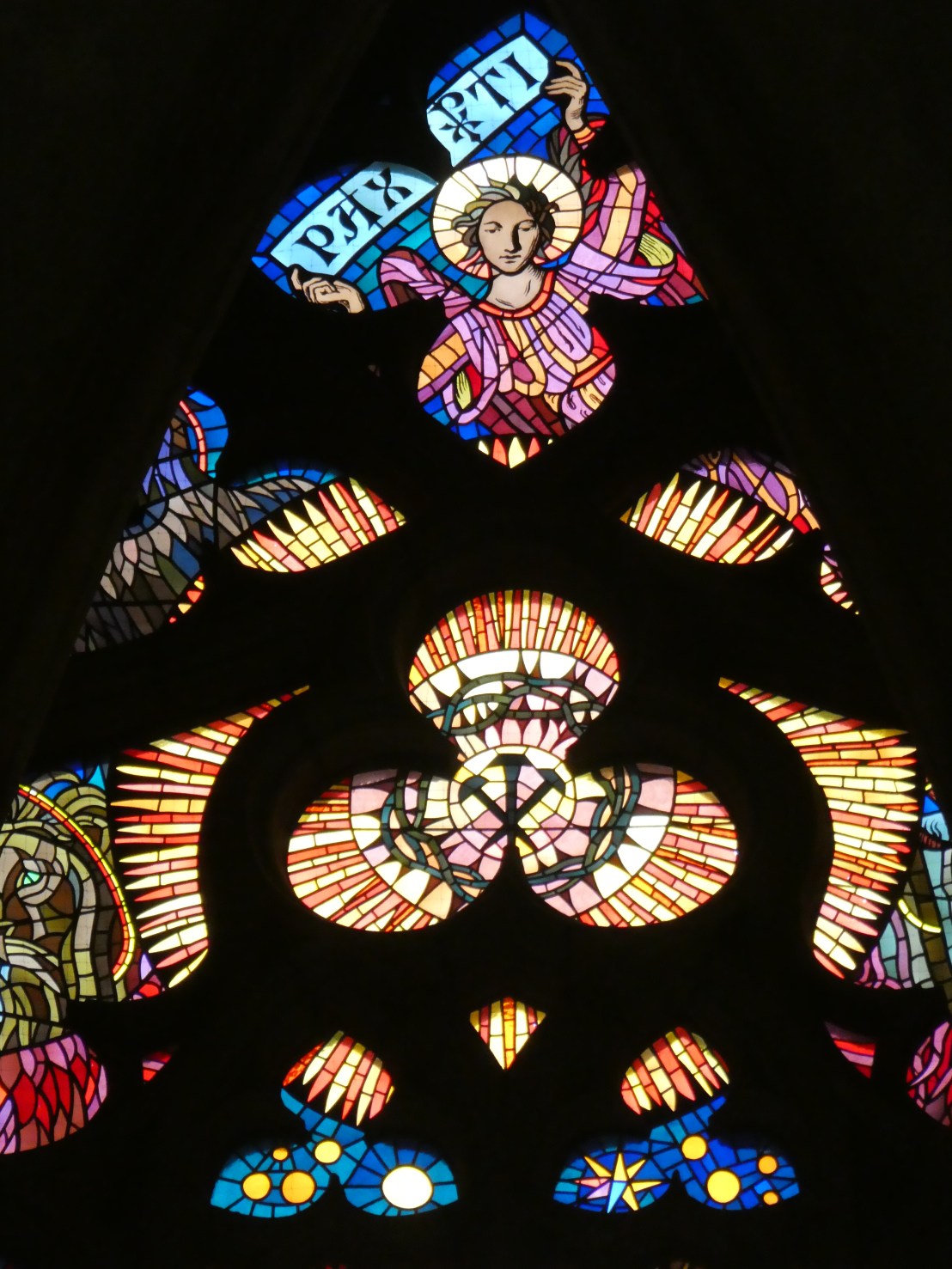
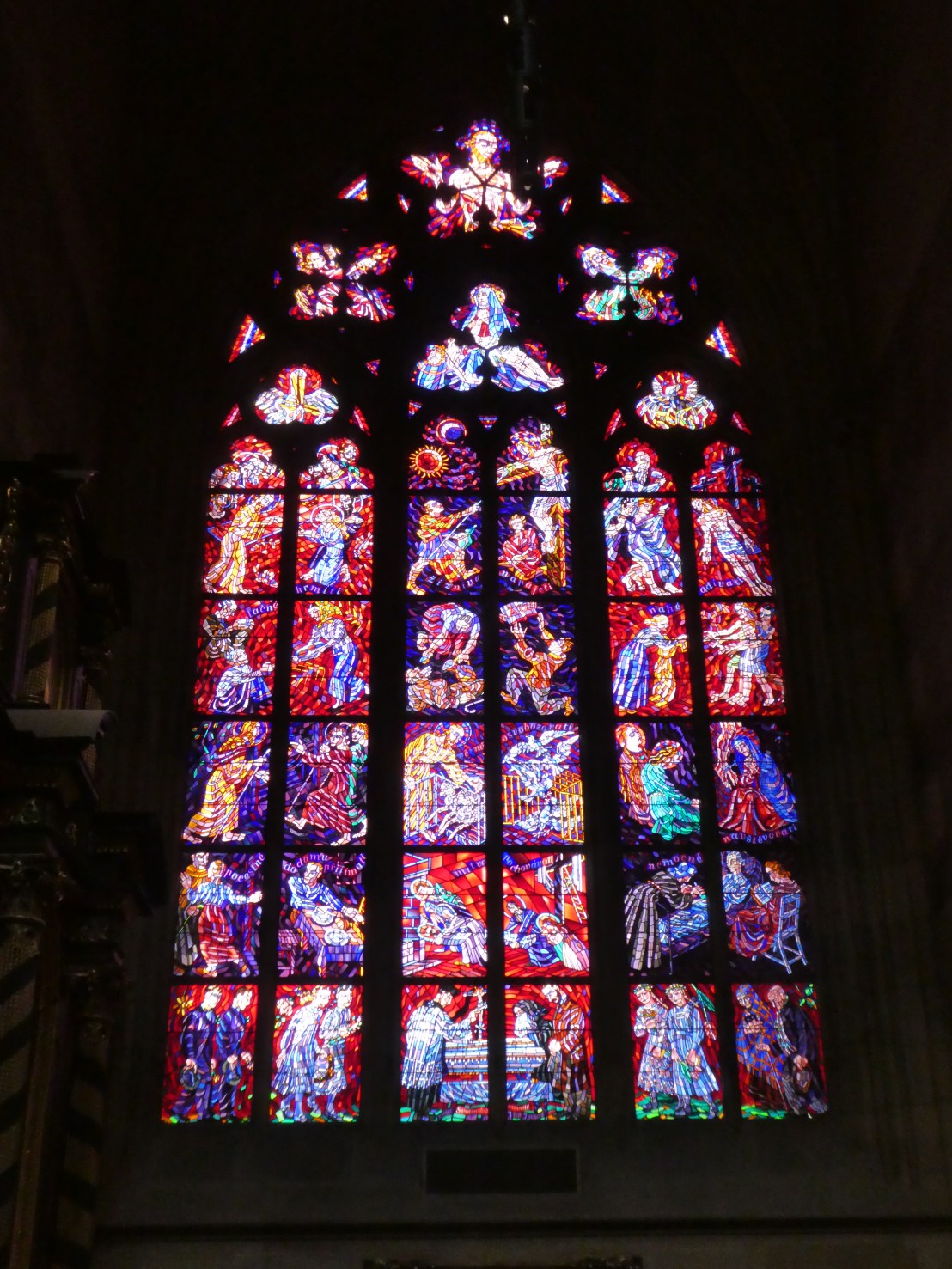
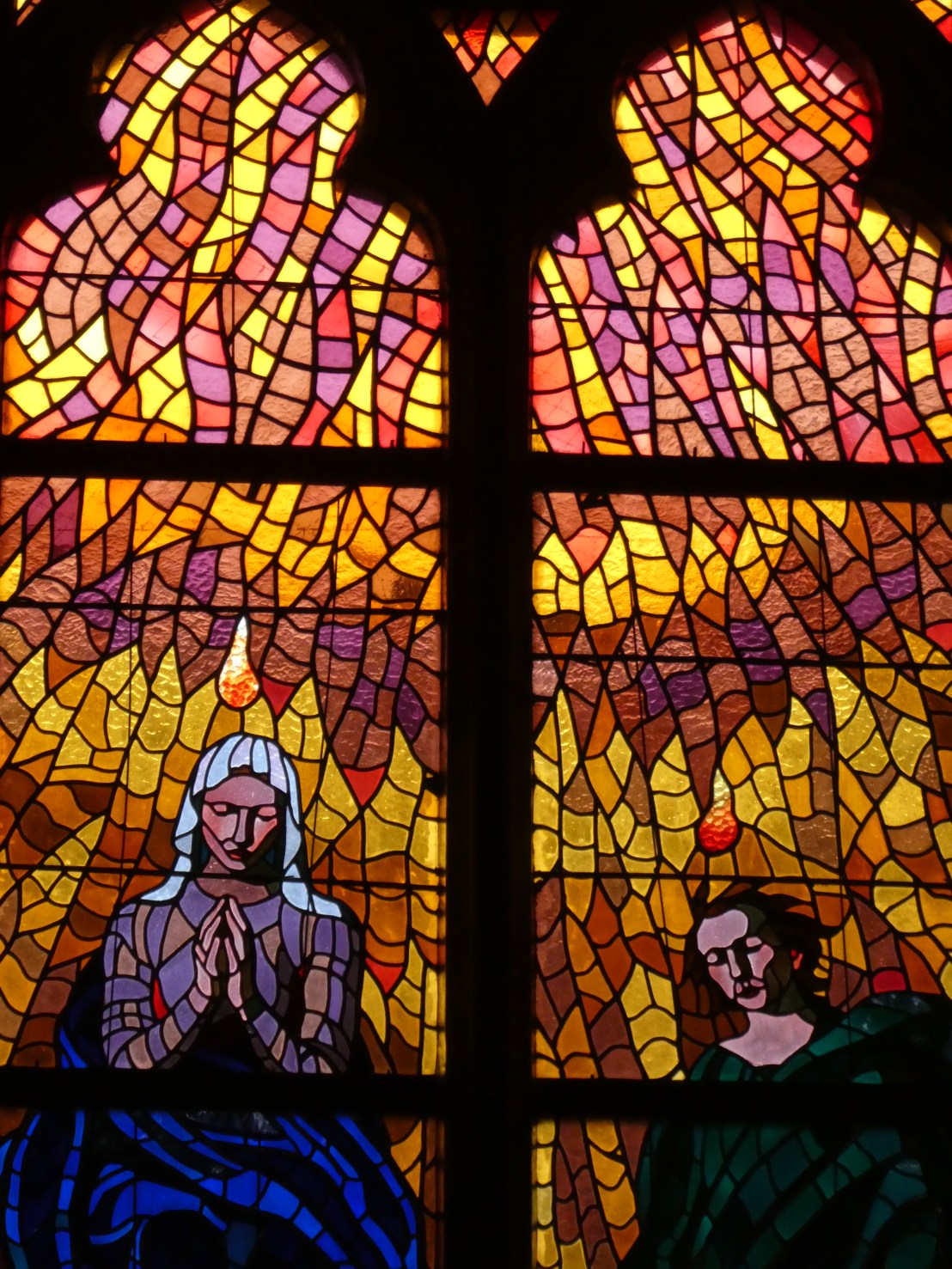
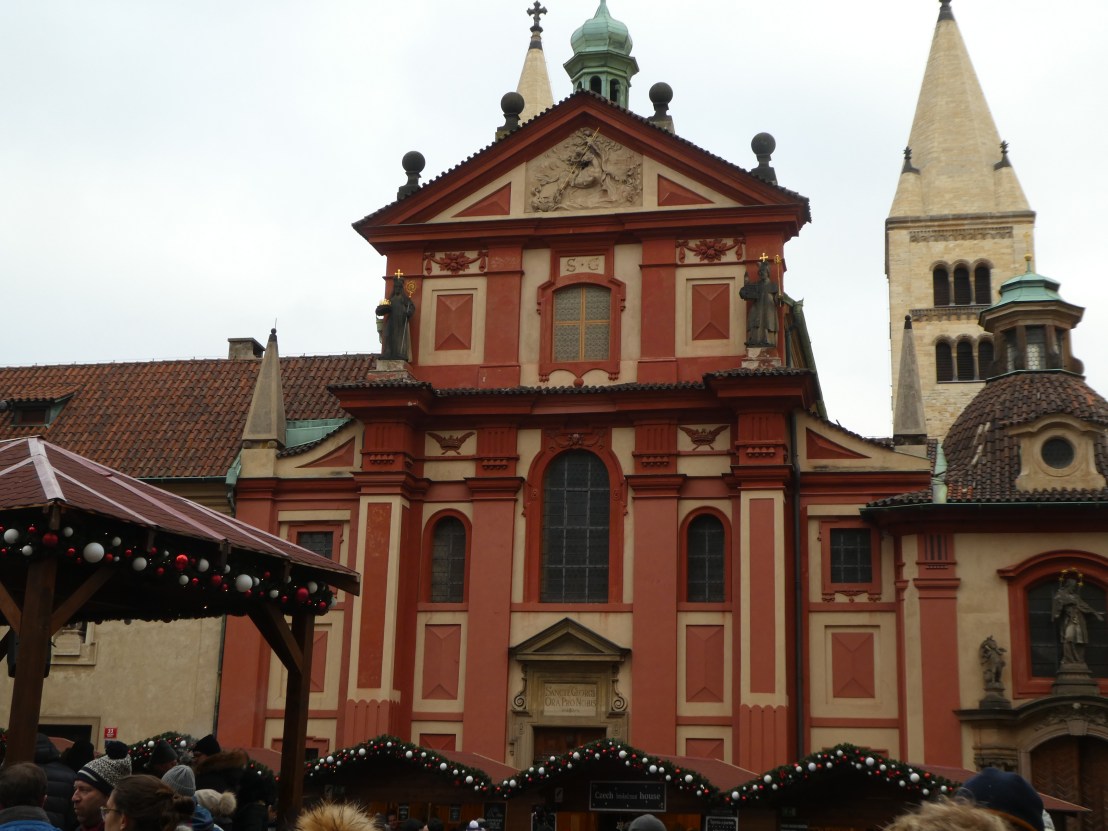
In the center of the Prague Castle is St. Vitus Cathedral, the Czech national church. A church has stood on this spot since 930. The construction for this iteration began in 1344 and the front half was finally finished in 1929, which explains why some of the stained glass windows have a modern design.
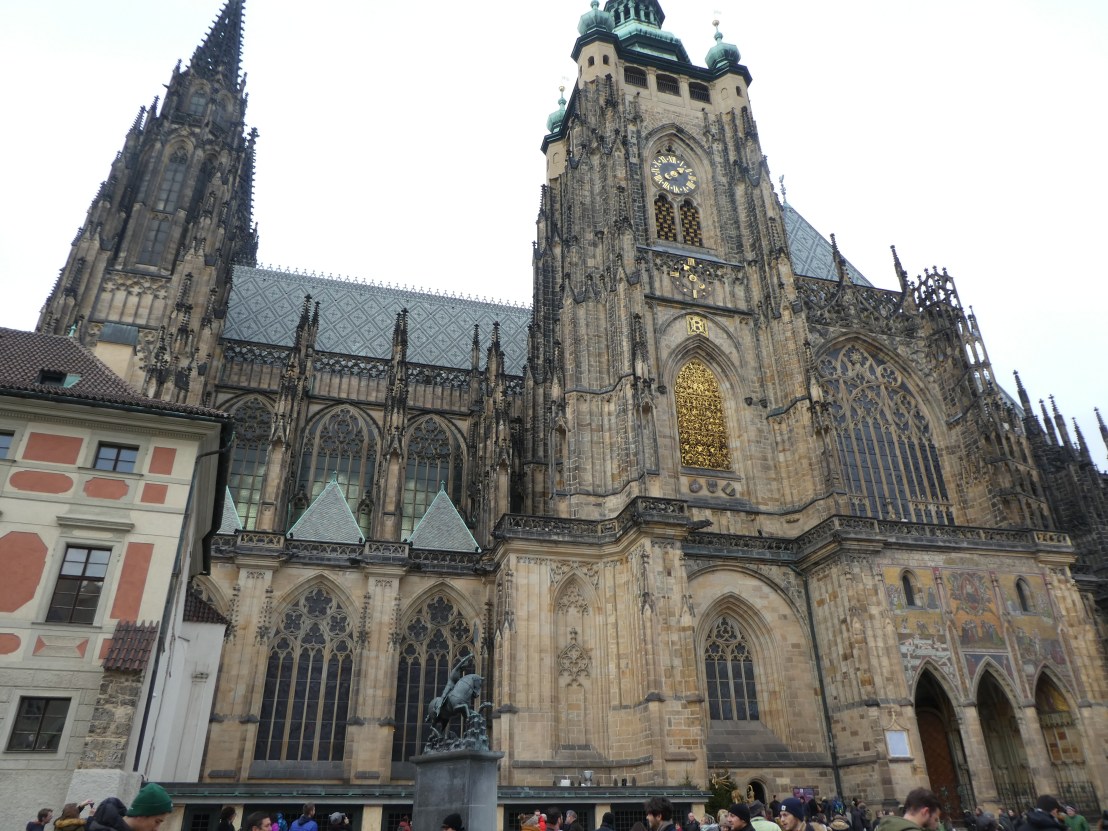

And then there are the stained glass windows. Oh my! The bright colors are so vivid and vibrant. The windows in St. Vitus are unusual in that many of them were made after the cathedral was finished in the early 20th century, which also explains why some of them are more traditional while others are more modern looking. According to our tour guide, when the cathedral was finished they had no funds left to pay for stained glass windows, so the windows were paid for by local businesses thus explaining the white sponsor identification labels in the lower panes of the windows.


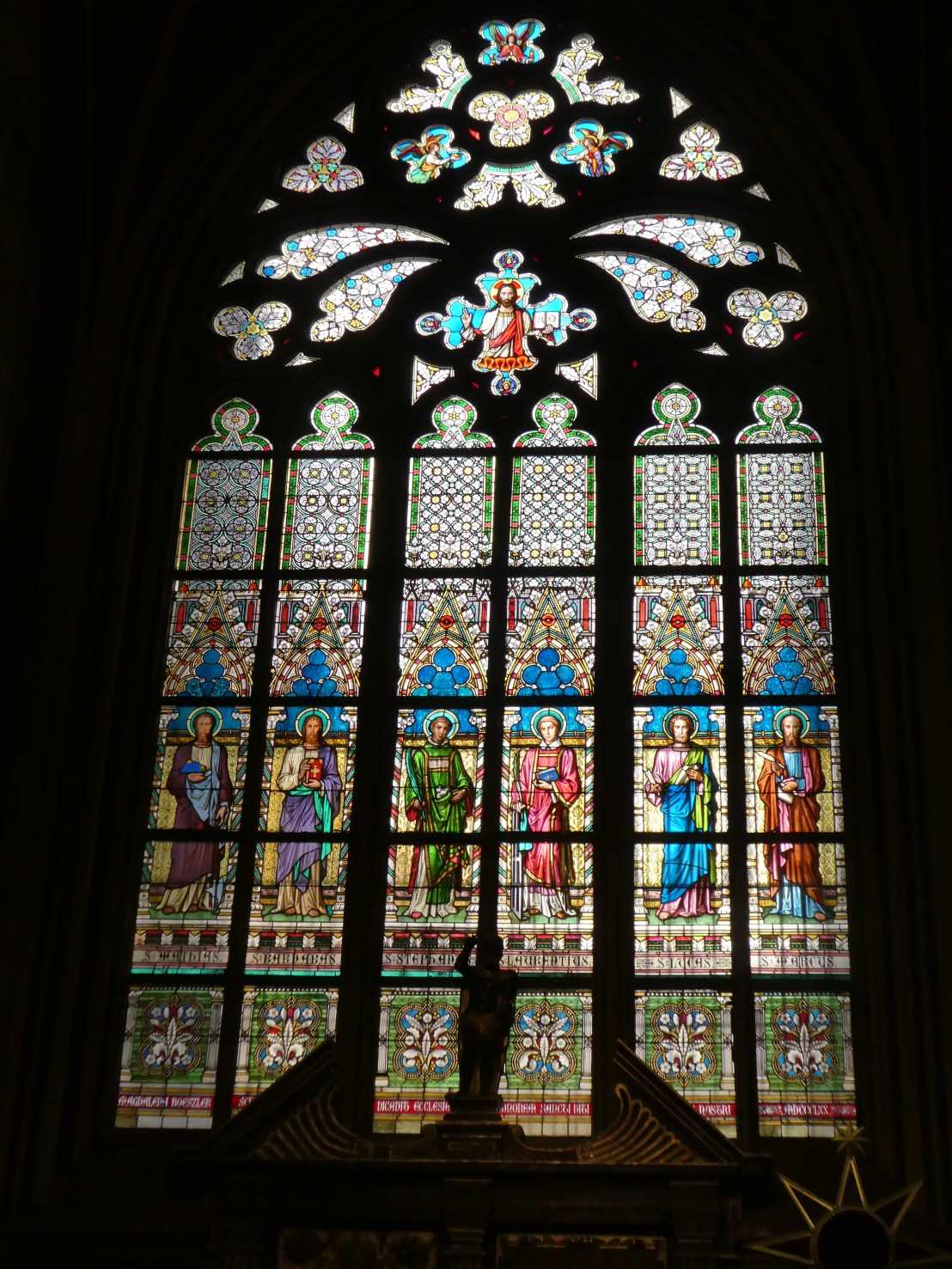
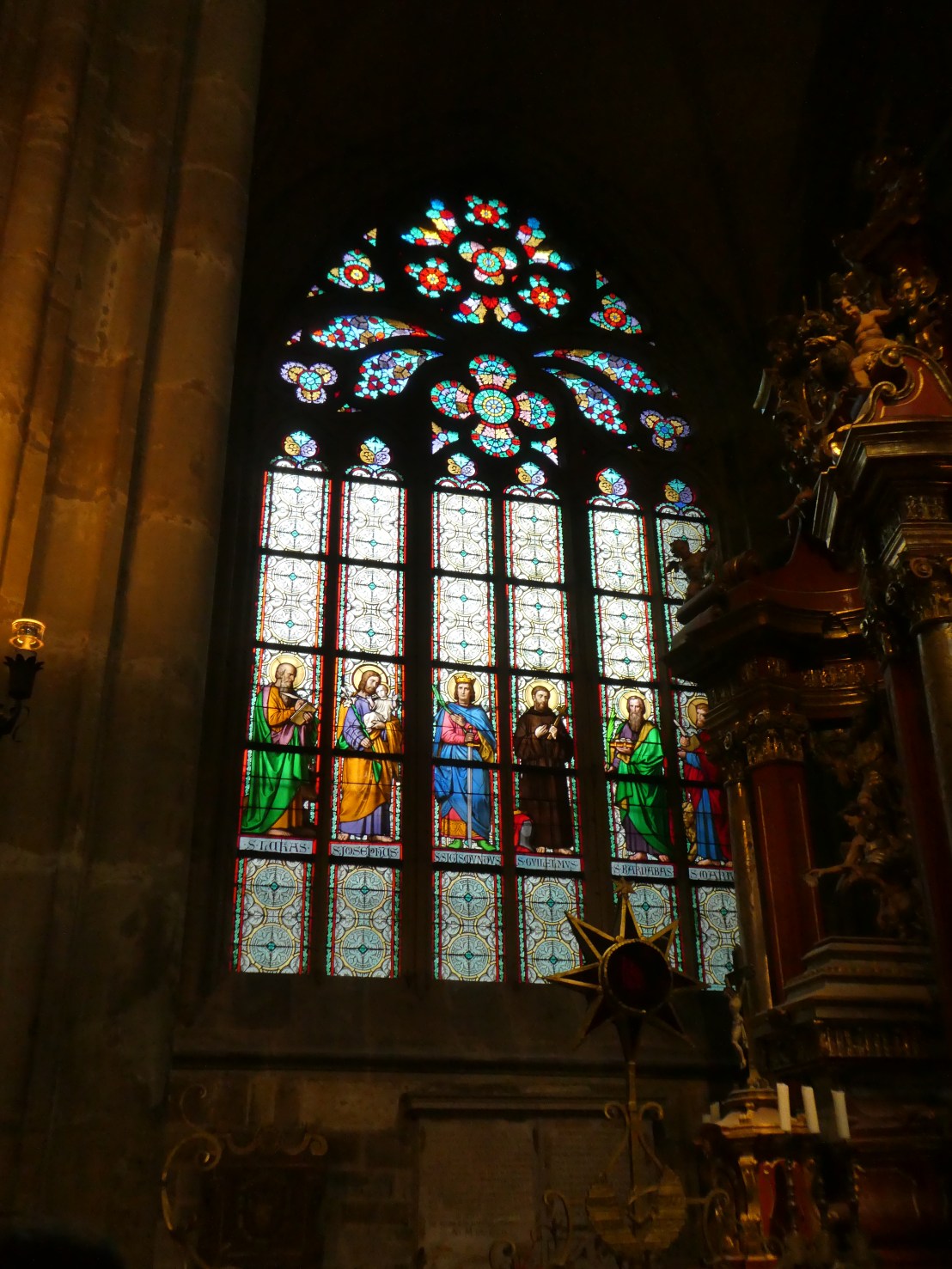
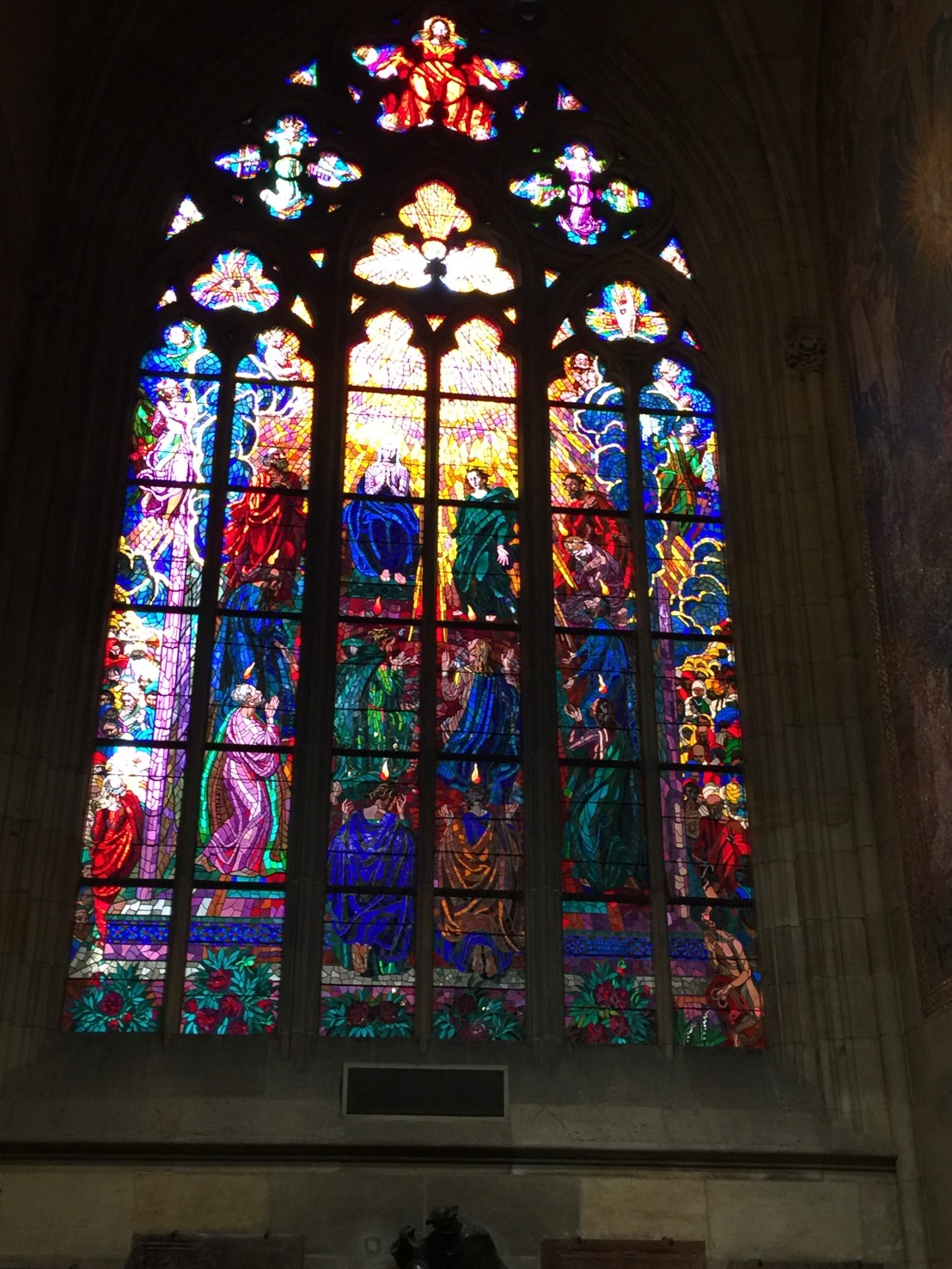
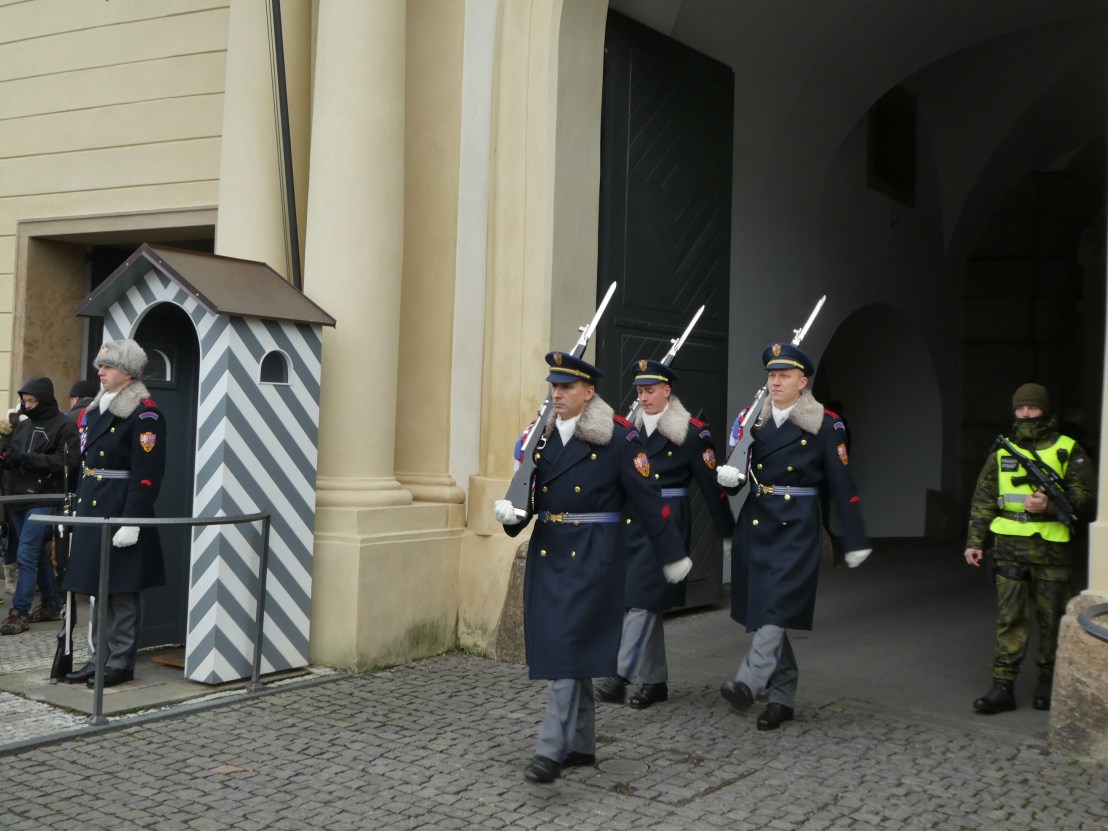
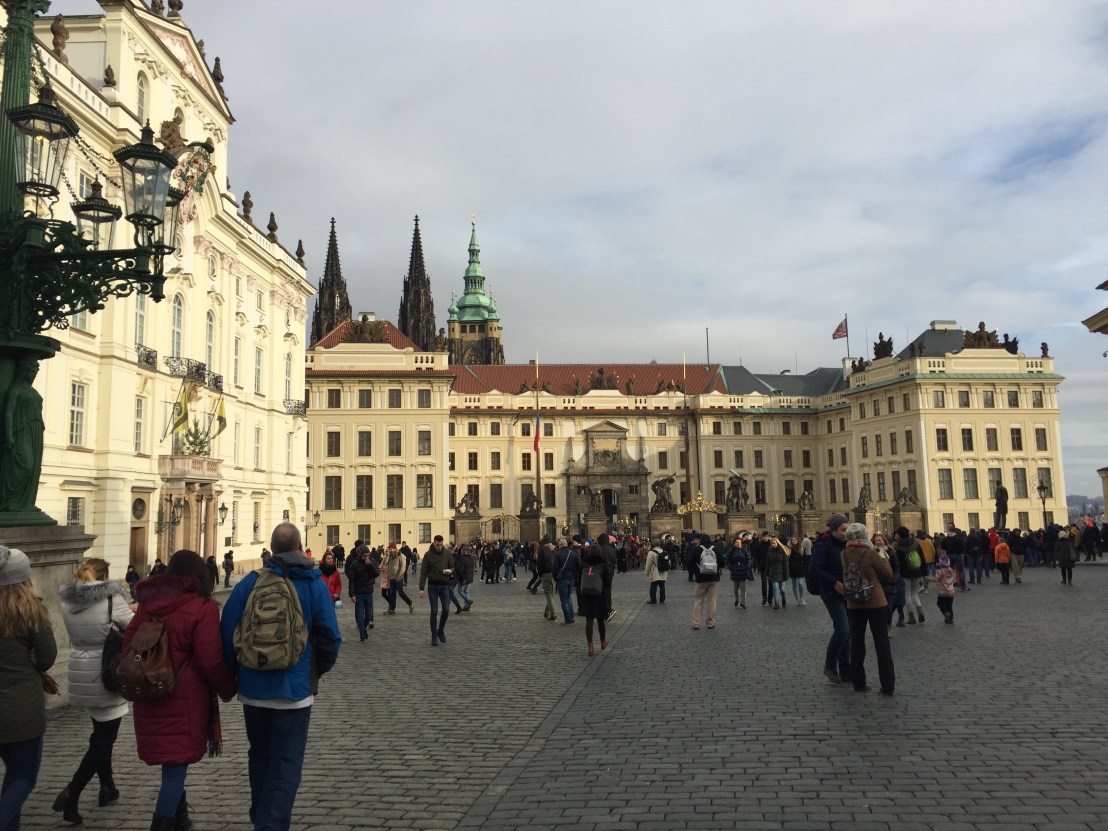
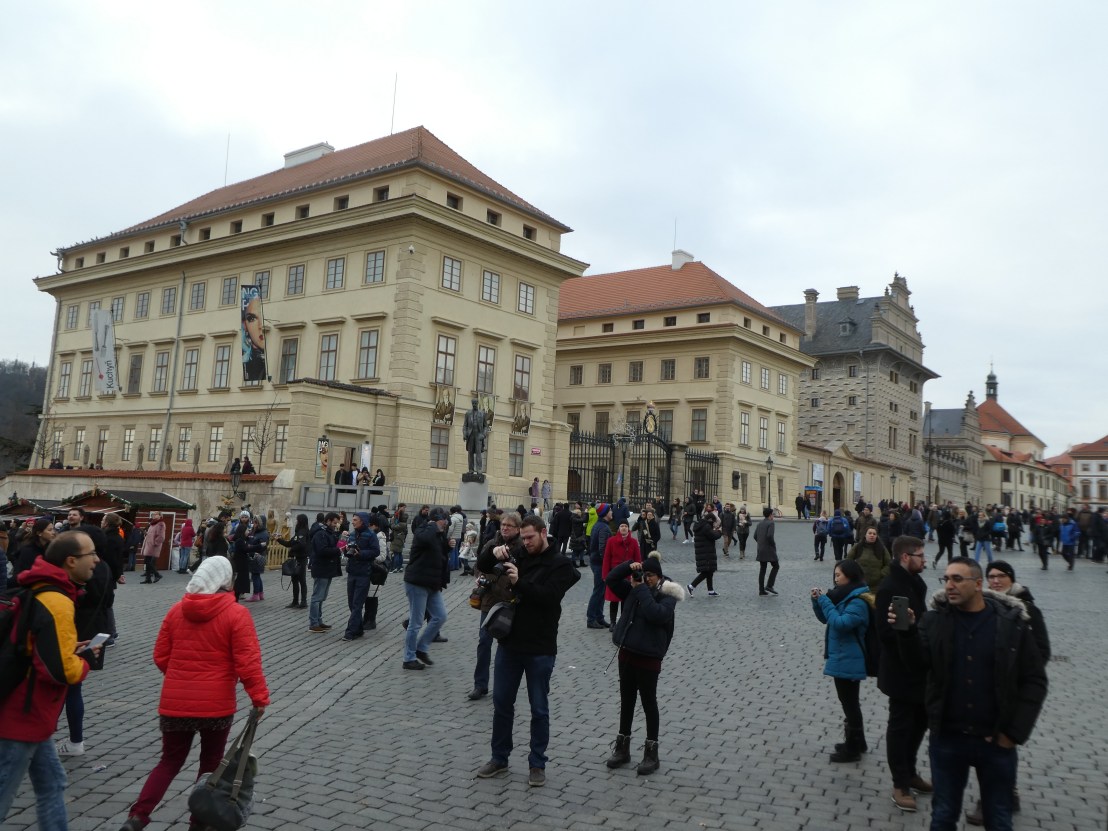
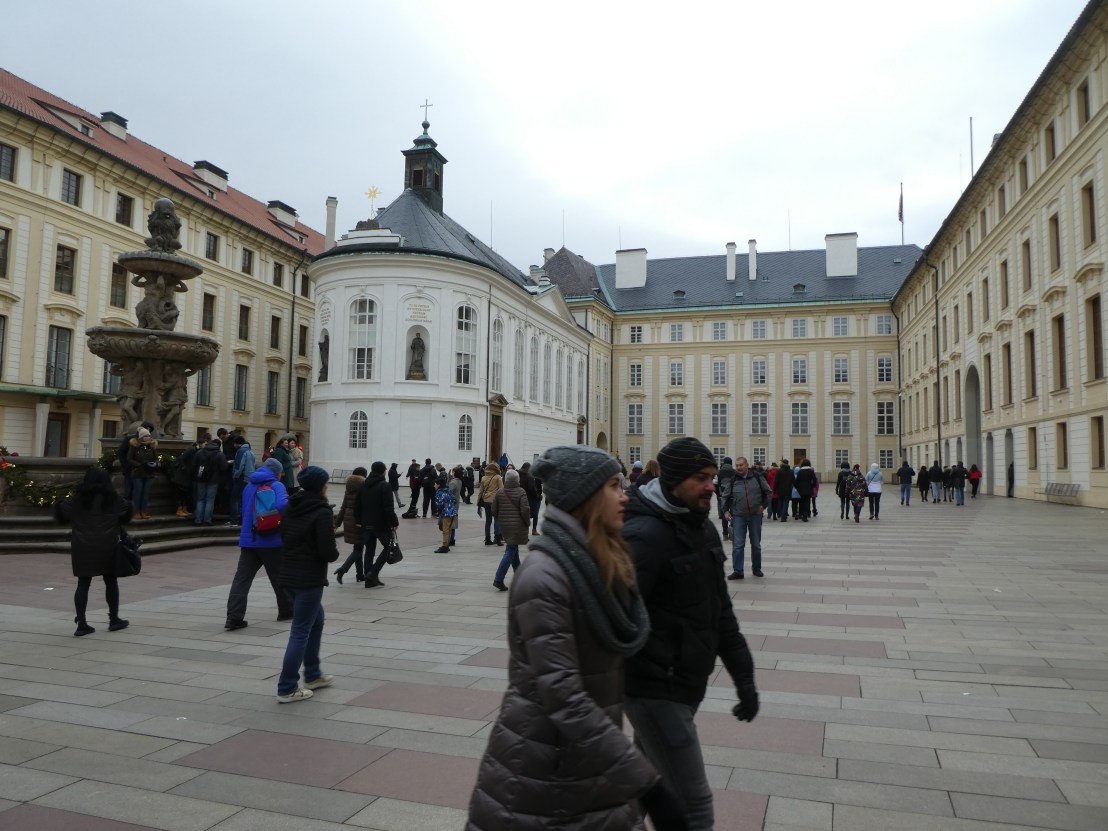
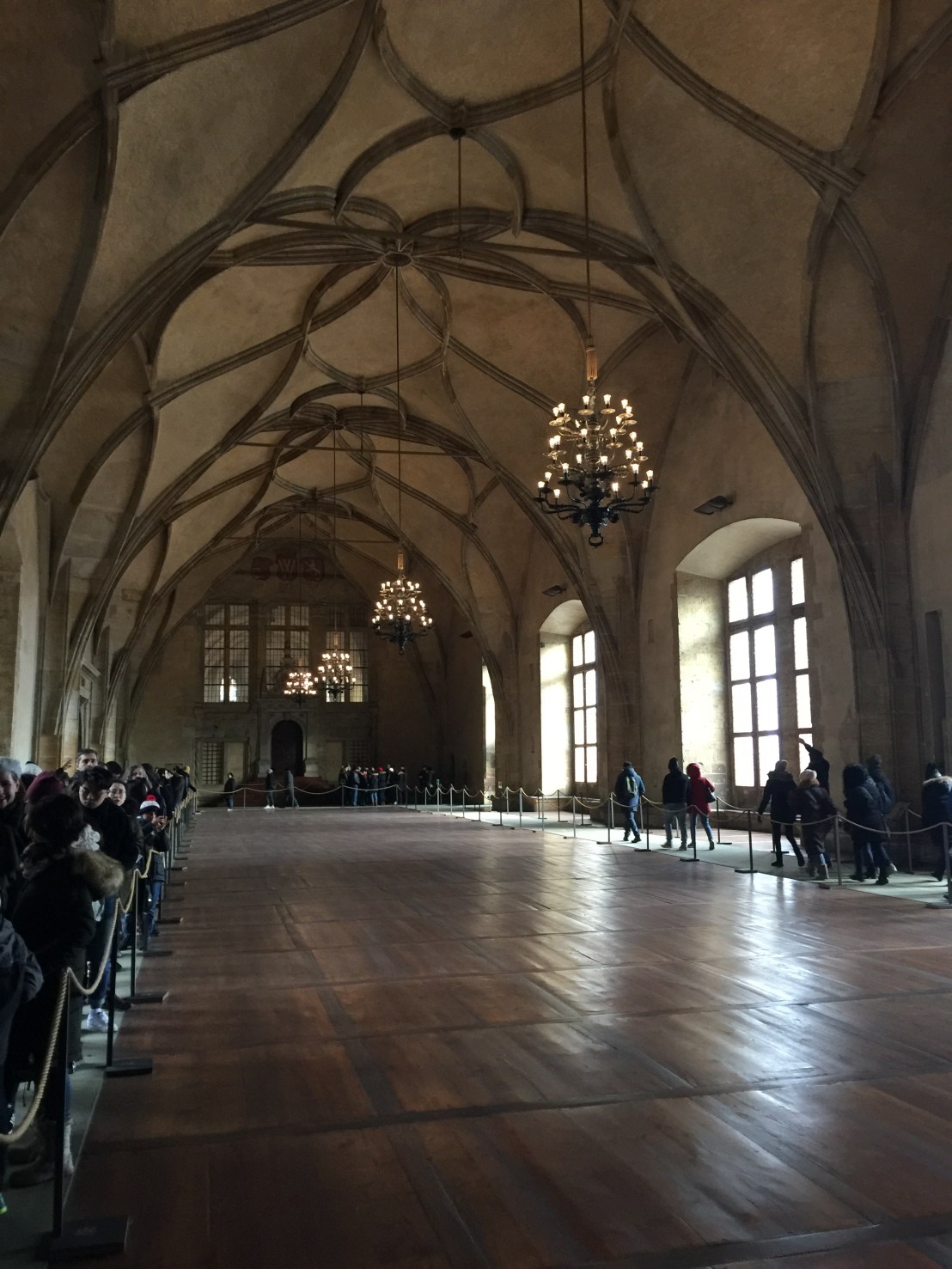
We took a 3-hour guided tour of the Prague Castle complex on the hill. It’s a 1,900 foot-long series of courtyards, churches, and palaces covering 750,000 square feet and by some measures it’s the largest castle on earth. The Czech President’s office is located in the Castle and at the center of the complex is St. Vitus Cathedral (which I’ll cover in a separate post).


The hotel we stayed in on our return trip to Prague was really interesting so I thought I would include a post on it. When we took a shuttle to the hotel the first night, he couldn’t get very close to it because of the crowds at the Christmas Market on the Old Town Square. So the driver just sort of dumped us off and pointed across the visitor-packed square and said nebulously, “it’s over there.” So we set off with our luggage in the general direction the driver was pointing. We couldn’t find street names (which are traditionally on the sides of buildings) or numbers. But we finally found a hotel that just said “hotel” on it (see below) and finally realized that must be it. (We later discovered that the name of the hotel is on the front of the building but in the winter when the patio is covered, it’s not really visible from the street. If you look carefully behind the heater on the patio, you can see it.) But then we couldn’t find an entrance.
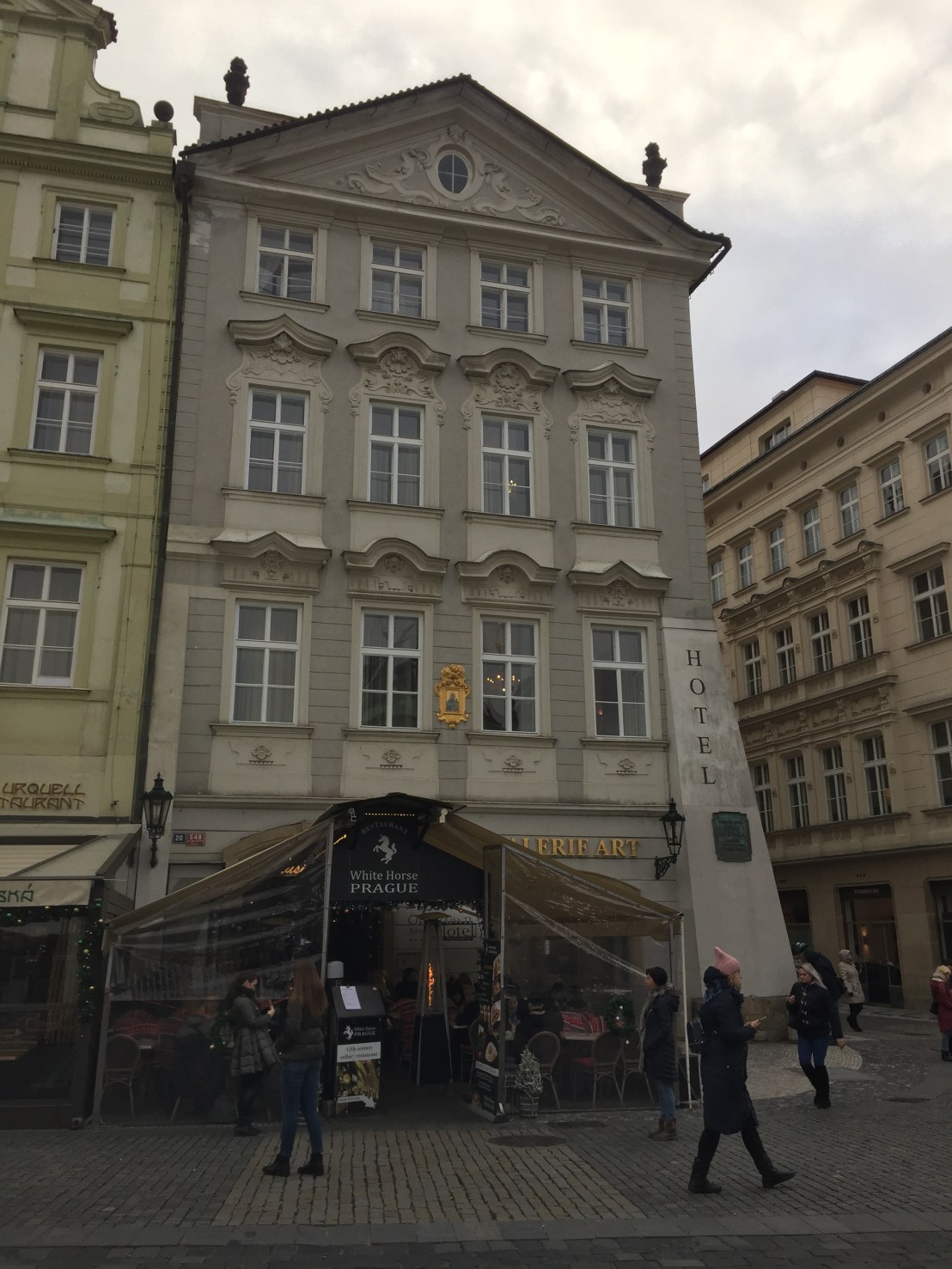
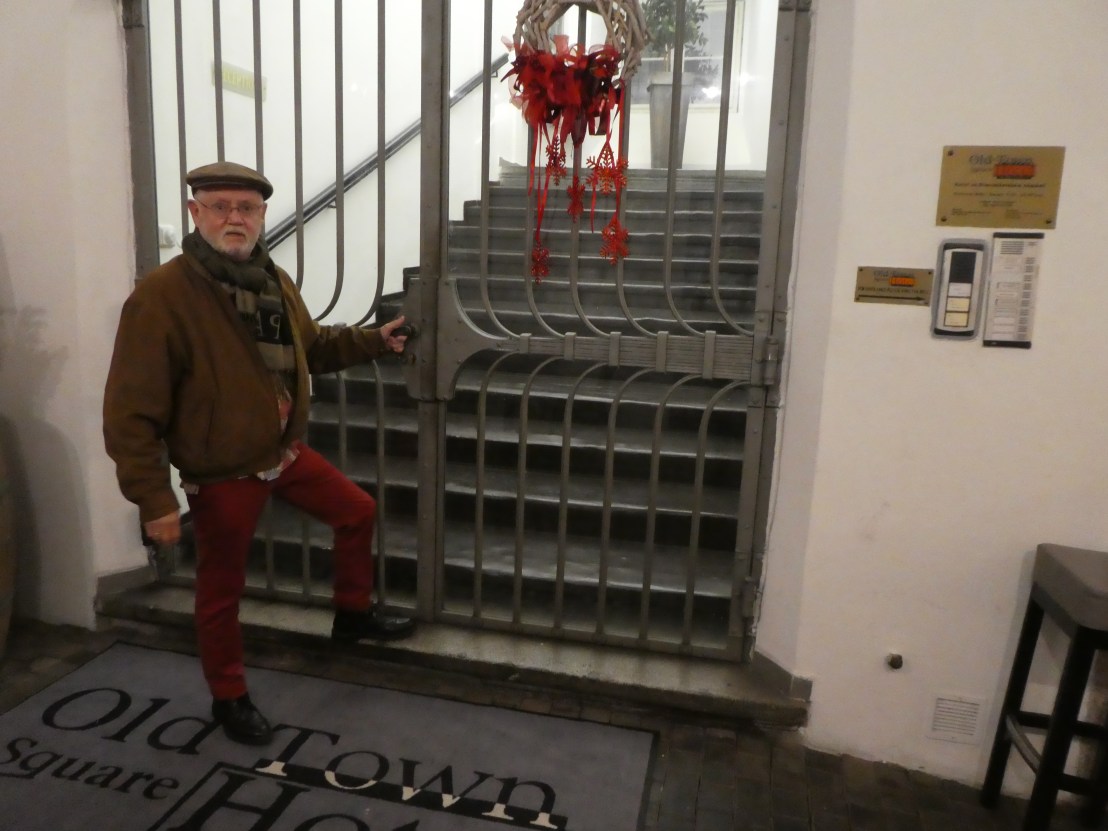
It turns out the entrance is through the White Horse Restaurant, which is in the front of the hotel and owned by the hotel. The downstairs Romanesque cellars that date back to the 12th century and have nightly life jazz and blues concerts are also owned by the hotel. If you say “hotel” to the hostess out front, she’ll let you walk straight back through the “outdoor” patio portion of the restaurant with it’s fur cushions and blankets on the chairs (covered in the wintertime and open patio the rest of the year), and then through the inside of the restaurant, way to the back where there’s a locked wrought iron gate leading to some stairs.
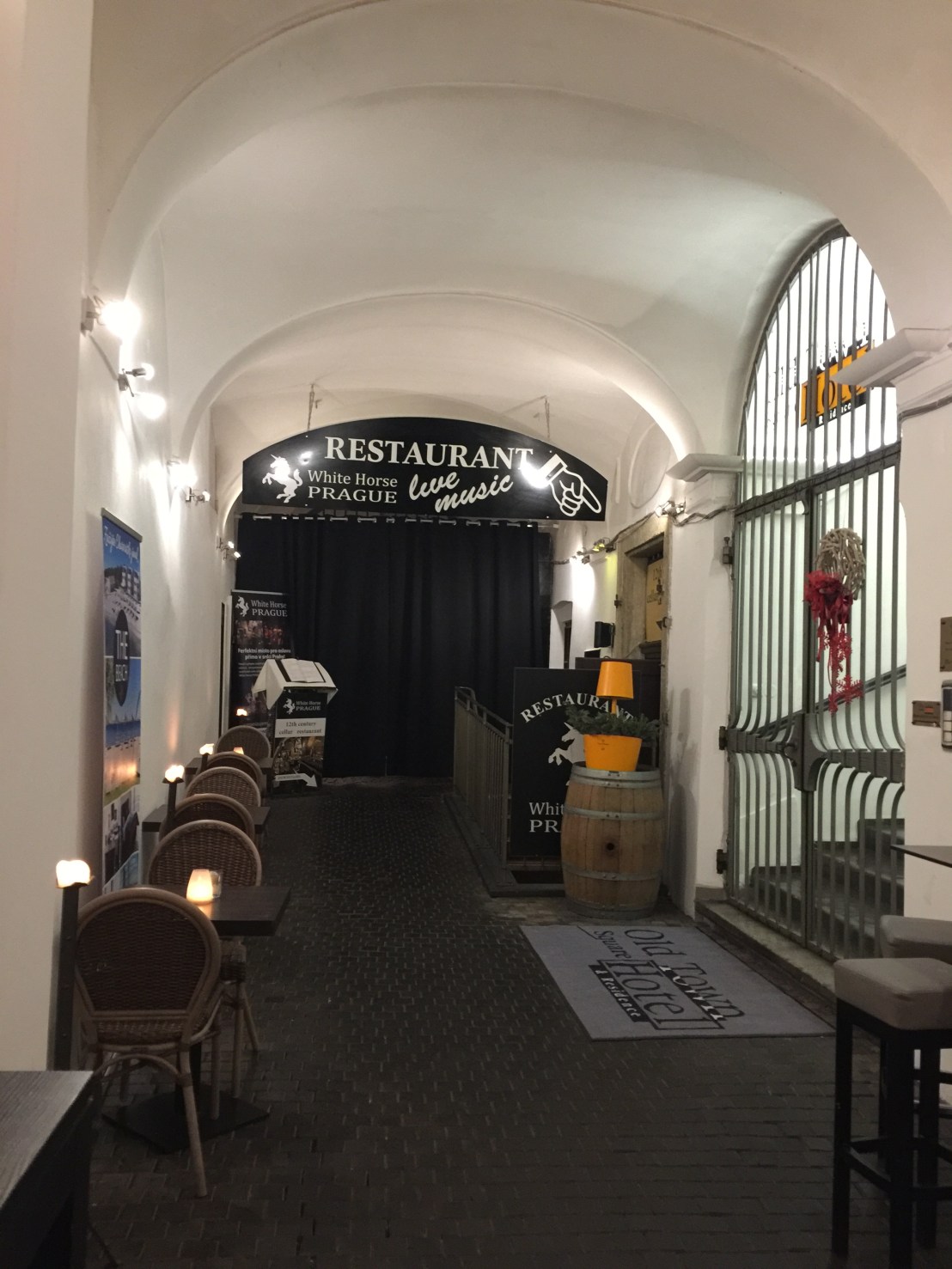

Before we go into our room, let me tell you a little more we learned about the hotel. As I said earlier, the hotel is made up of this building and the adjacent one to its left. Both buildings are registered on the UNESCO list of monuments because this is the only house in Prague that contains a preserved ribbed vault. And this ribbed vault dates back to 1496 when the buildings underwent an extensive reconstruction. An architect self-portrait and the year 1496 are printed on one of the vaults.
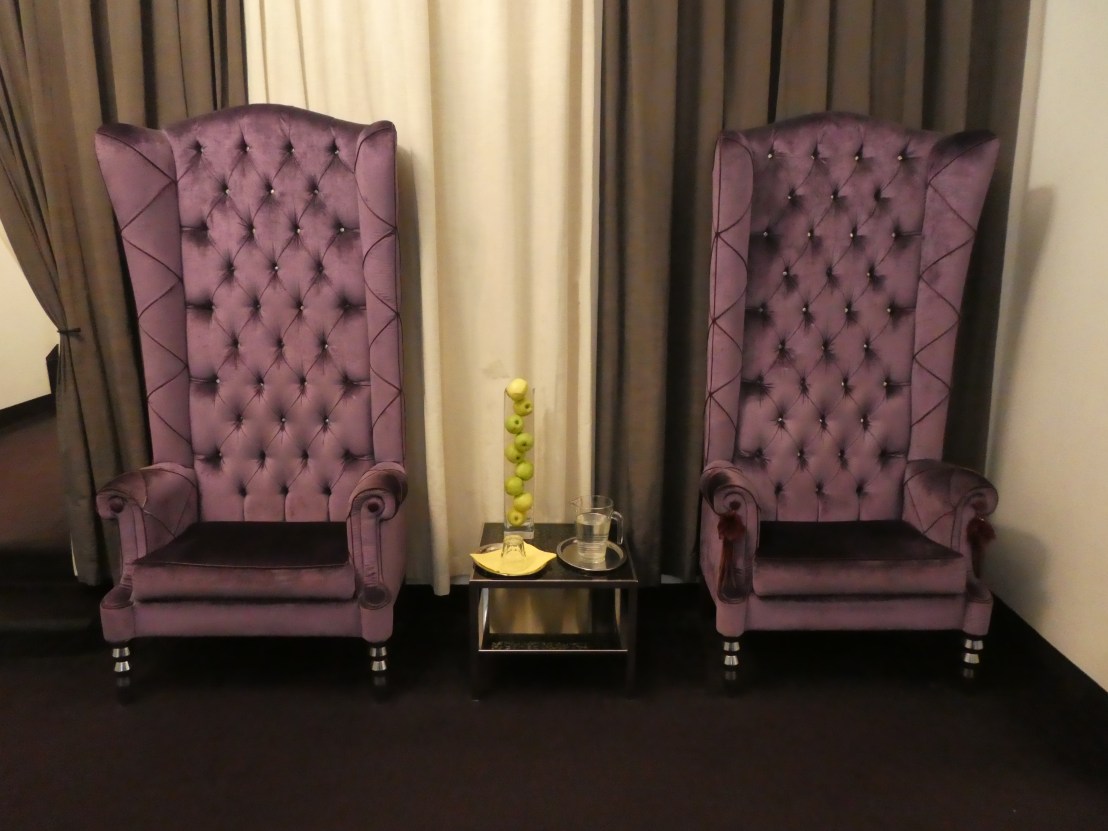
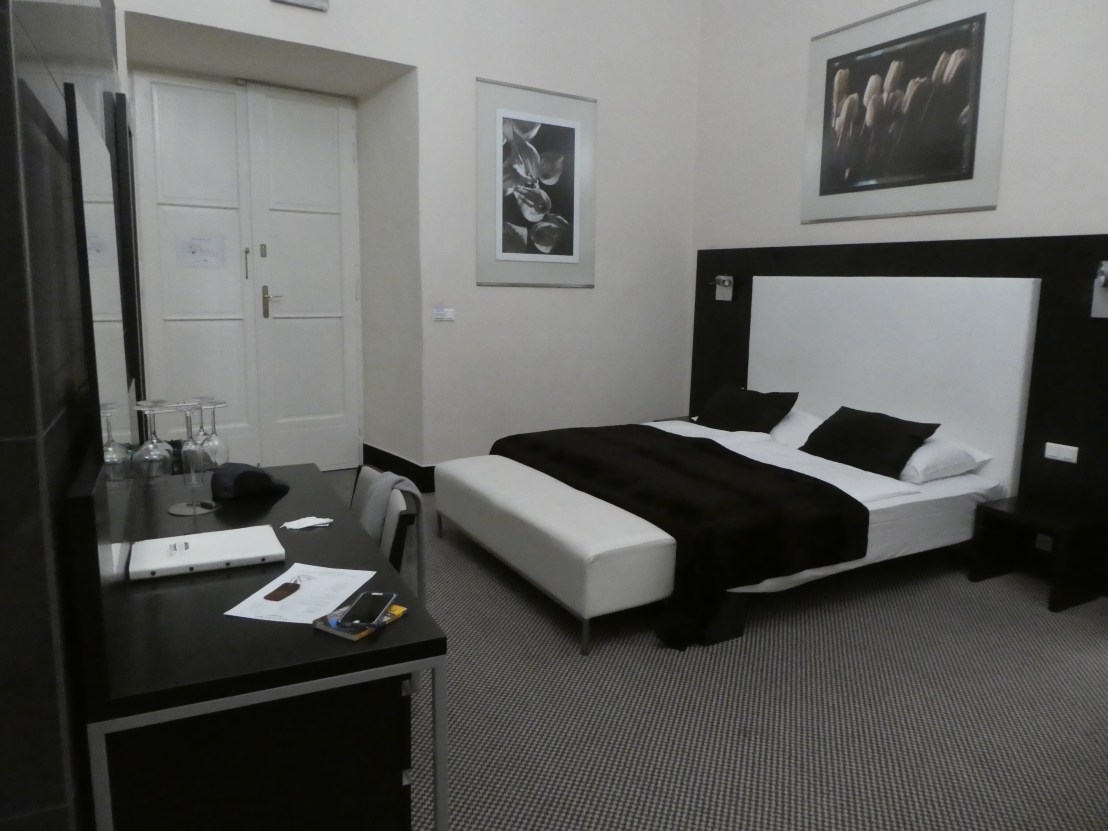
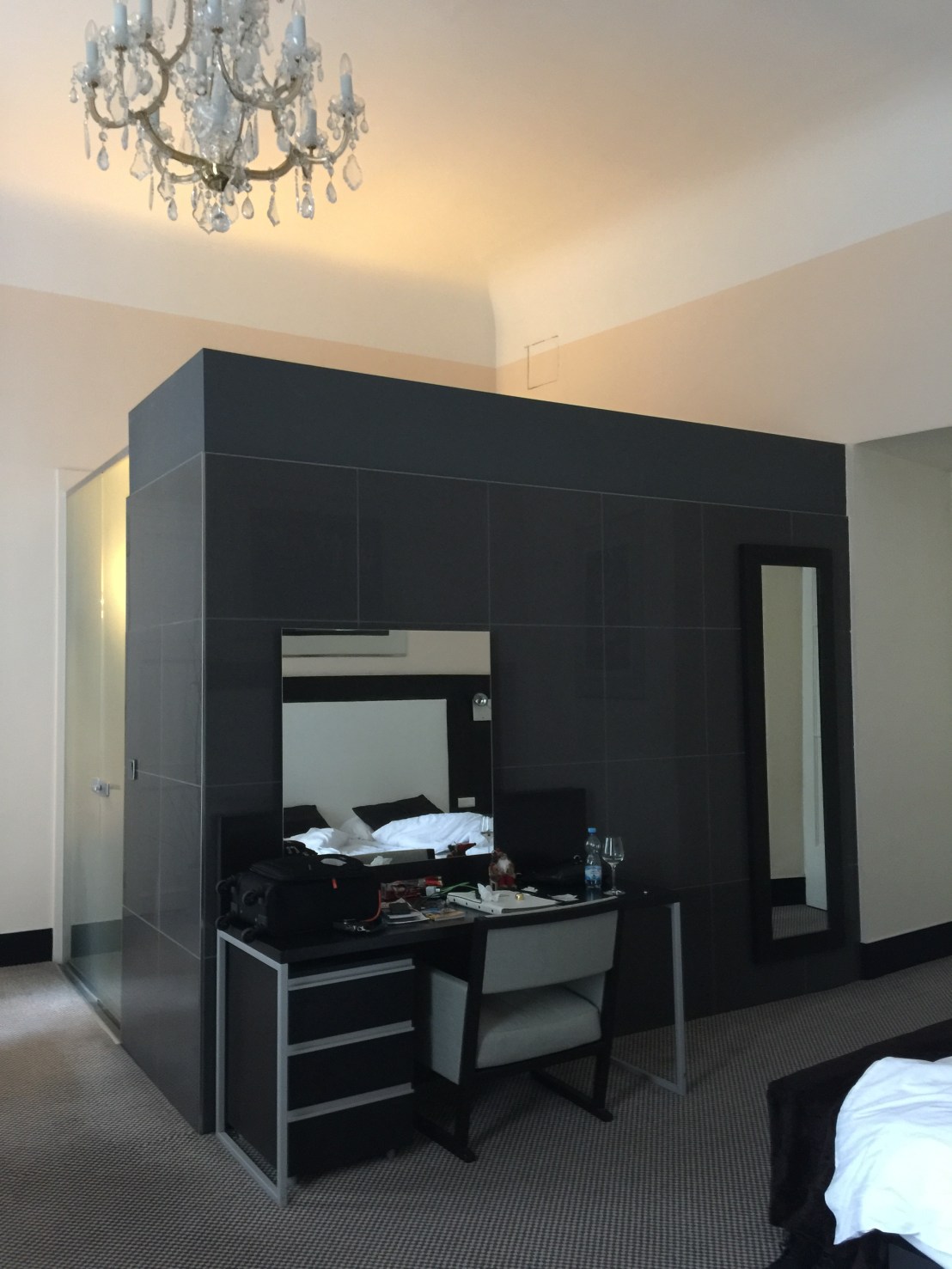
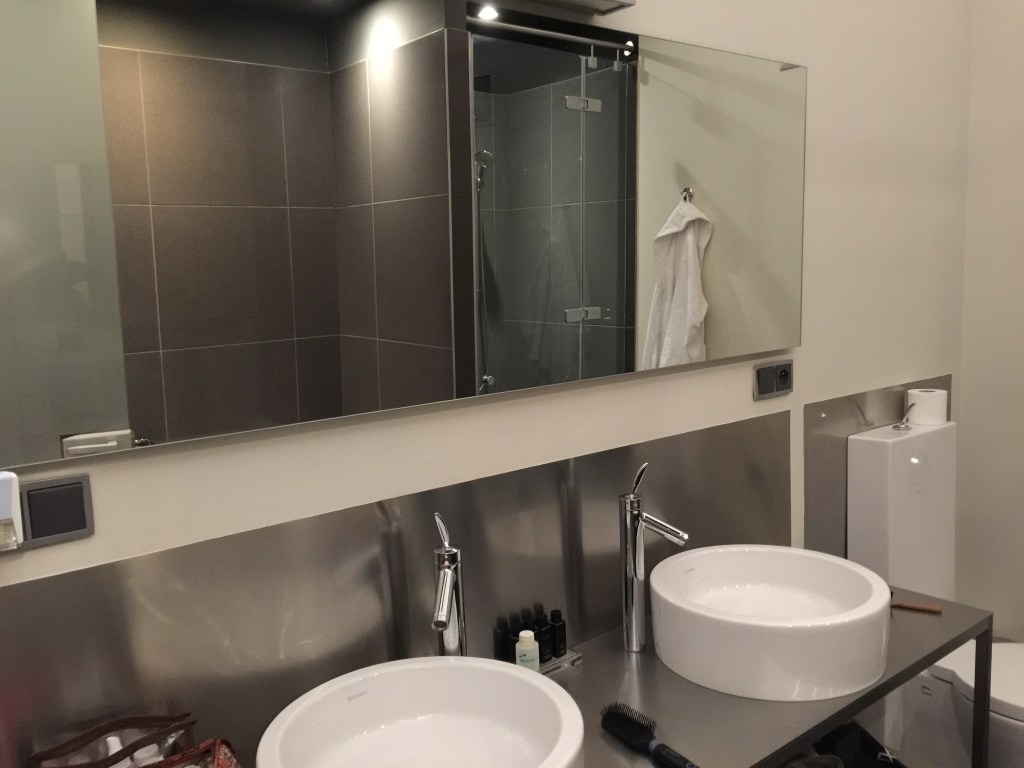
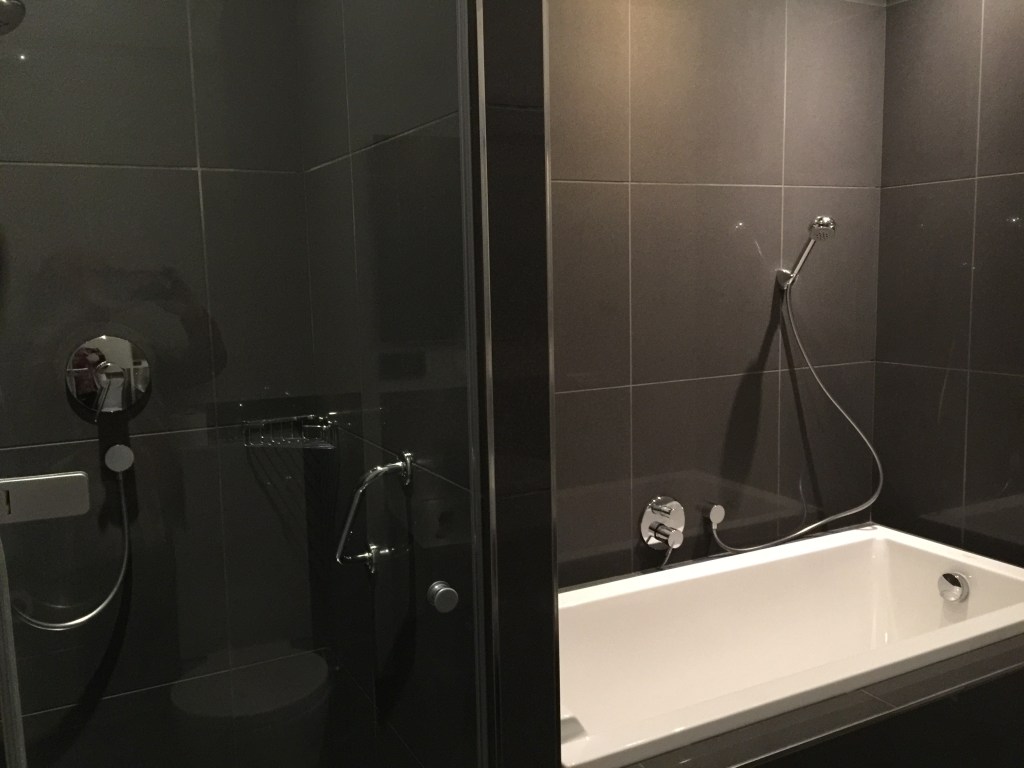
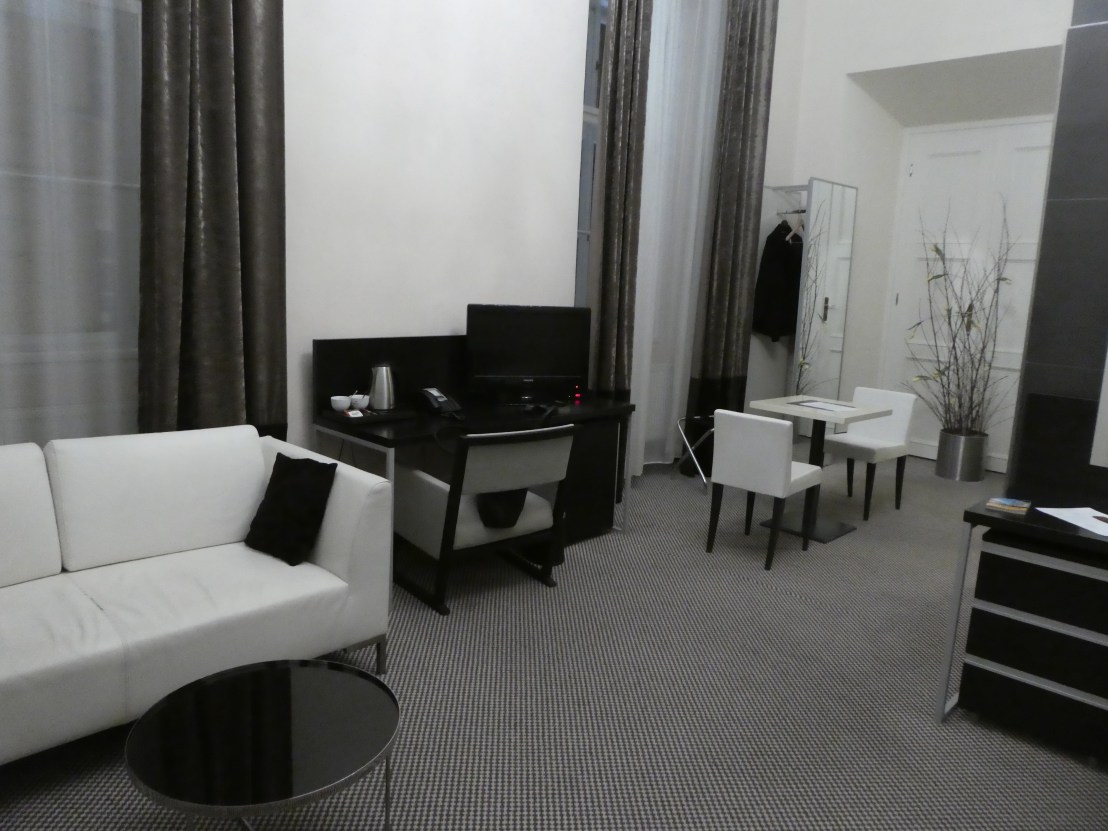
The hotel was completely renovated in 2004 and now contains 10 rooms and suites ranging in size from 600 to 1,100 square feet. It is referred to as a “palace,” and although it doesn’t really seem like a palace, it does contain many characteristics of a palace. The ceilings are very, very high, probably 24-26 feet. The rooms contain double doors at either end making the rooms interconnecting if desired, which was typical of most palaces. Of course they didn’t originally have bathrooms, and having a UNESCO designation puts restrictions on what and how changes can be made. The added marble bathrooms are very modern and look like they were just dropped into the rooms.
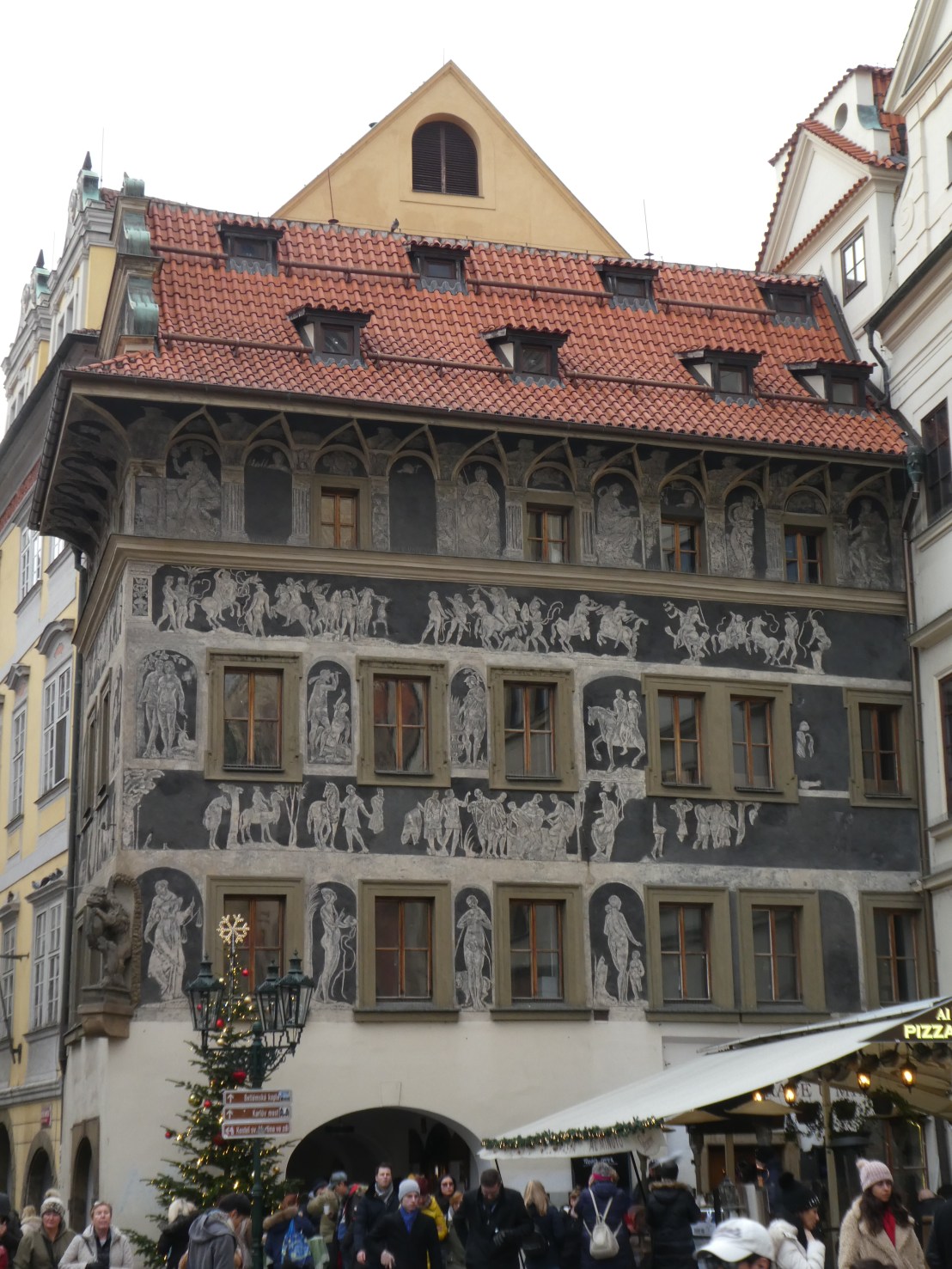
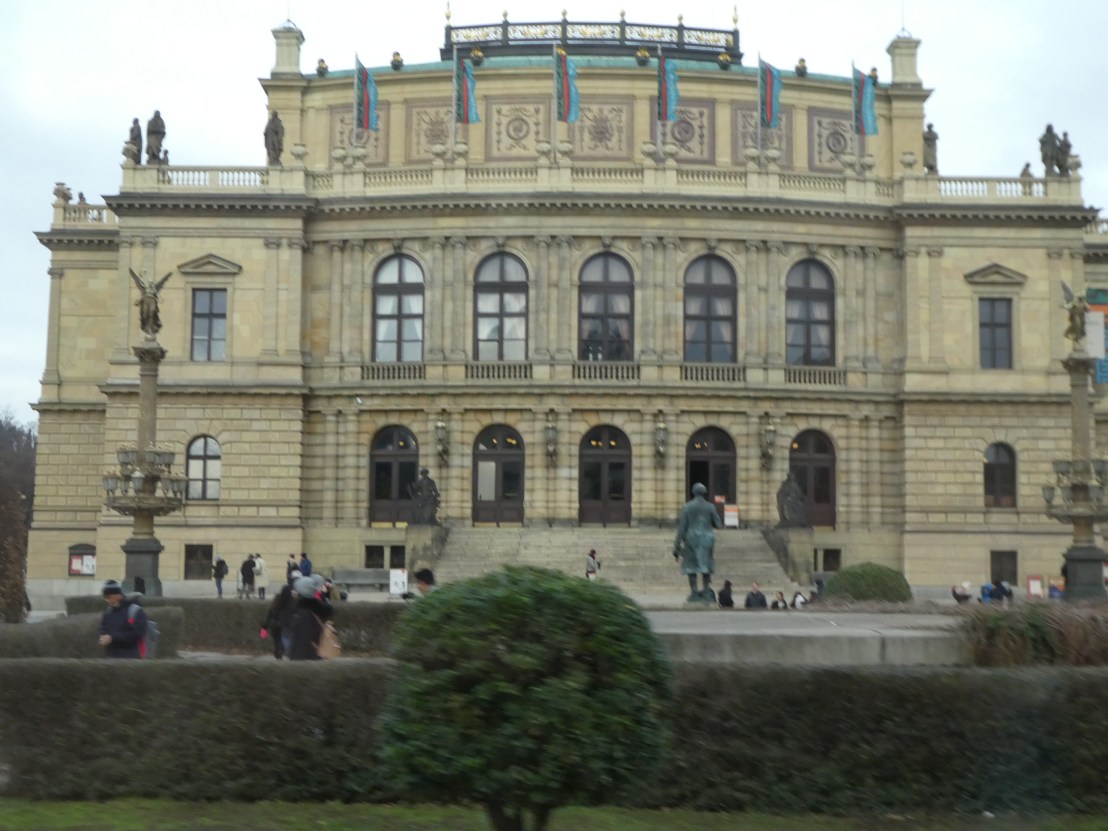
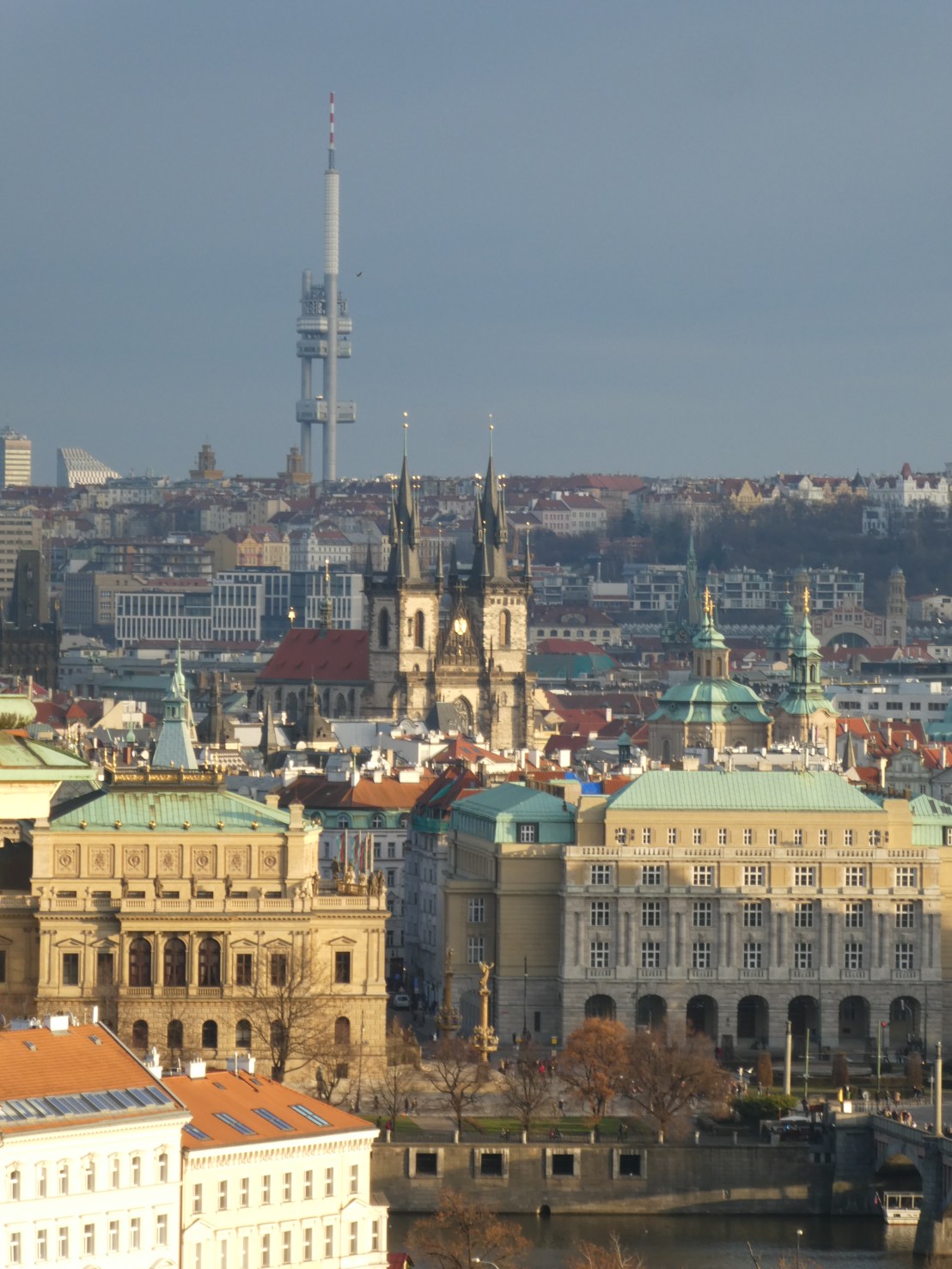
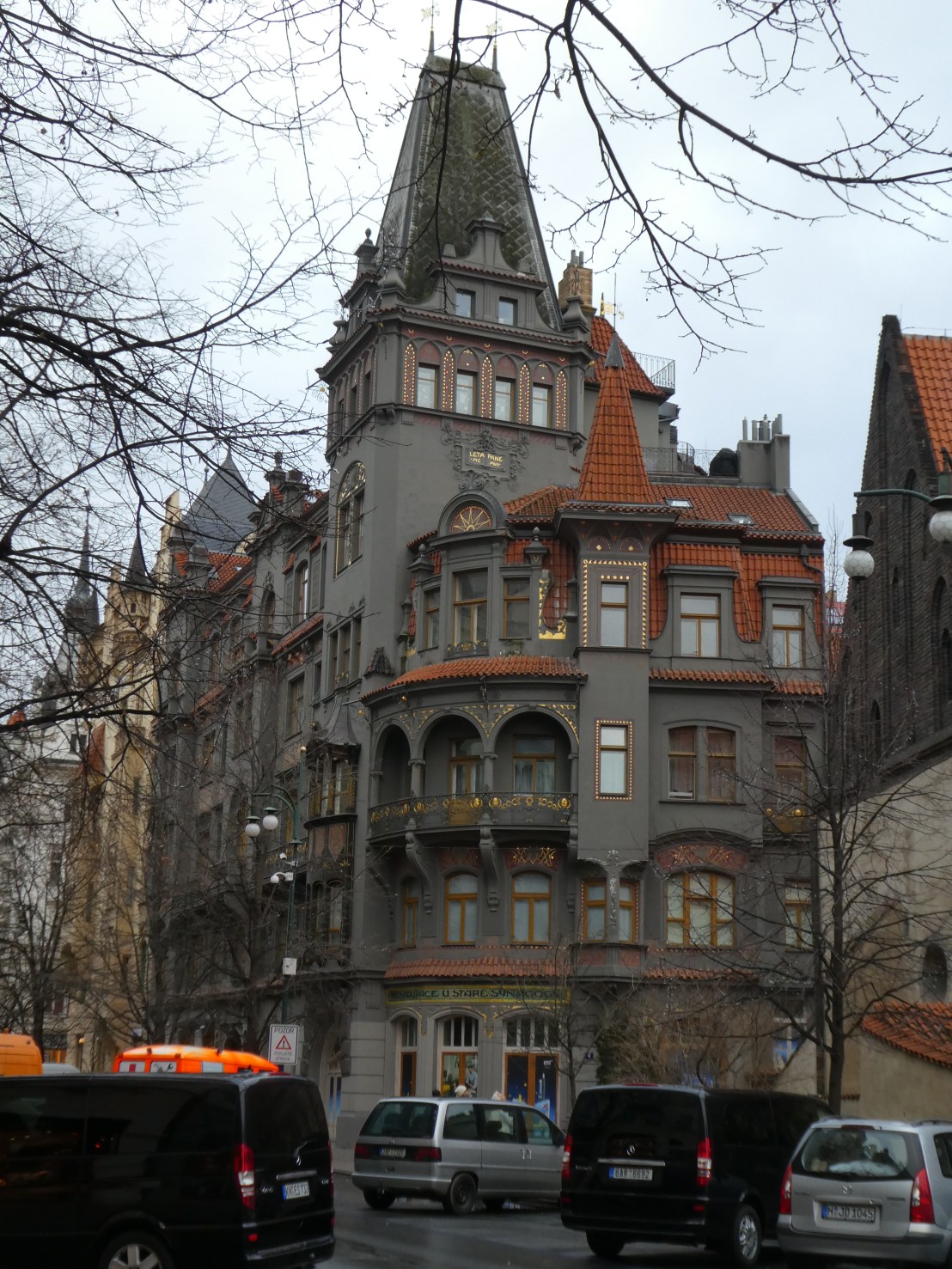
We spent much time walking in the Old Town area, admiring the beautiful architecture and designer shop windows. Below is just a bit of what we saw.
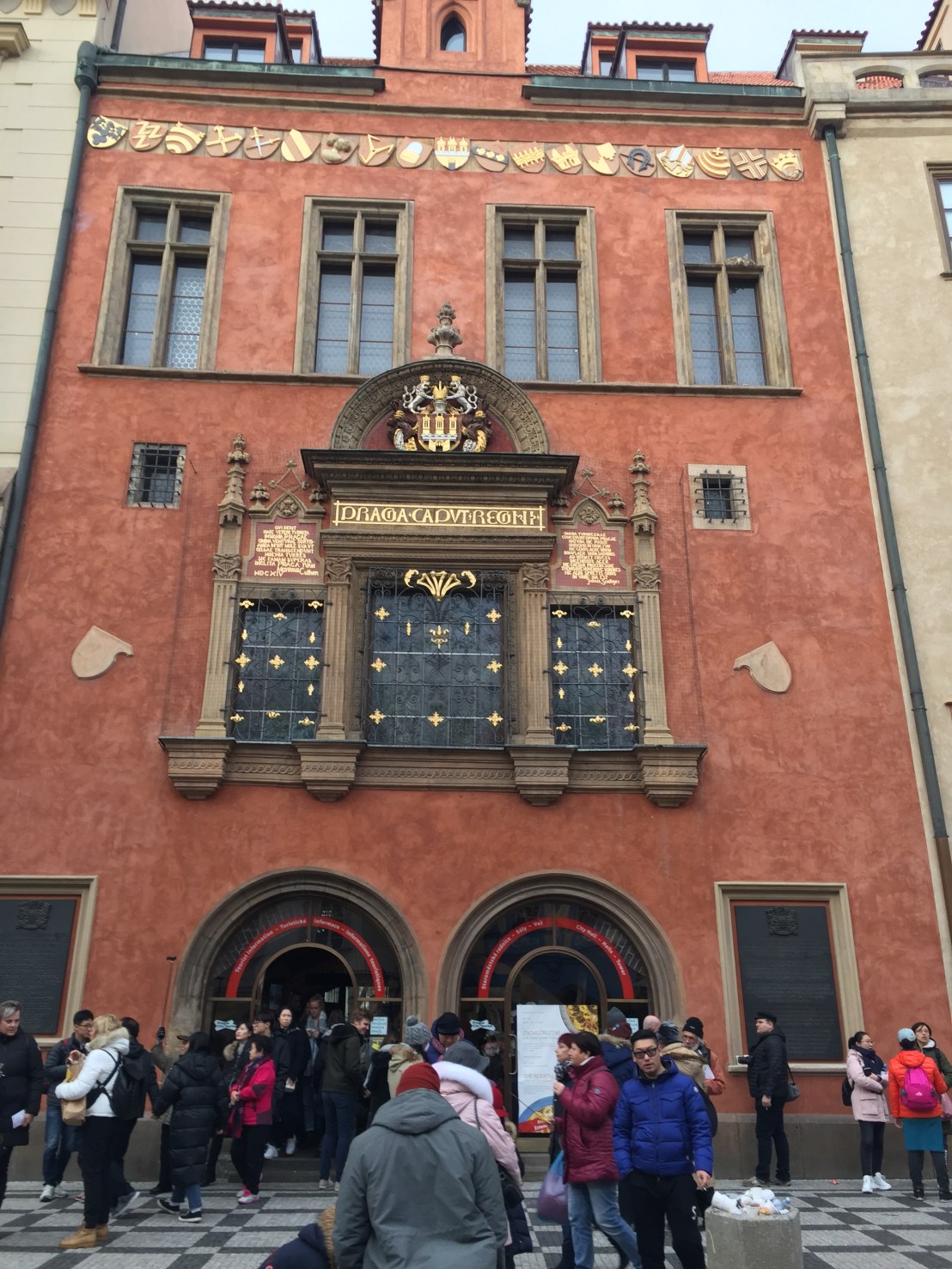
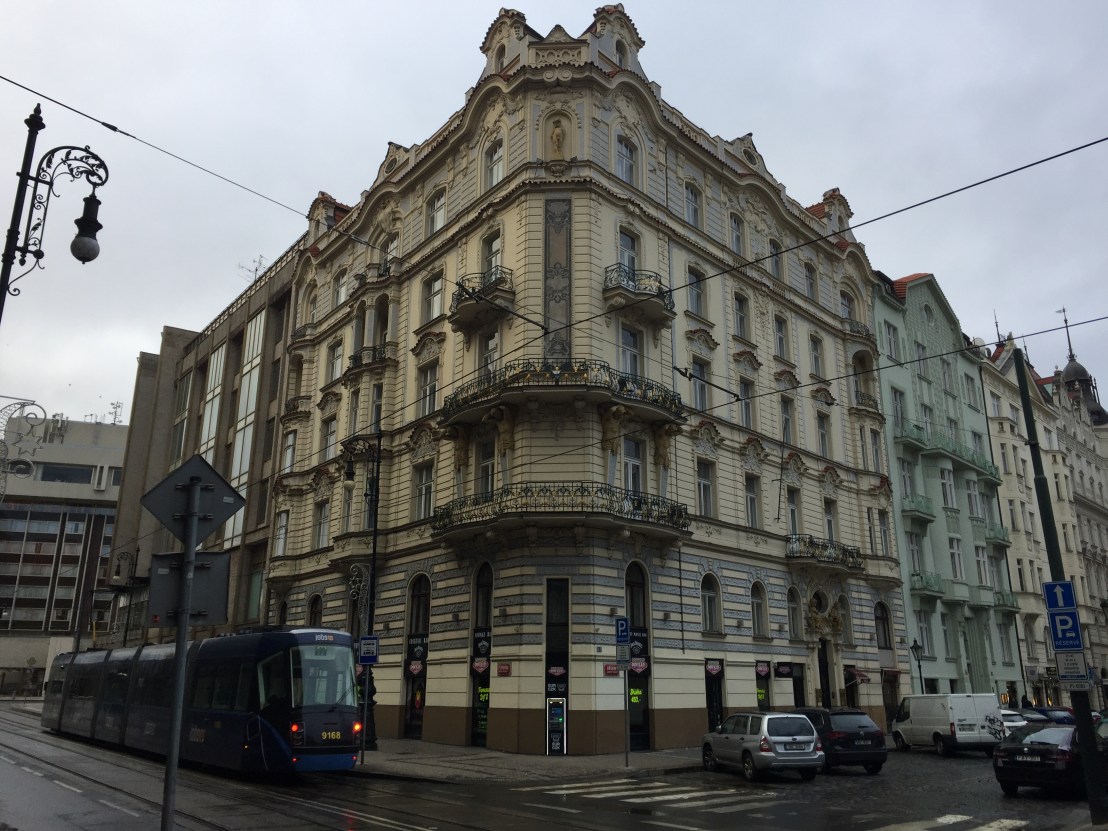
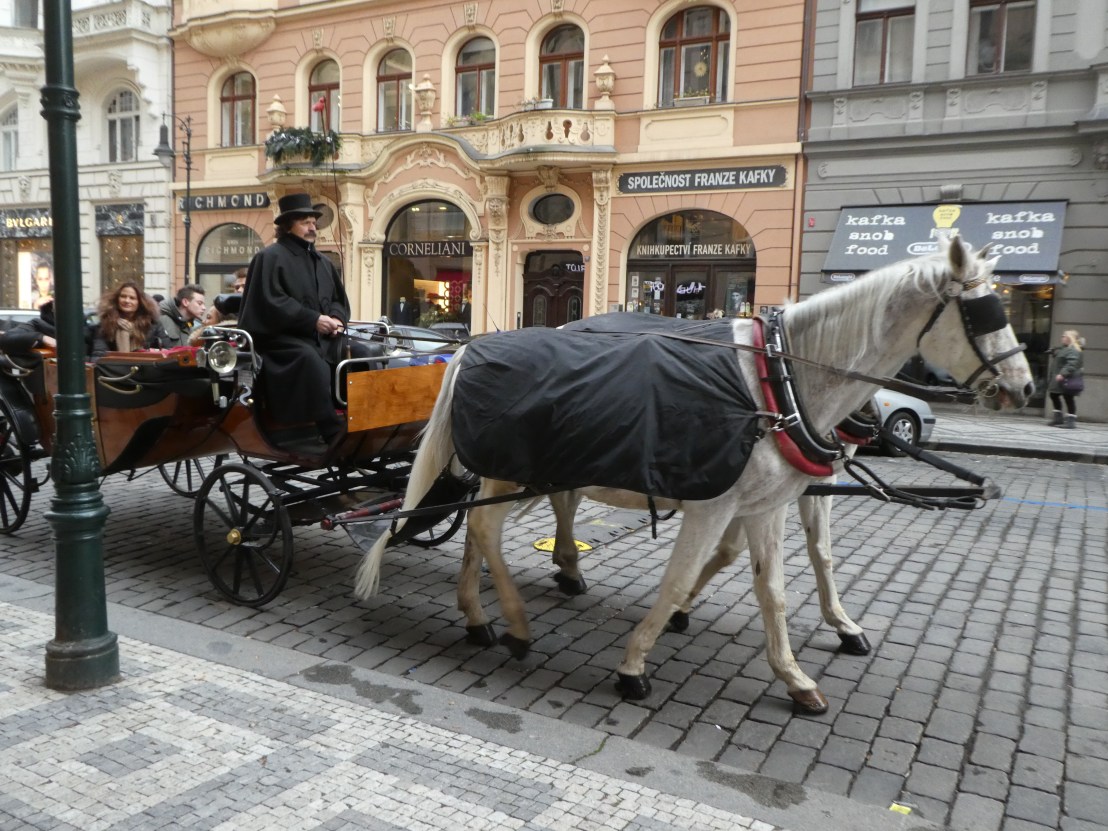

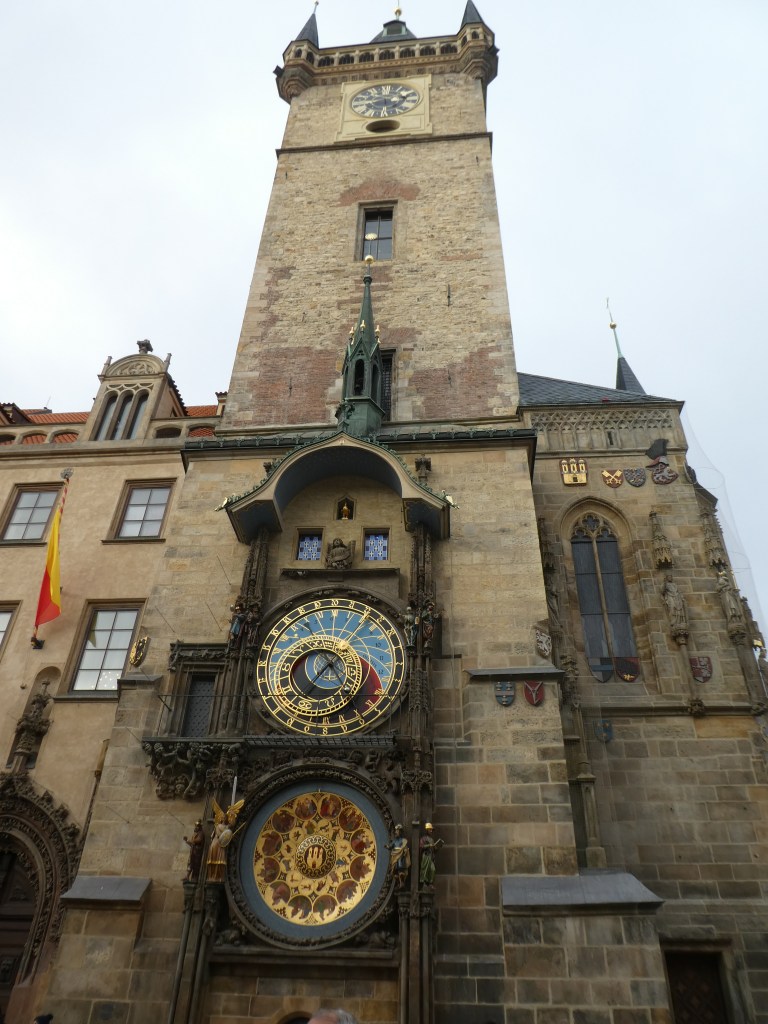



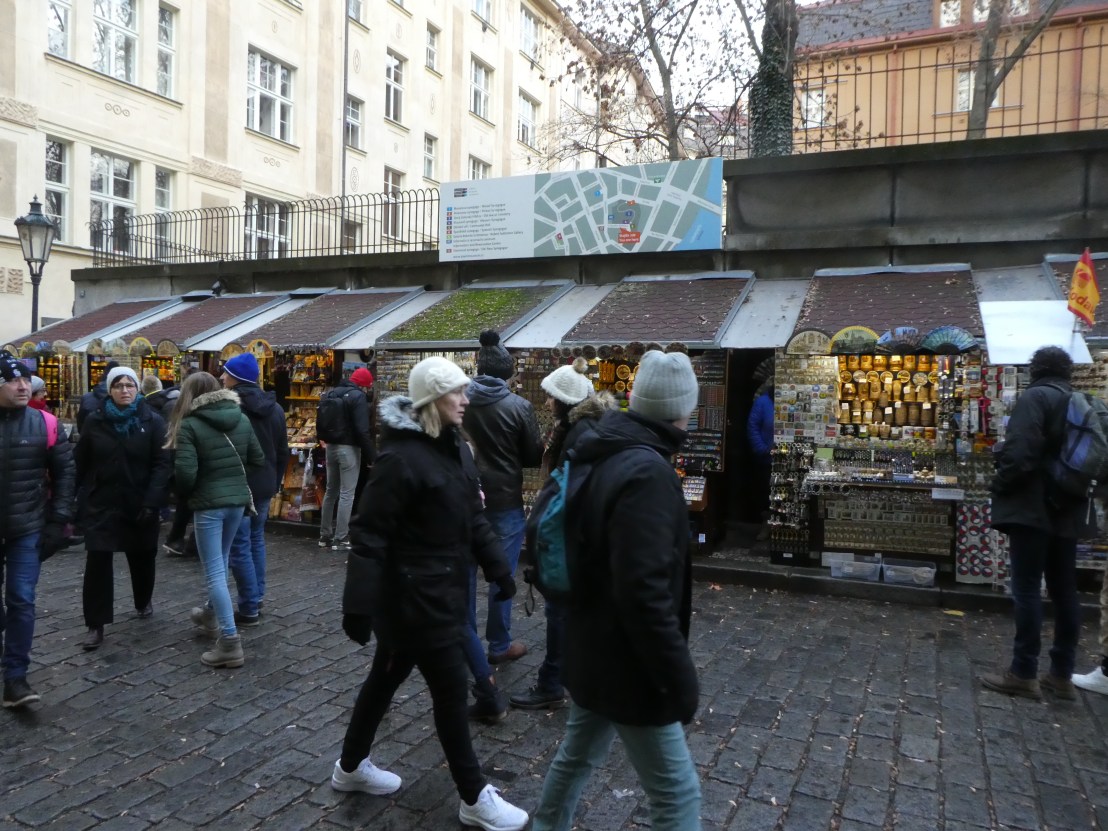
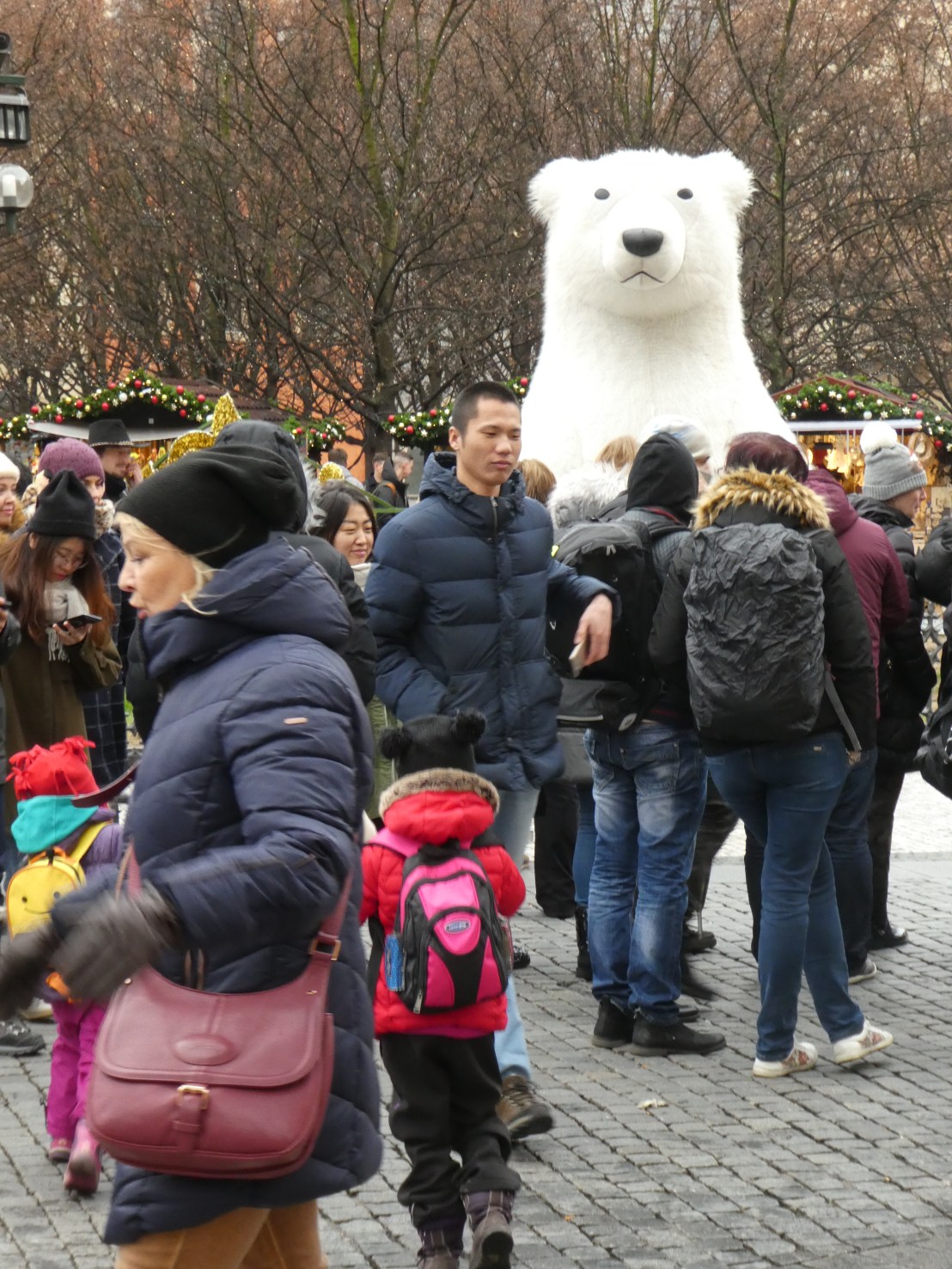
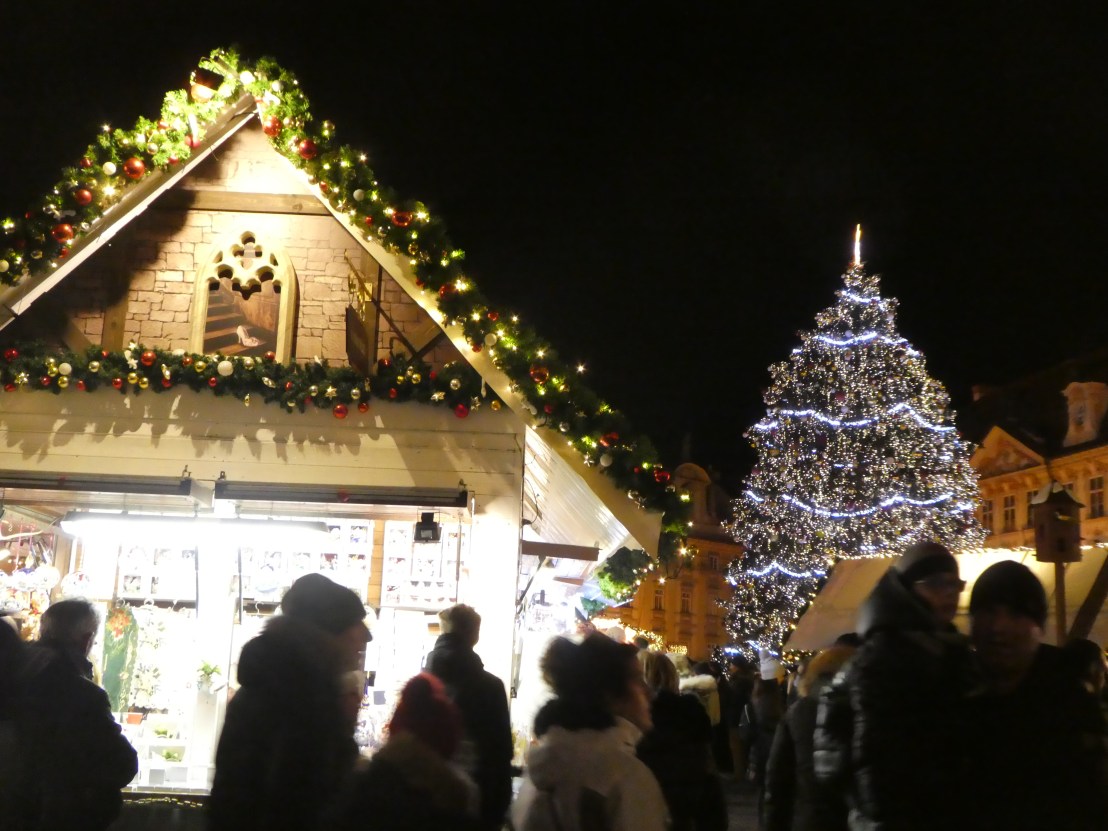
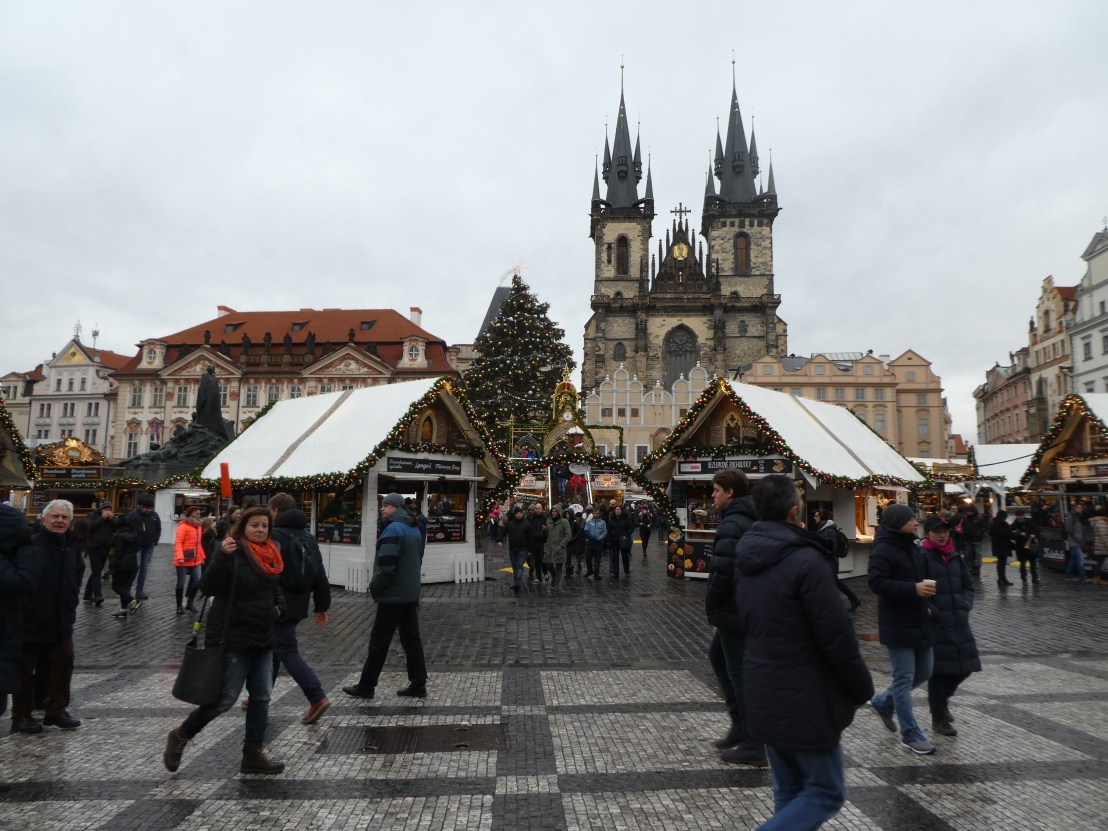
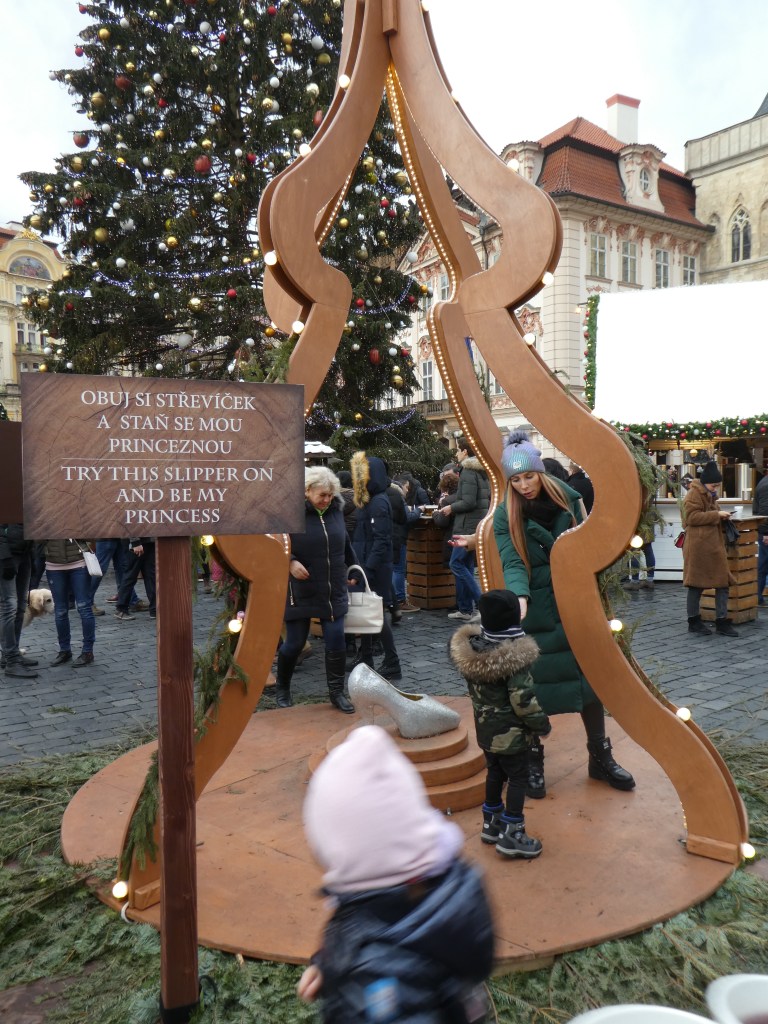
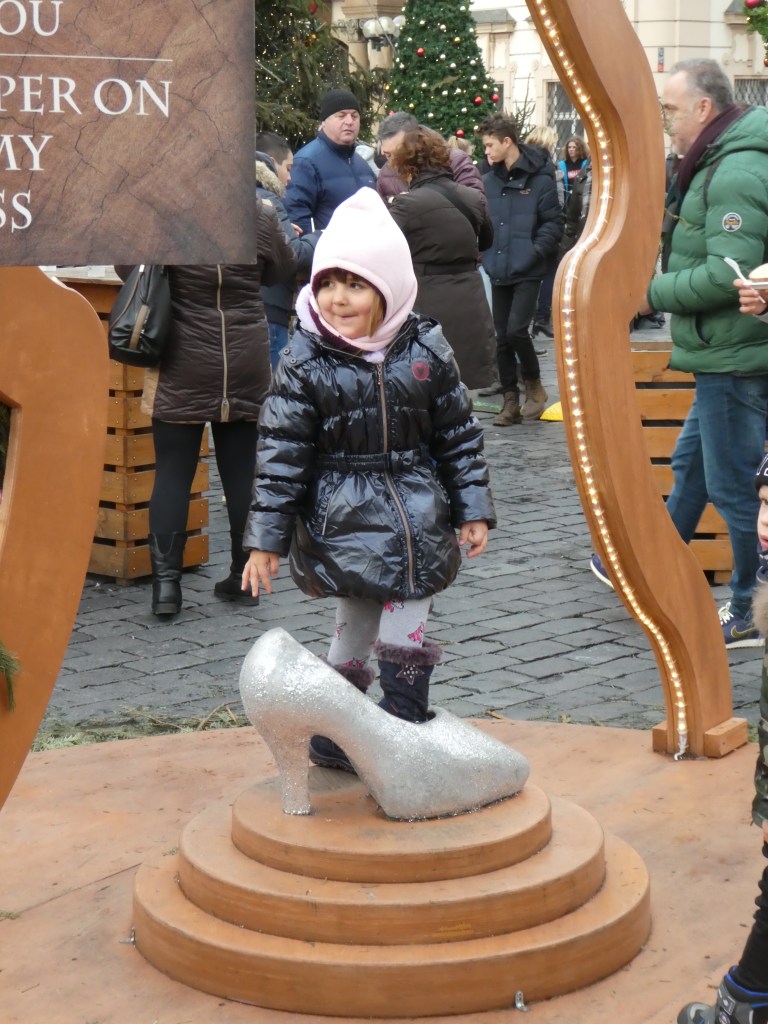
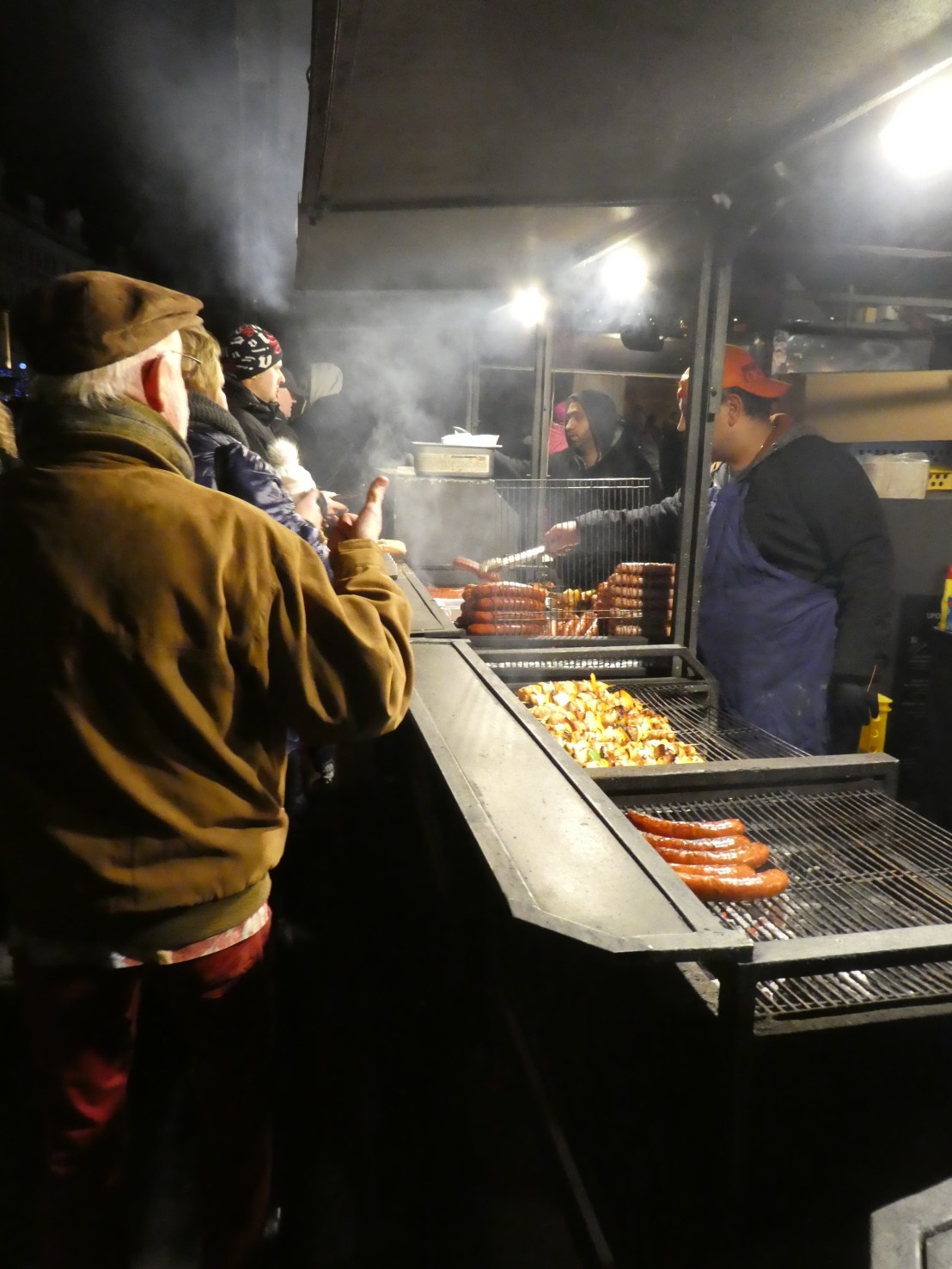
So we’re back in Prague and this time we’re staying in a hotel on the Old Town Square. And guess what? That’s where the biggest Christmas Market is. Our hotel is really interesting so I’m going to do a separate post on it, but in this post I’ll just share a few photos from the Christmas Market there. The Markets in Prague aren’t as big as the ones in Salzburg, but there’re still very good, and of course they’re crammed with people.


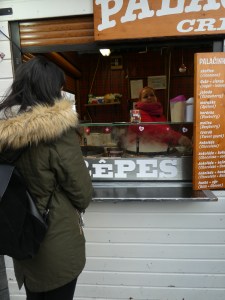
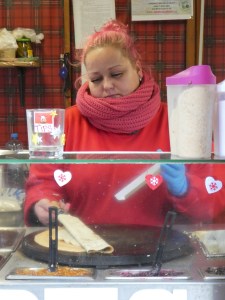
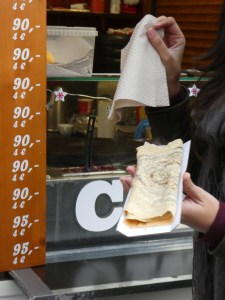
How to Make a Fabulous Crepe (I can personally vouch for how amazing – and messy – these things are!)

Thanks to Pam’s suggestion, we maneuvered a short visit to Cesky Krumlov in the Czech Republic on the way back from Salzburg to Prague. While we had originally planned to take a day tour out of Prague to Cesky, we discovered that instead of taking the train back to Prague, we could take a shared shuttle which included a 5 1/2 hour stop in Cesky Krumlov, thereby saving us from losing another day. And we’re so glad we did.
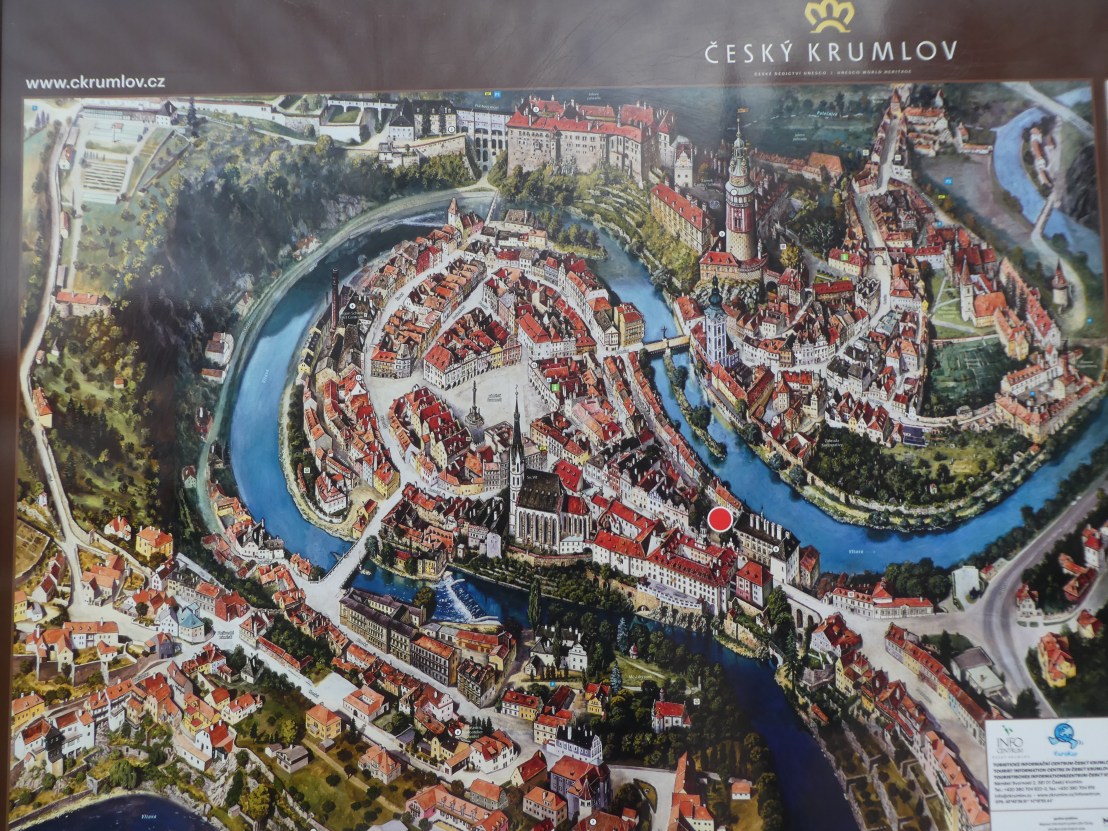
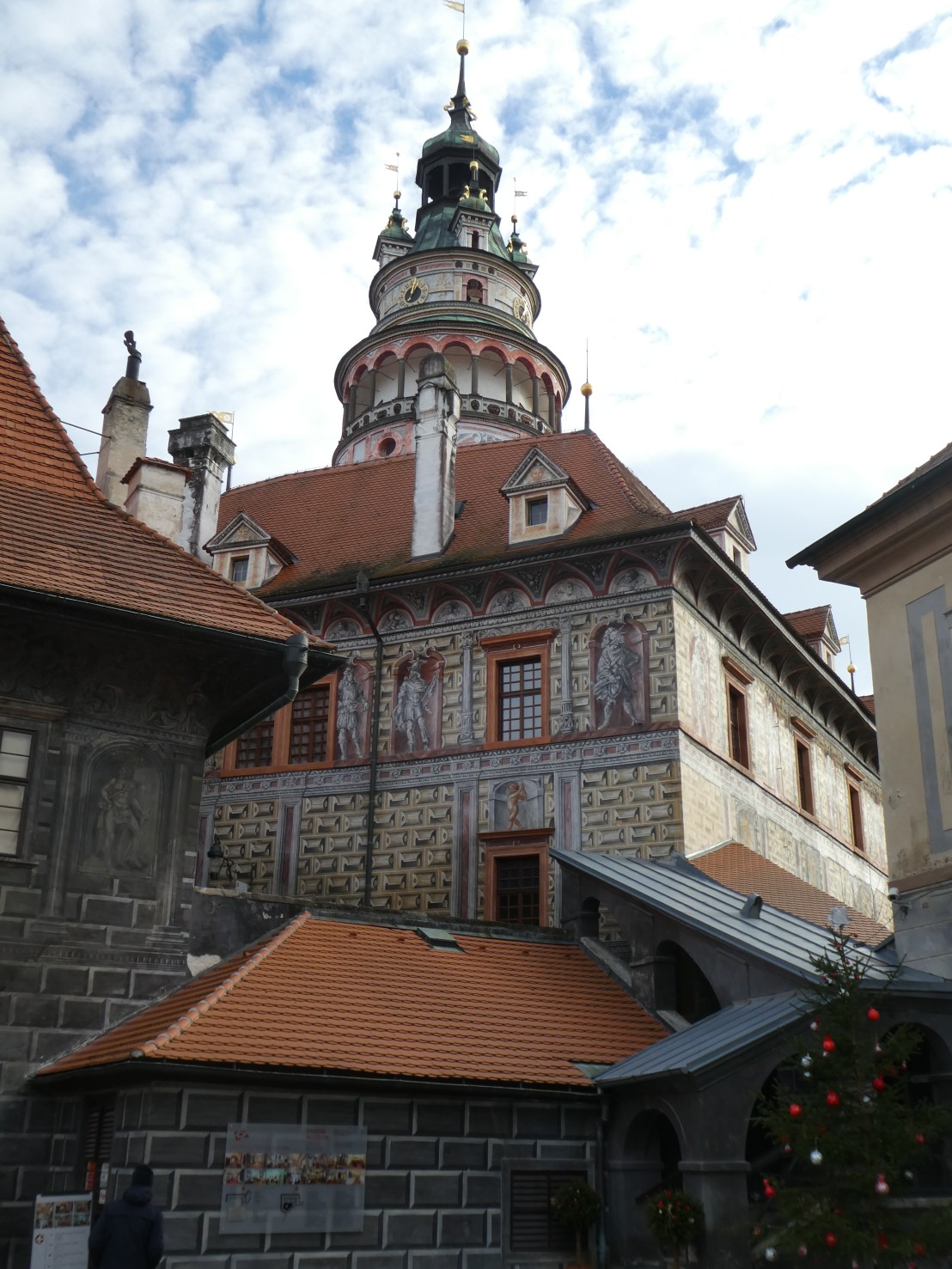
Cesky Krumlov, loosely translated as “crooked river” or “crooked peninsula,” seems like a big place but actually has less than 15,000 residents. It boasts one of the largest stronghold castles in Europe with a wonderfully preserved Baroque Theater and castle tower. Behind the castle are 27 acres of Baroque-Rococo gardens and below the castle the Vltava River meanders around the original town buildings. Yes, it’s the same Vltava River that runs through Prague. It’s a magical place and in 1992 it became one of the first sites in the Czech Republic to be registered as a Unesco World Heritage Site. Wandering through the streets of this hilly medieval village is a delightful way to spend an afternoon.
But let me make 2 observations: 1) Winter is not the best time to visit. Many of the city’s sites are closed, including all of the castle museums and the tours in the castle and the gardens. 2) Regardless of the time of year, a city tour would be helpful. Because we had originally planned to take a guided day tour, we had not done our homework so landed in Cesky totally unprepared. Even though it’s not a huge area, a little prior orientation would have allowed us to make better use of the time allotted.
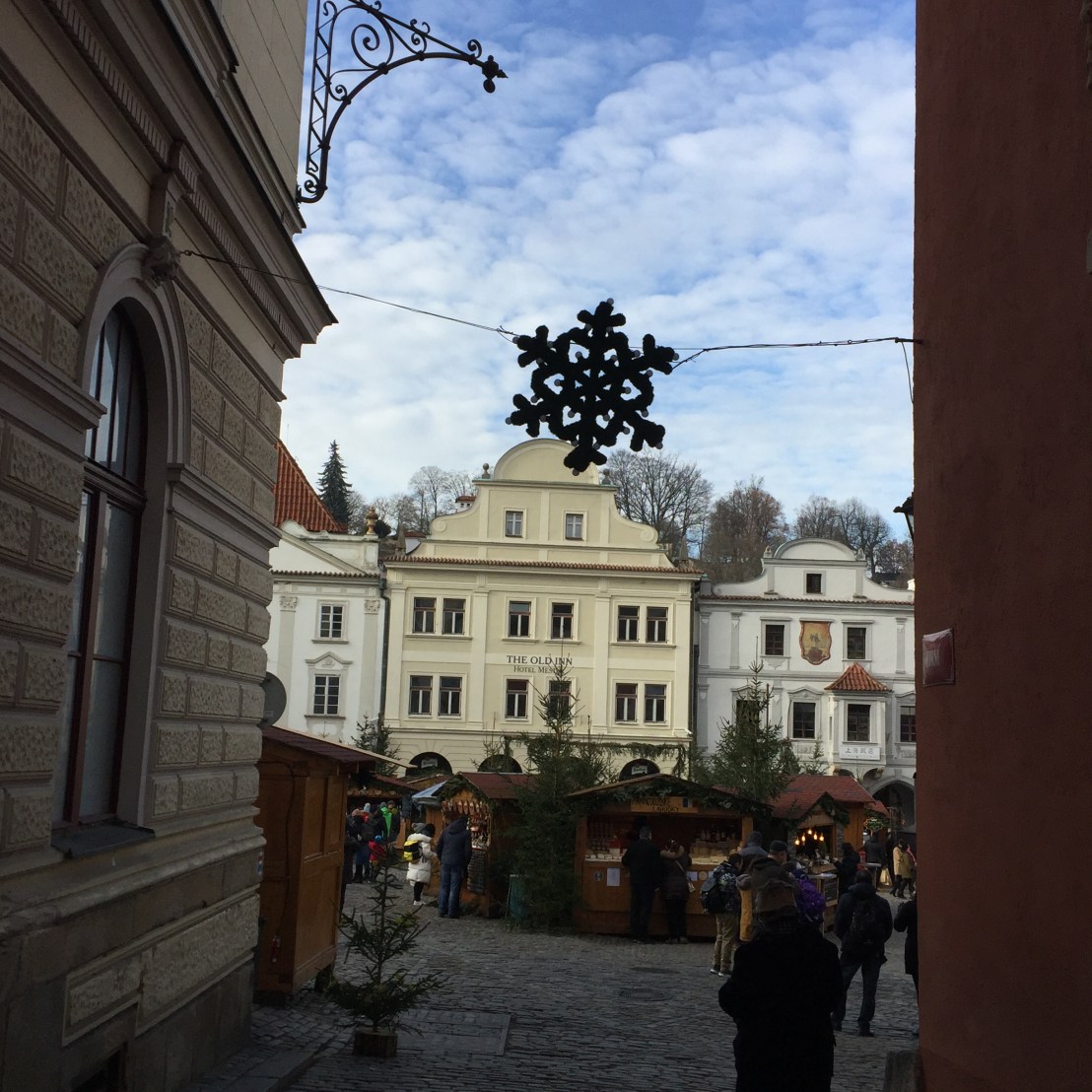
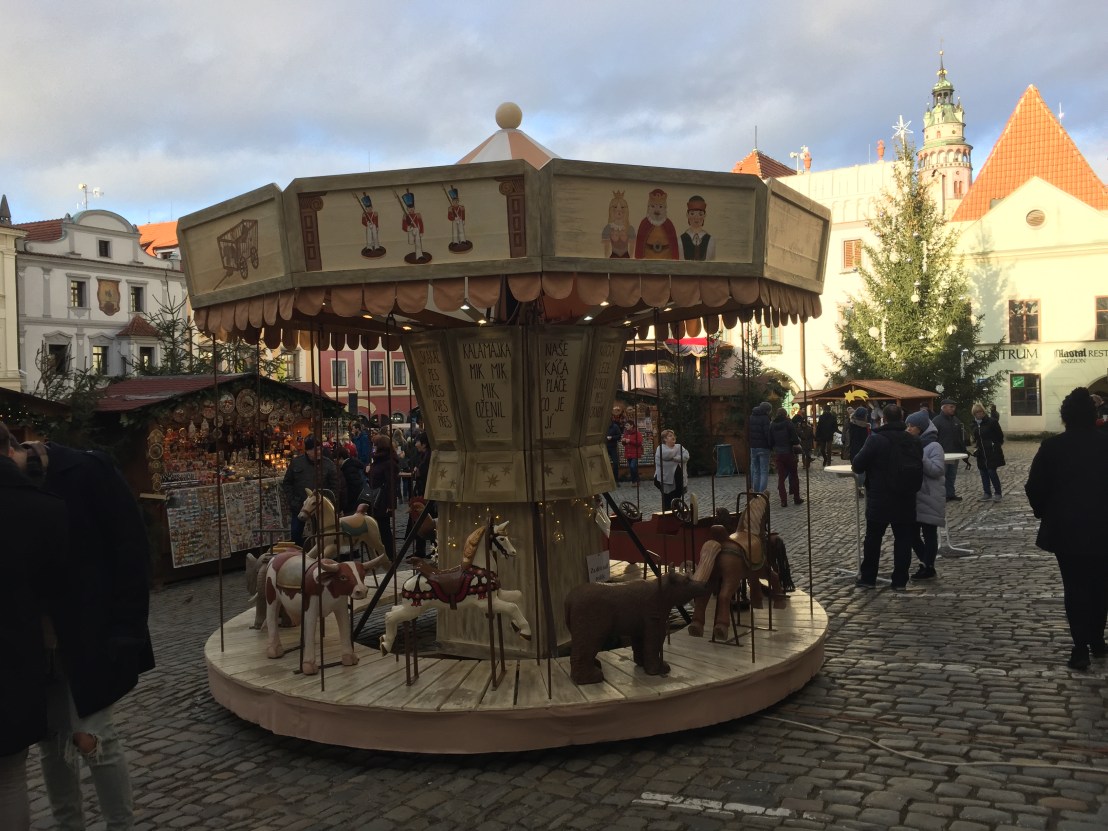
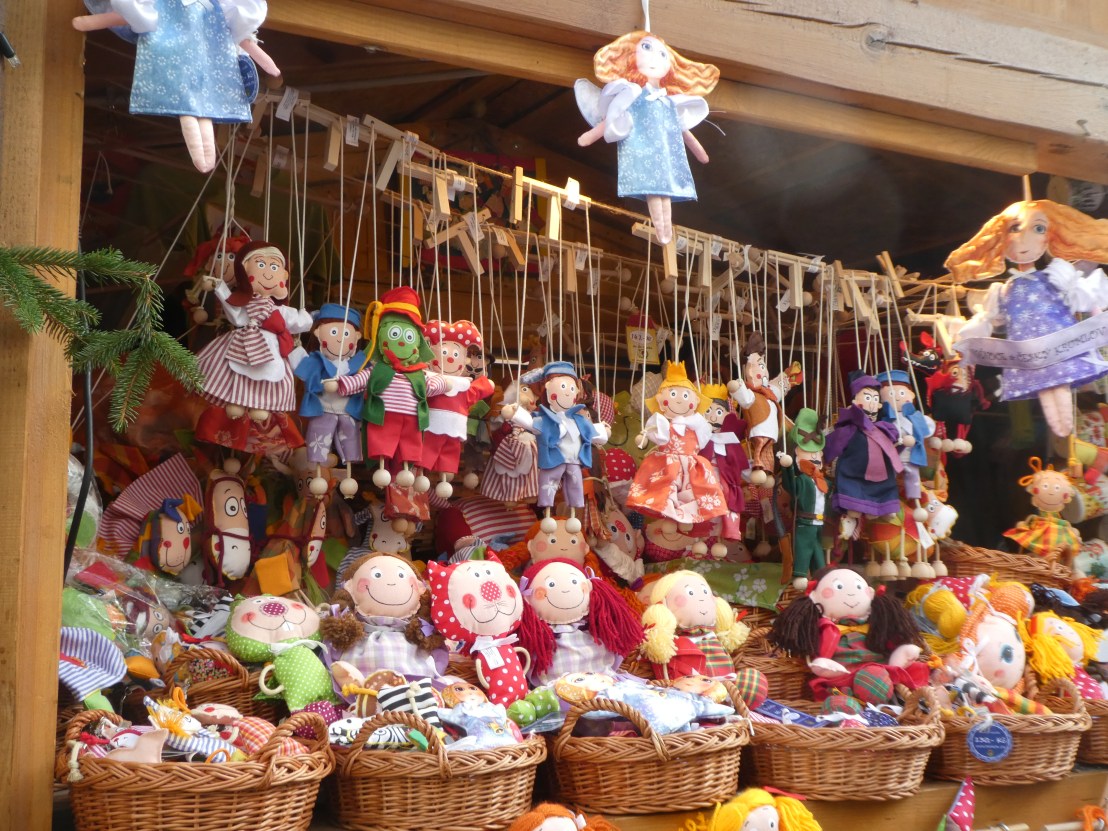
Of course there was a Christmas Market! We walked down the hill into the city square and there it was!
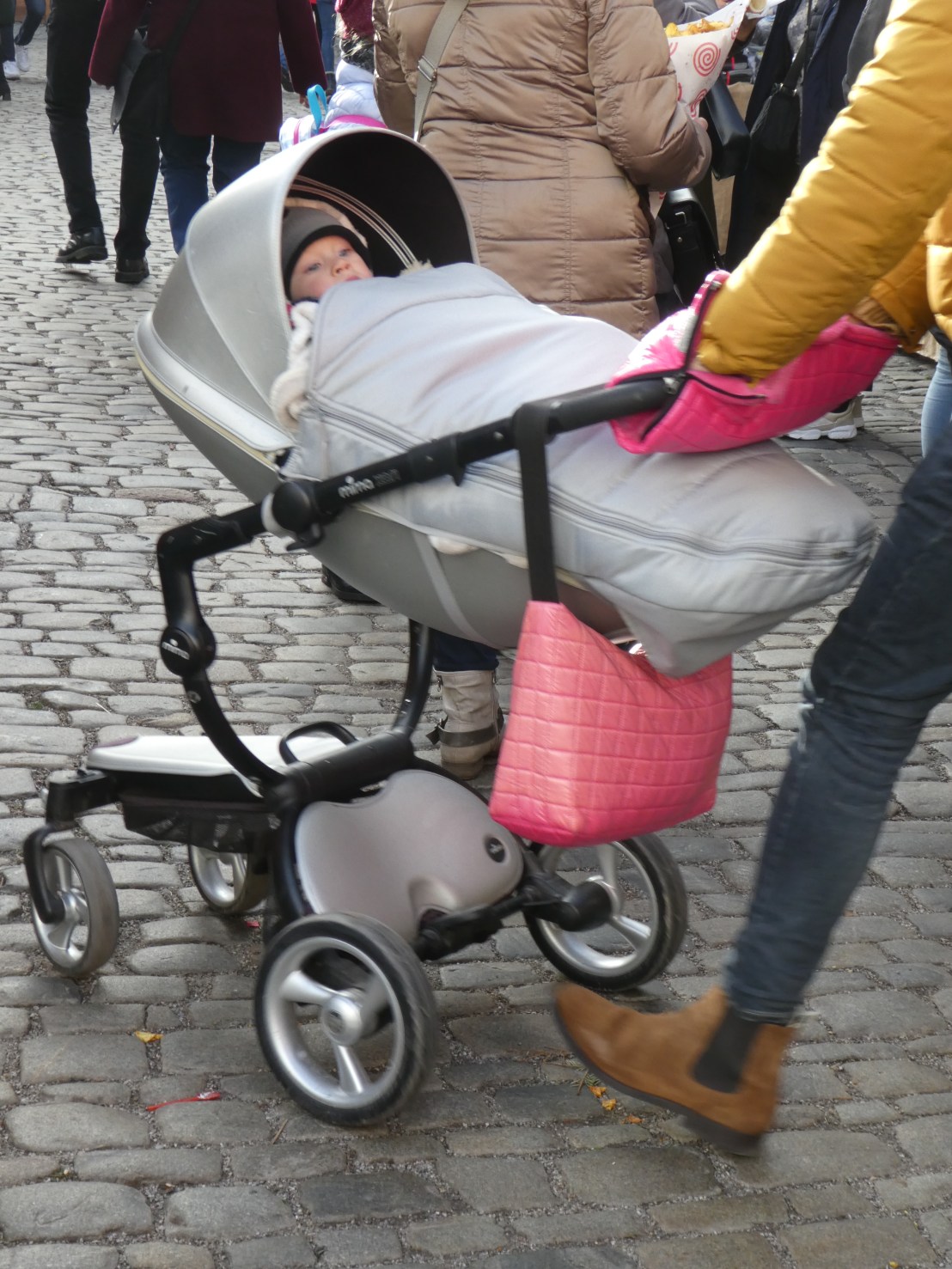

We took a walk up the hill and through the castle. It’s huge! I was amazed that we never walked up, or even saw, any stairs. All of the walkways and streets were on an incline which makes sense considering they had to be used by horses and wagons in ancient times.
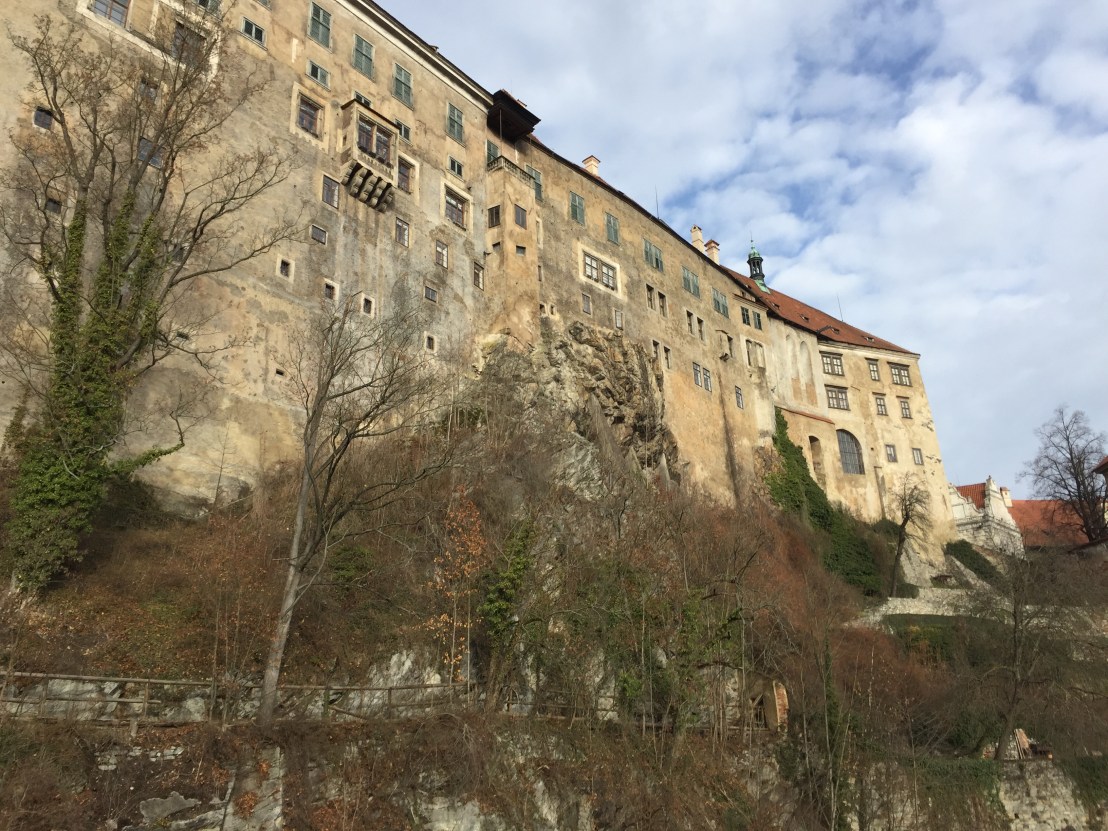
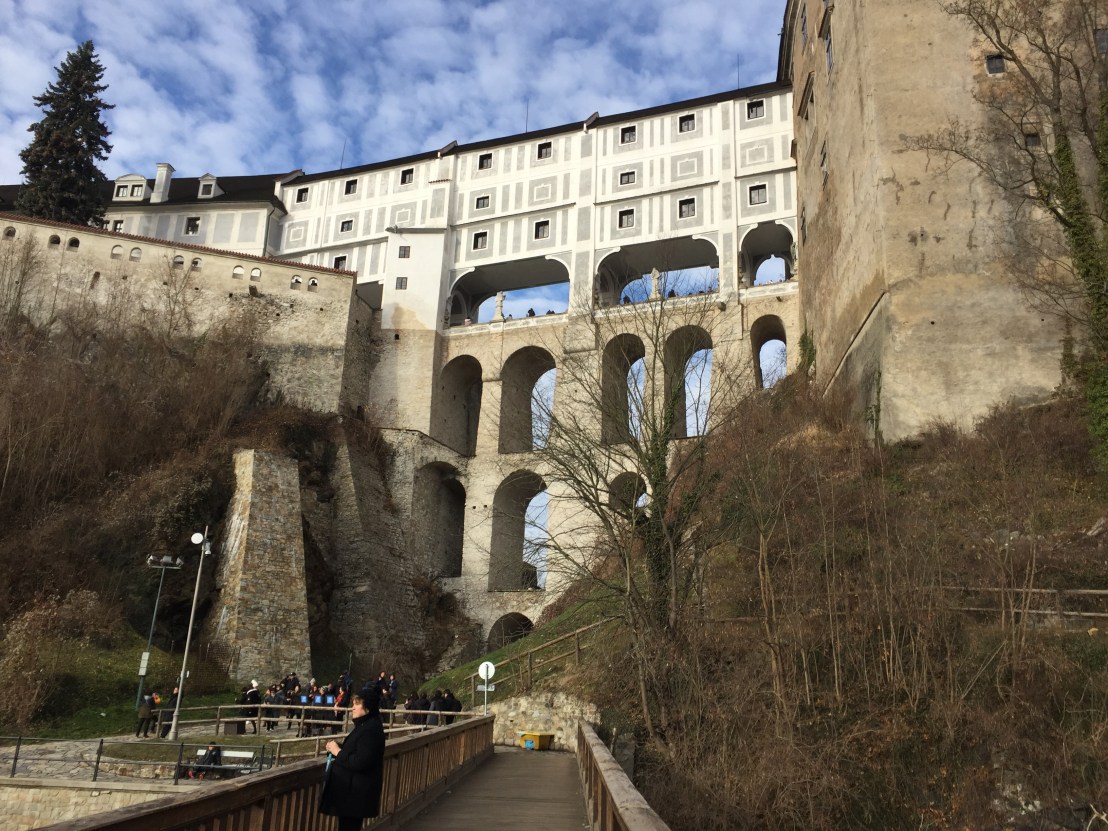
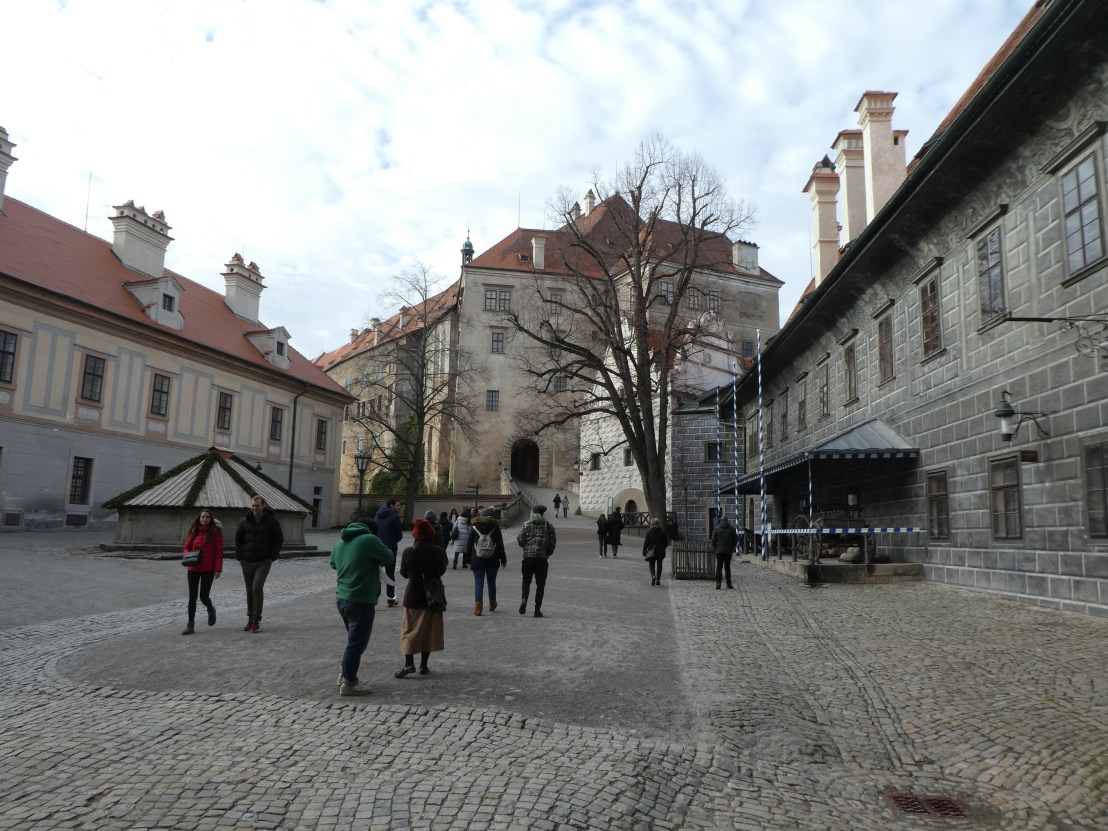
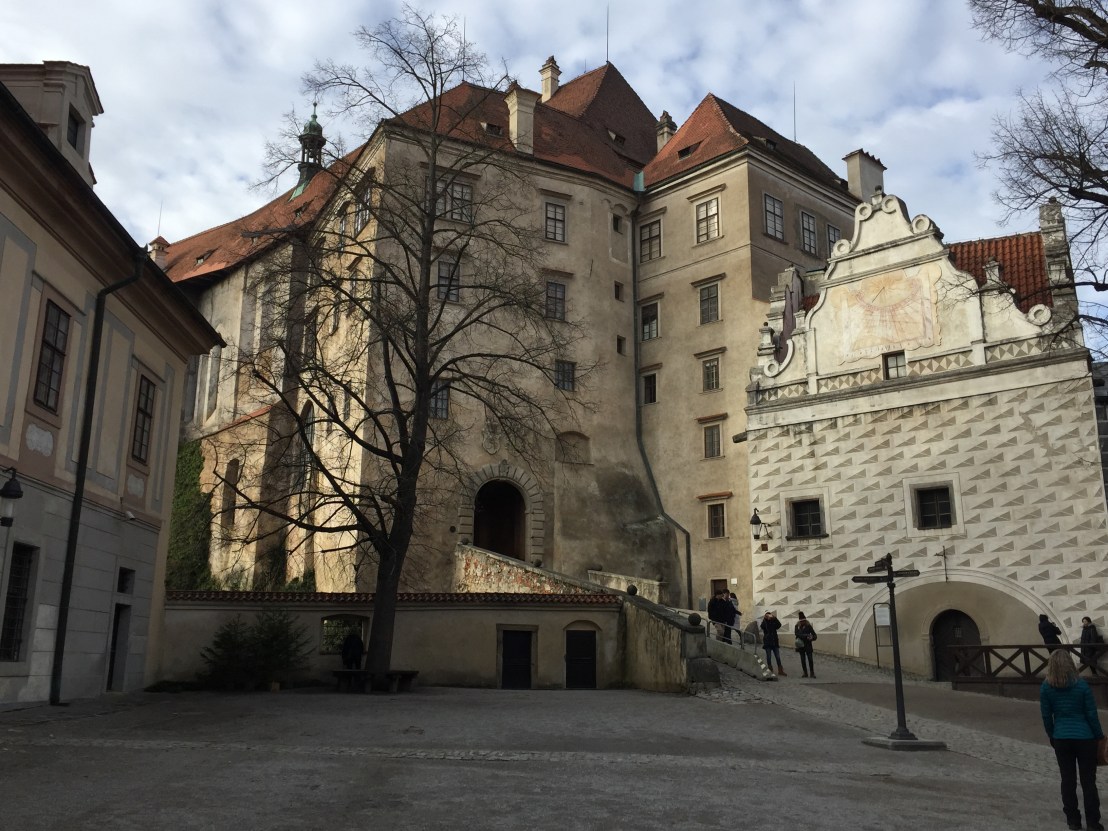
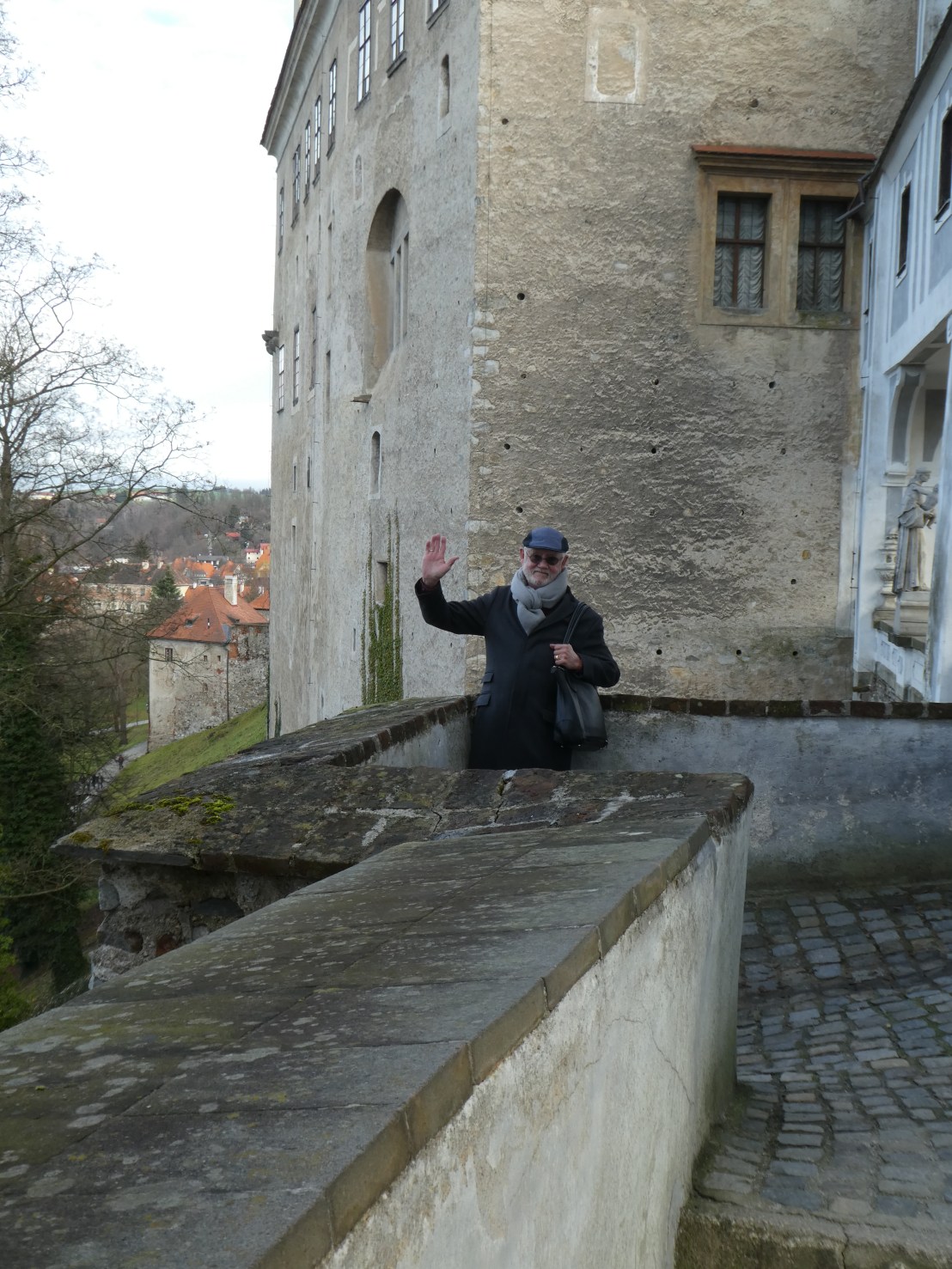


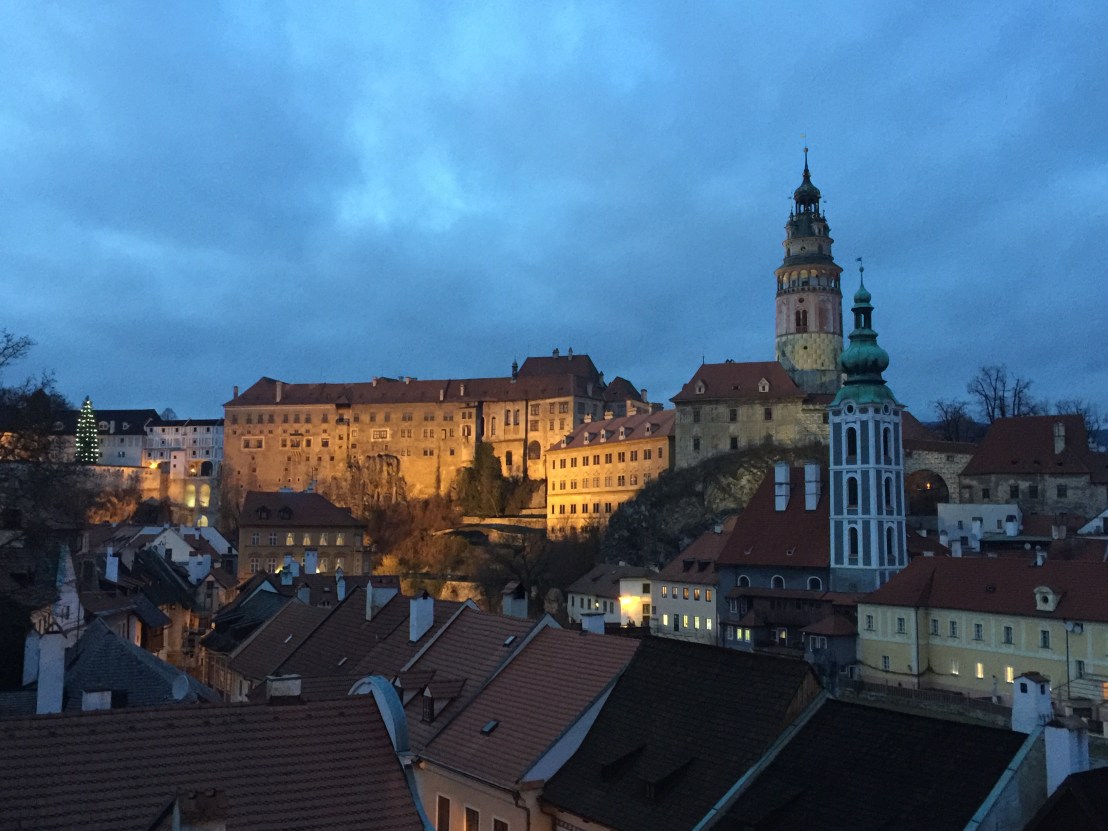
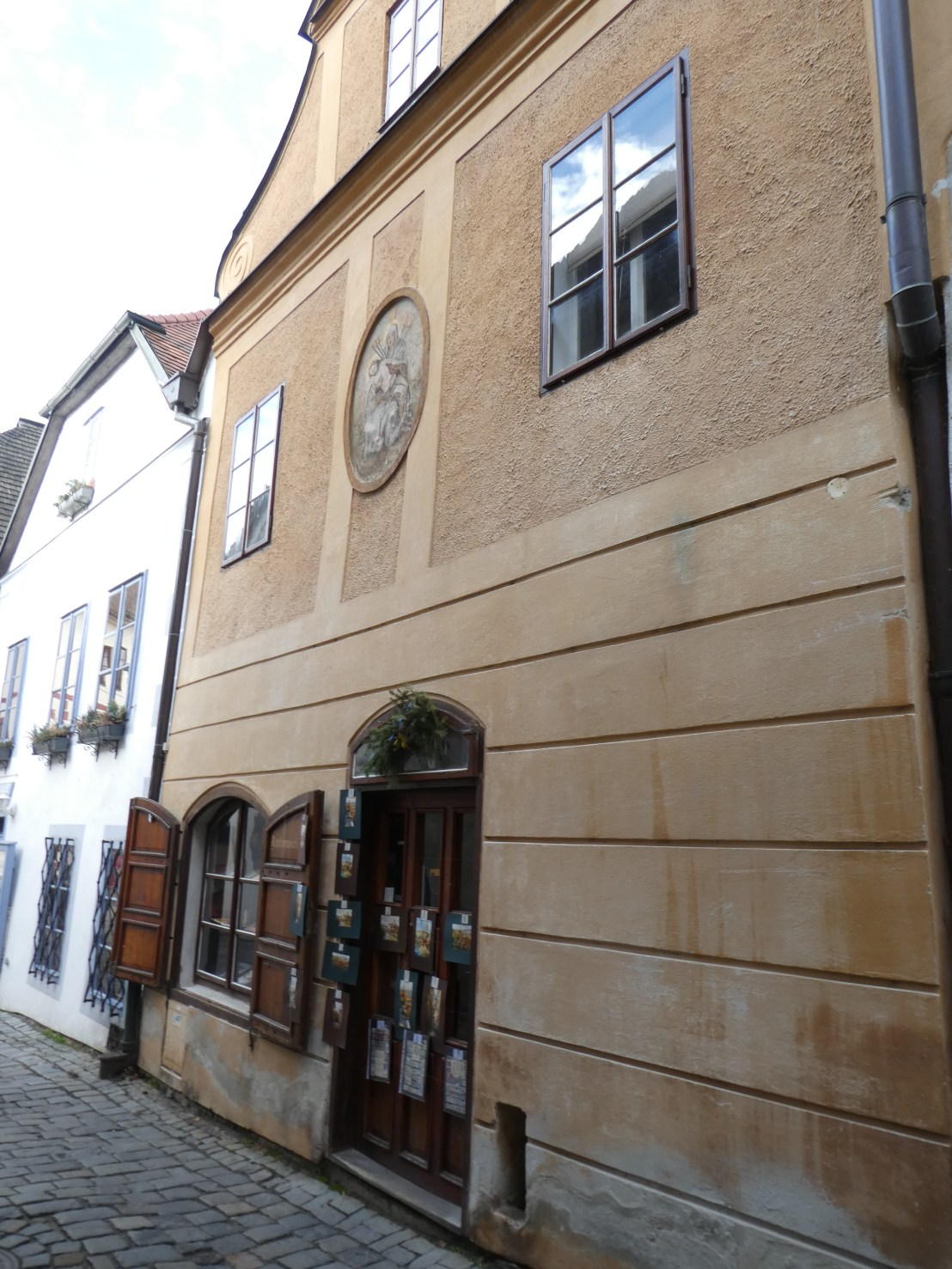
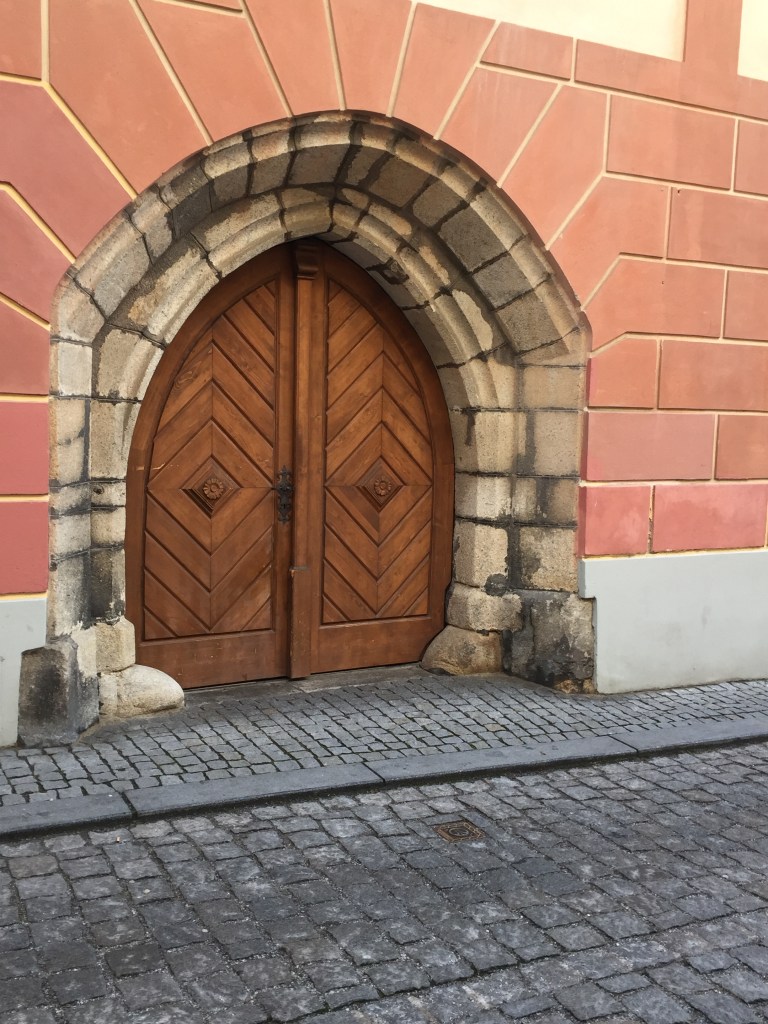
But it’s the beautiful architecture in Cesky Krumlov that make it so unique and special. And one of the really great things about the central area is that with very few exceptions, no cars are allowed. Here’s a sampling of some of the buildings we saw.
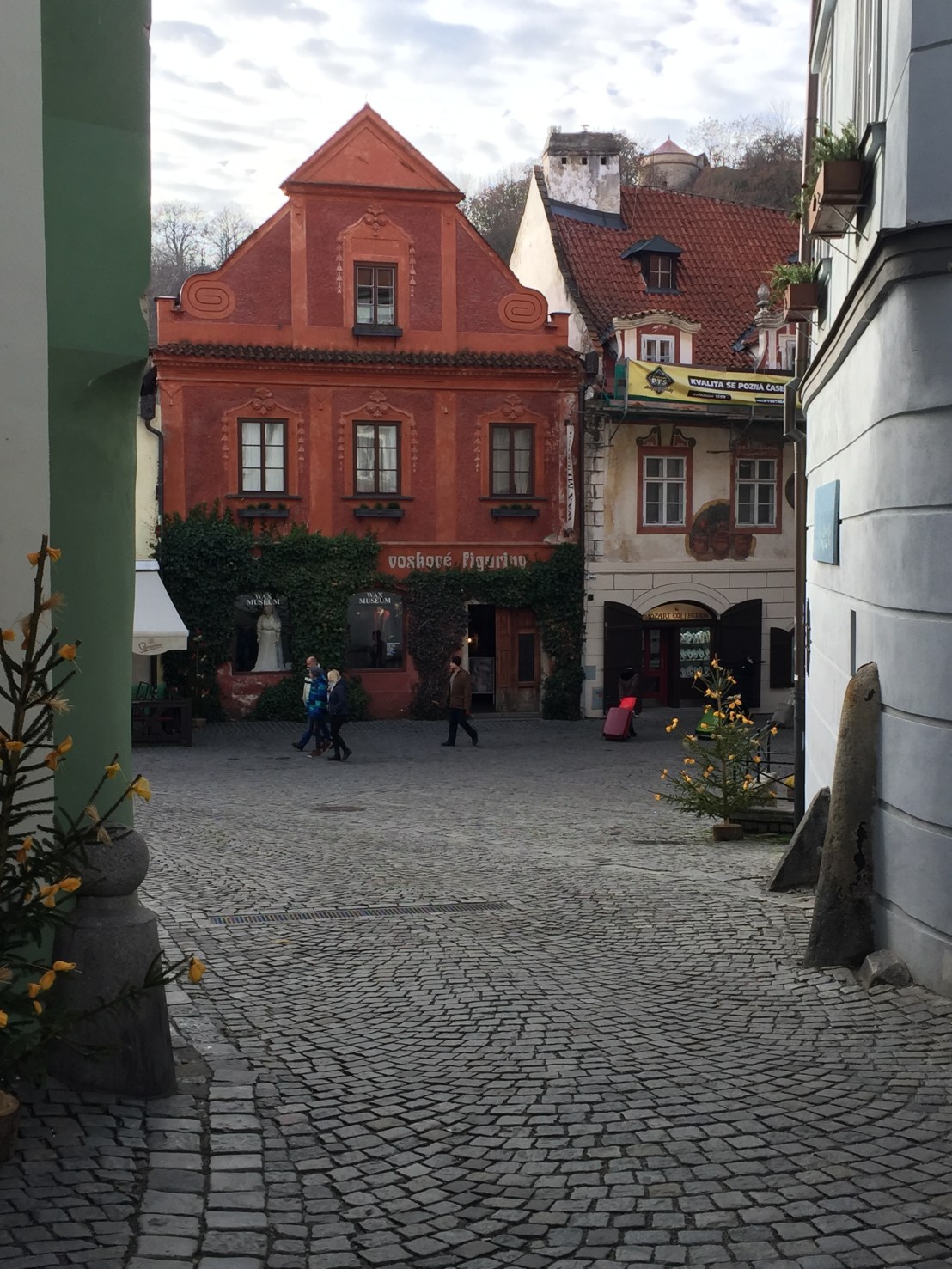

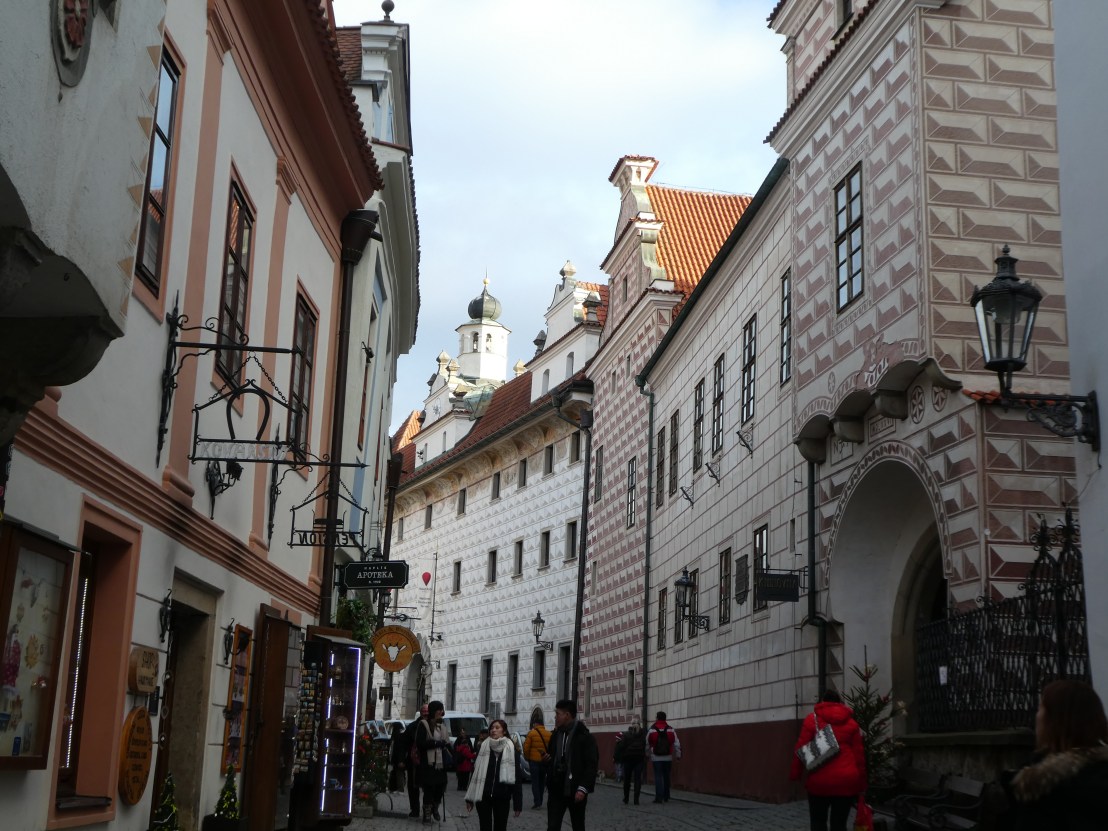
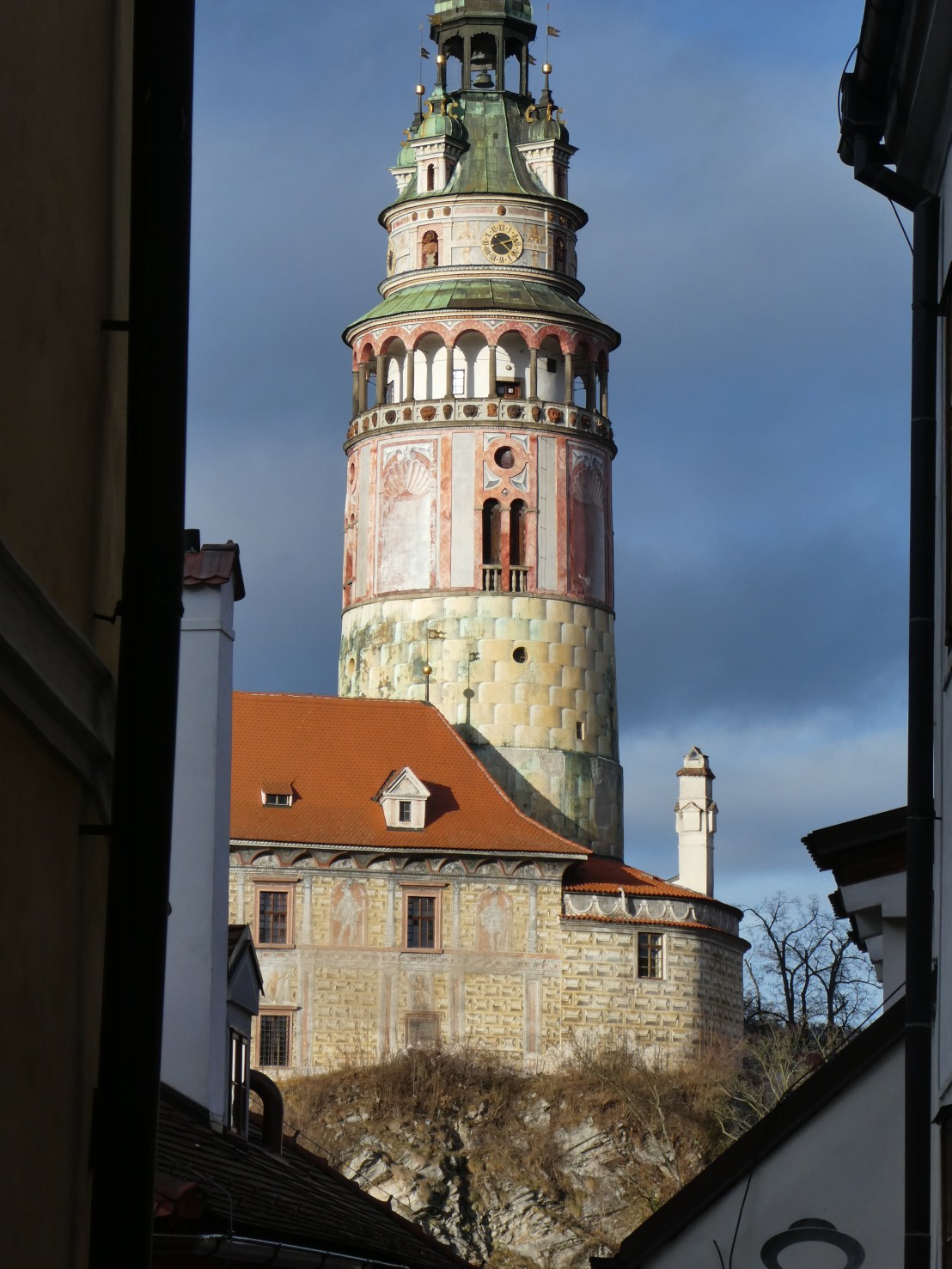
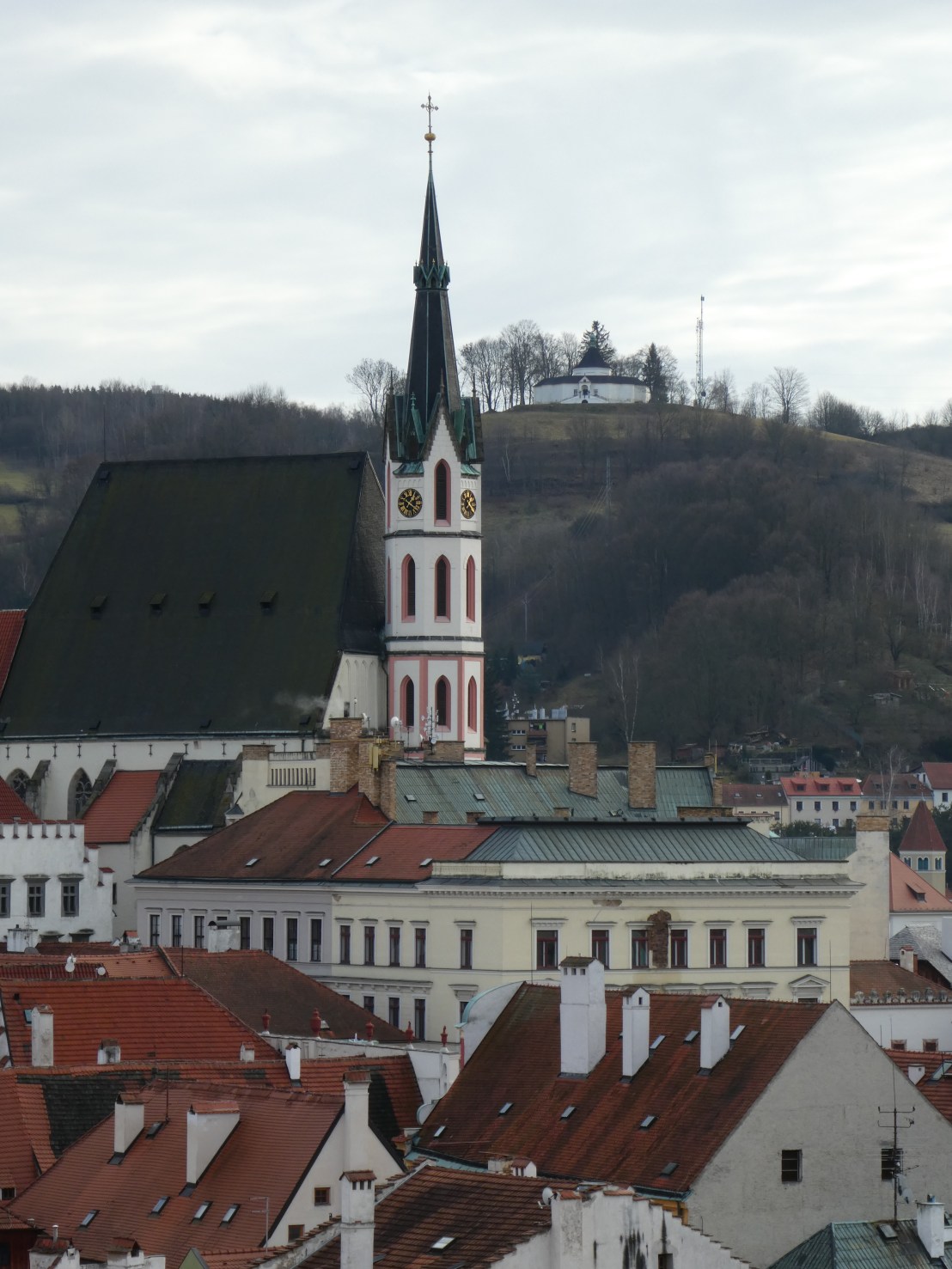

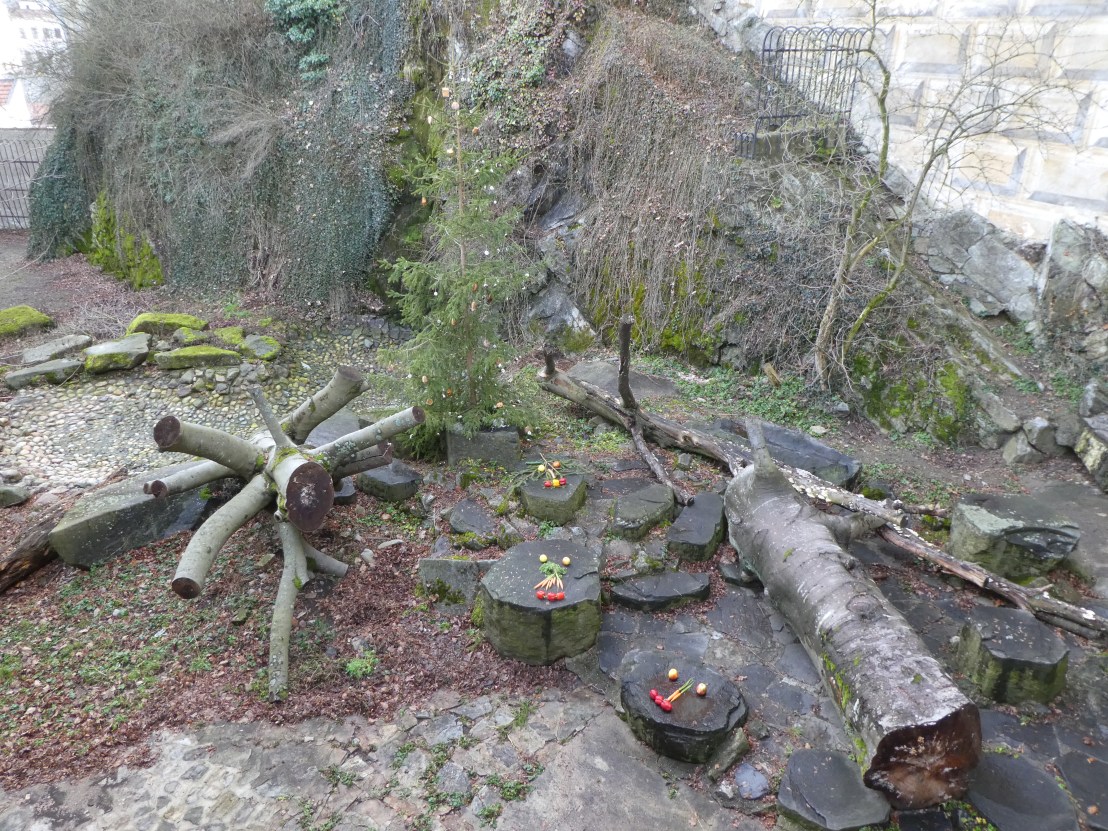
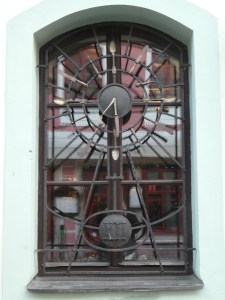
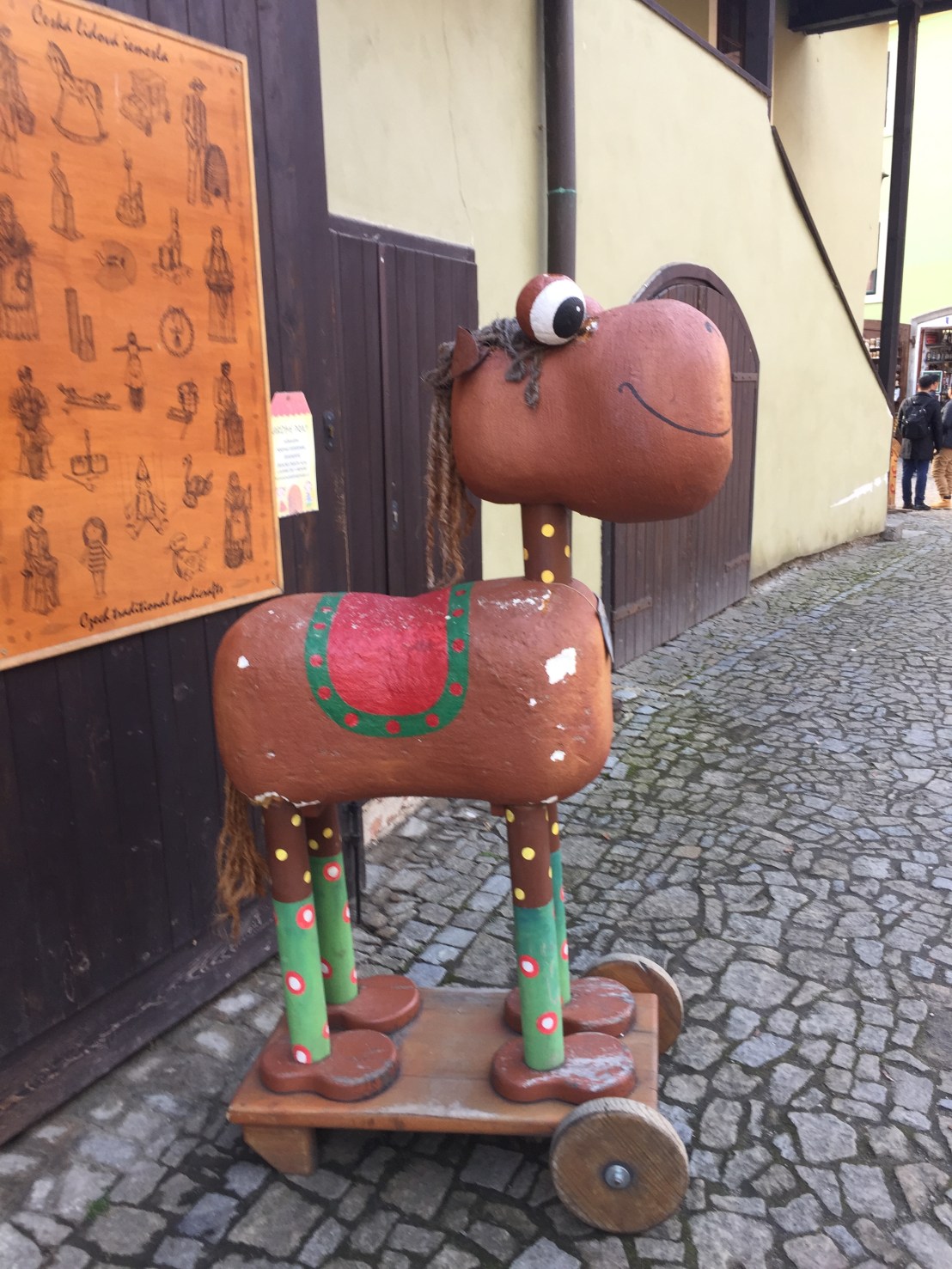
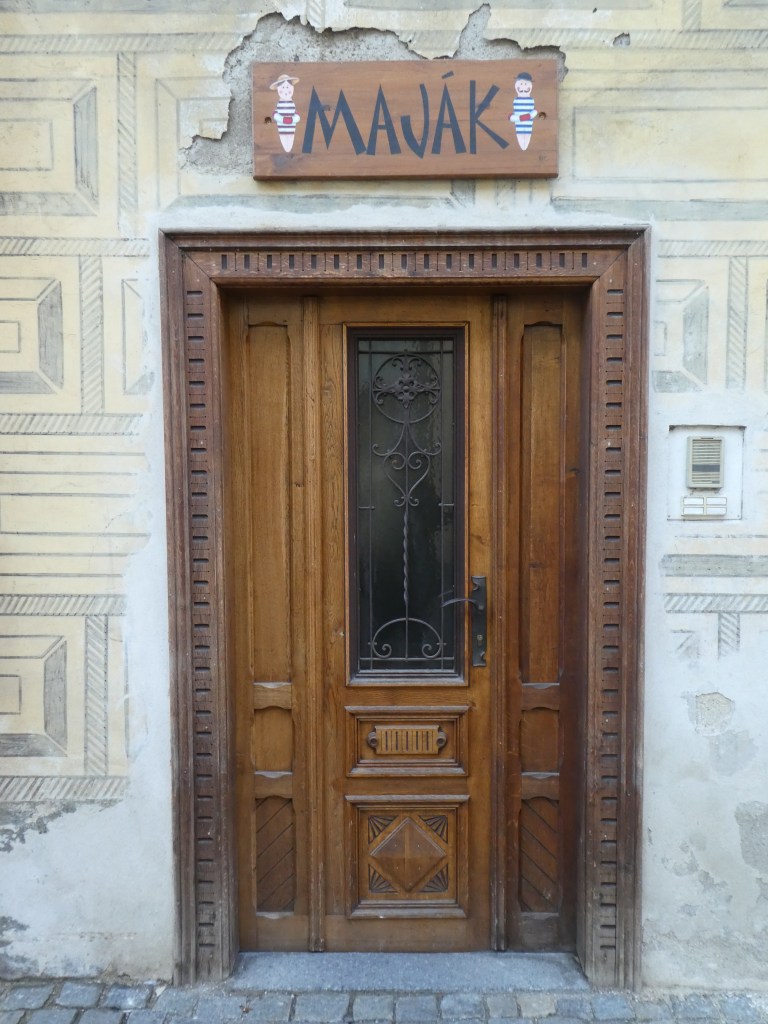
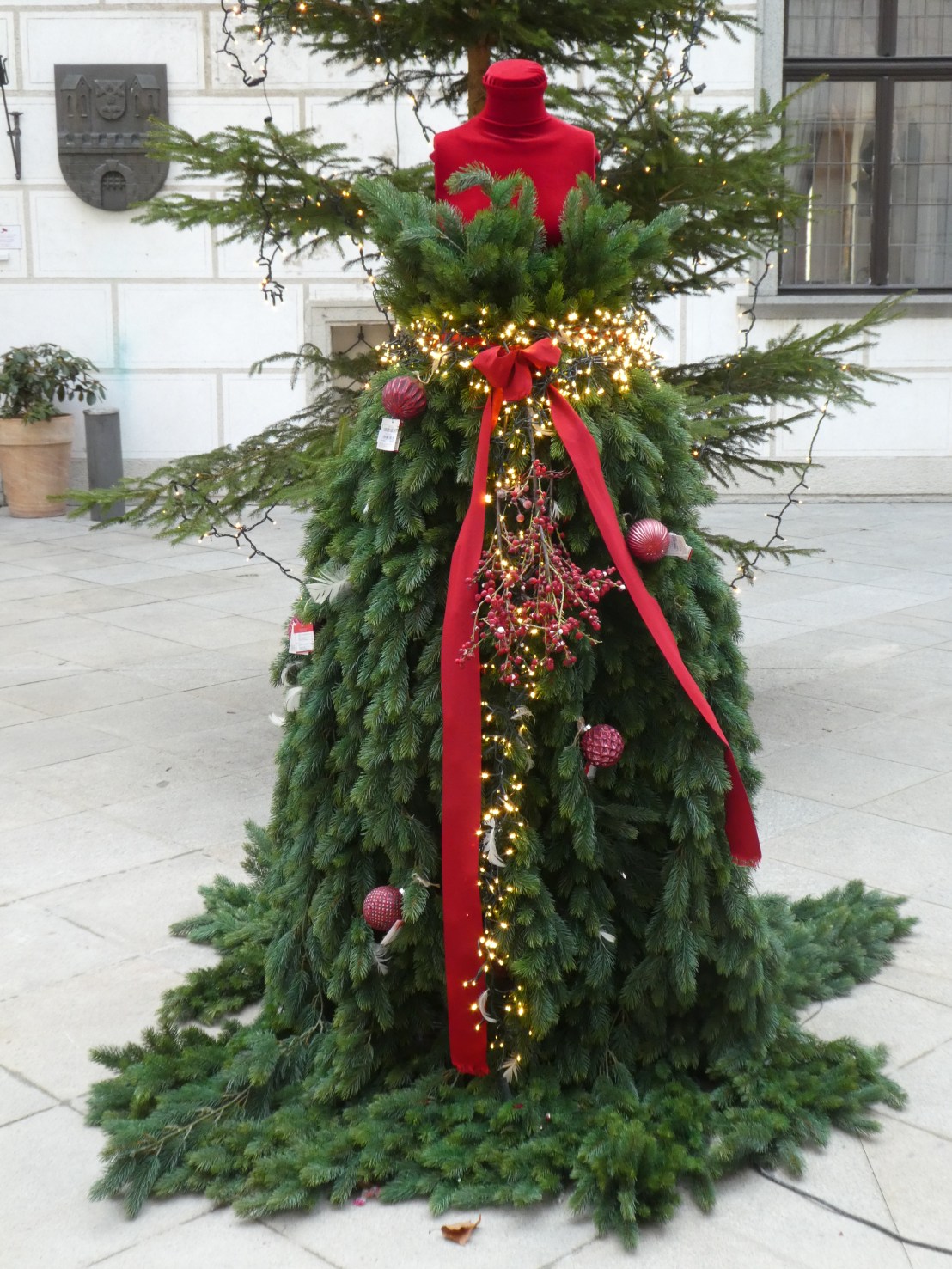
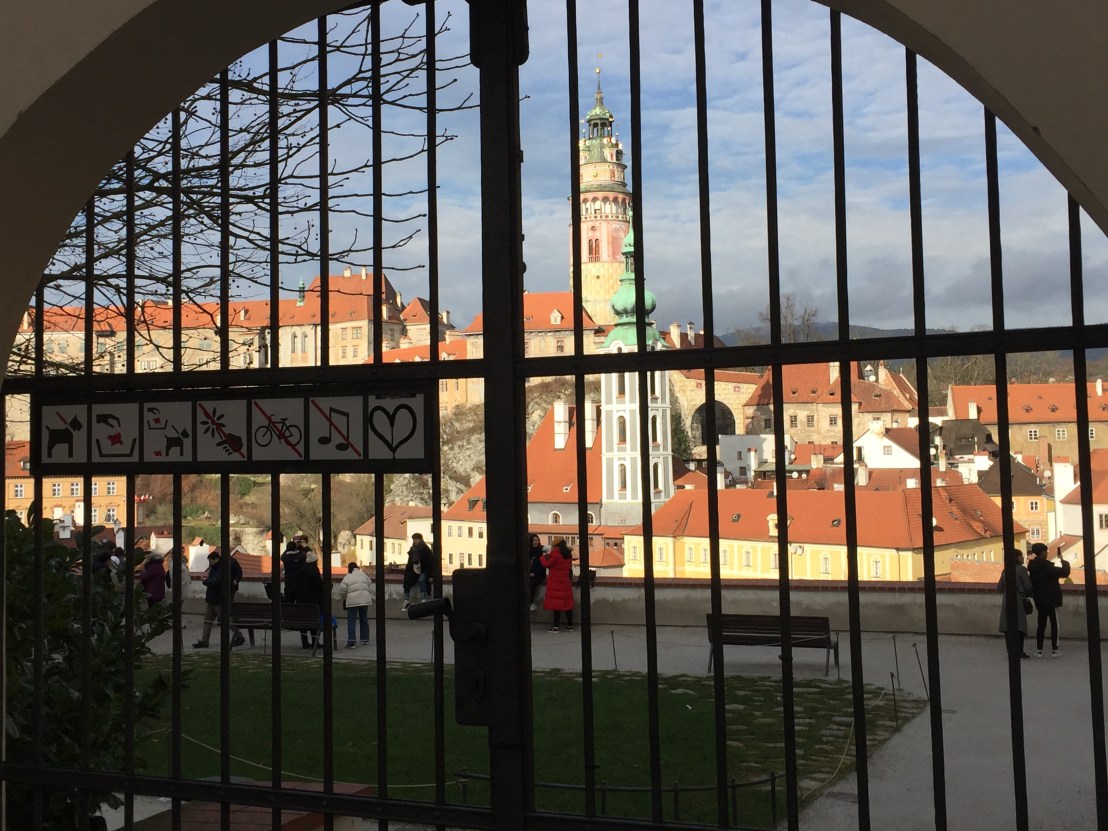
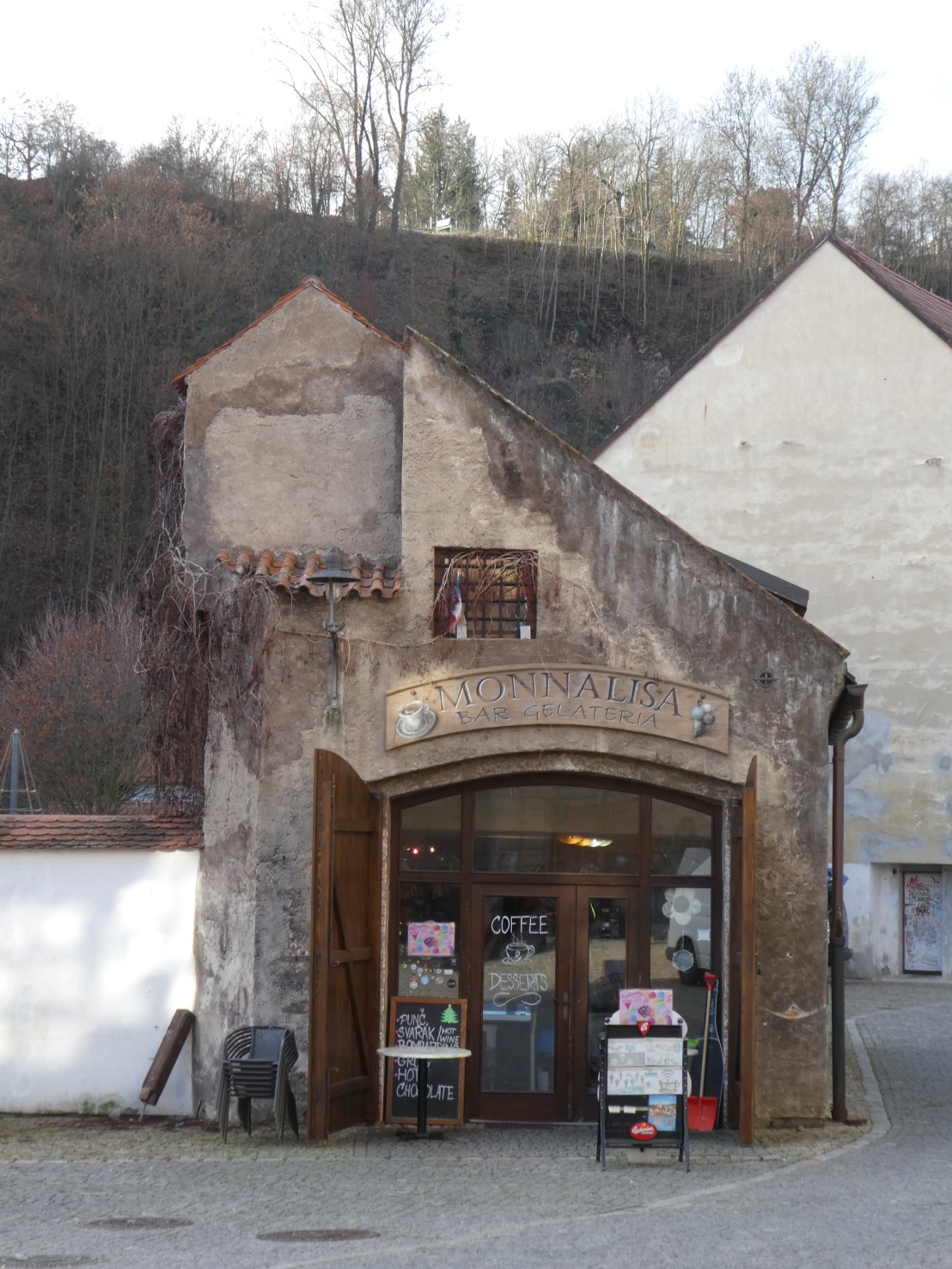
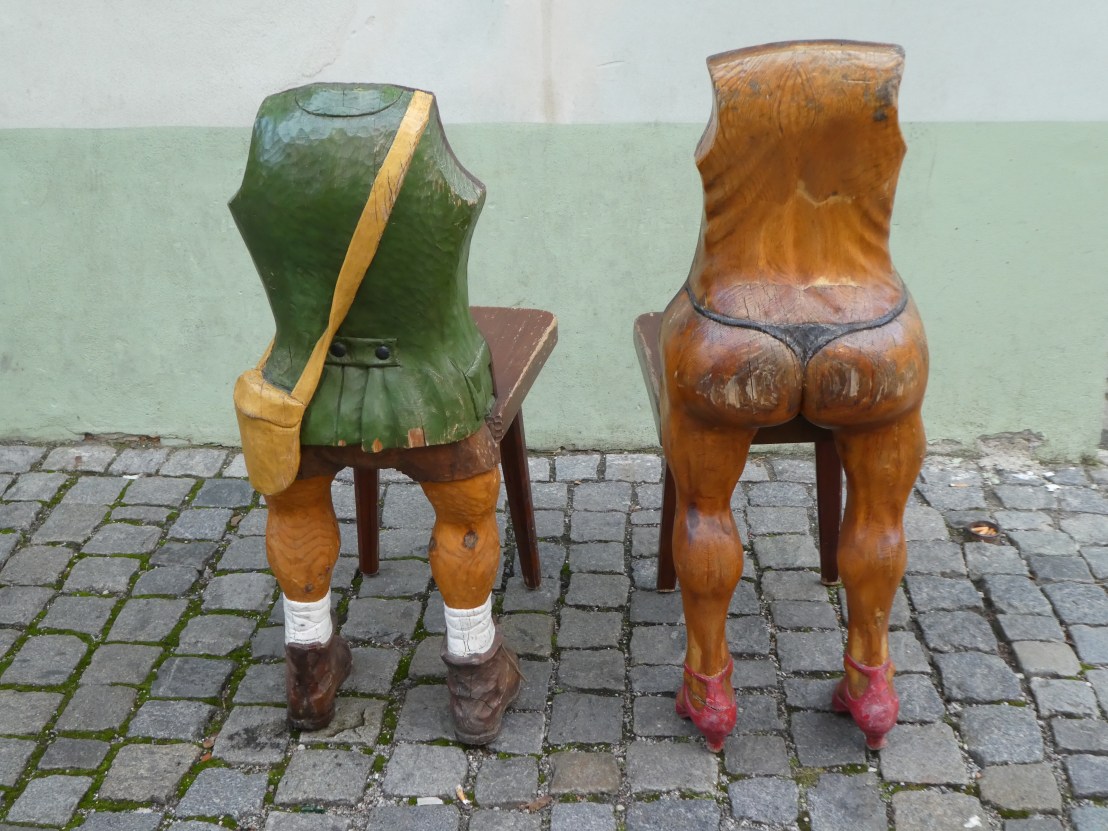
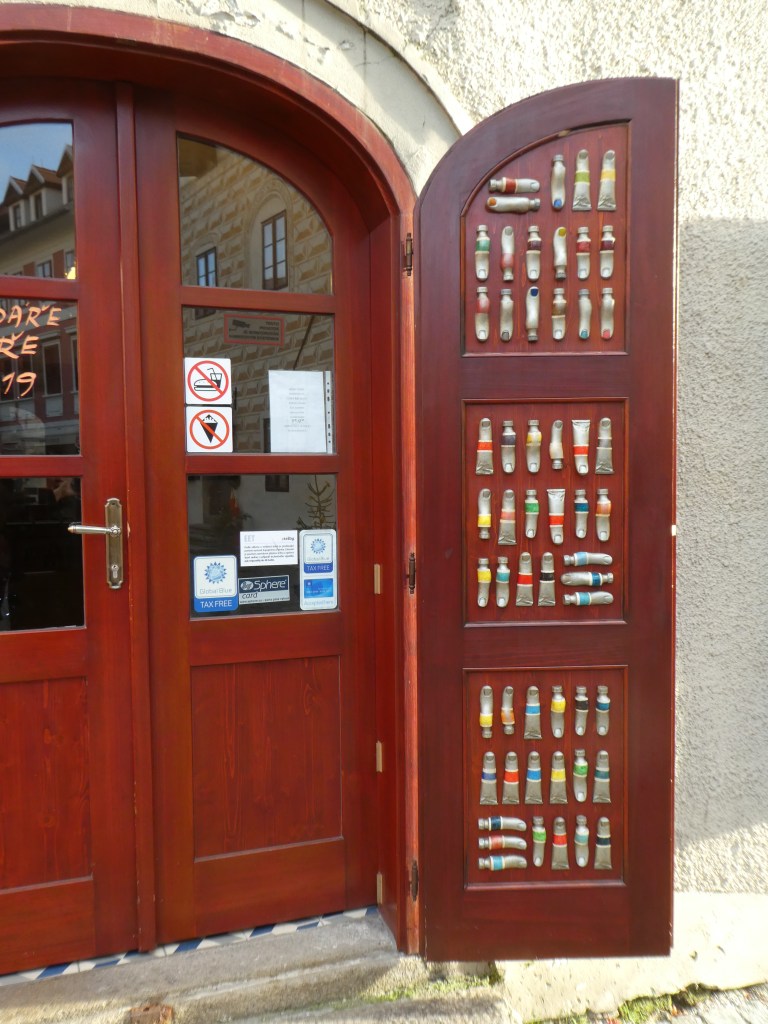
And here are just a few more of the fun things we saw in the Cesky area.

 Christmas Markets & More